
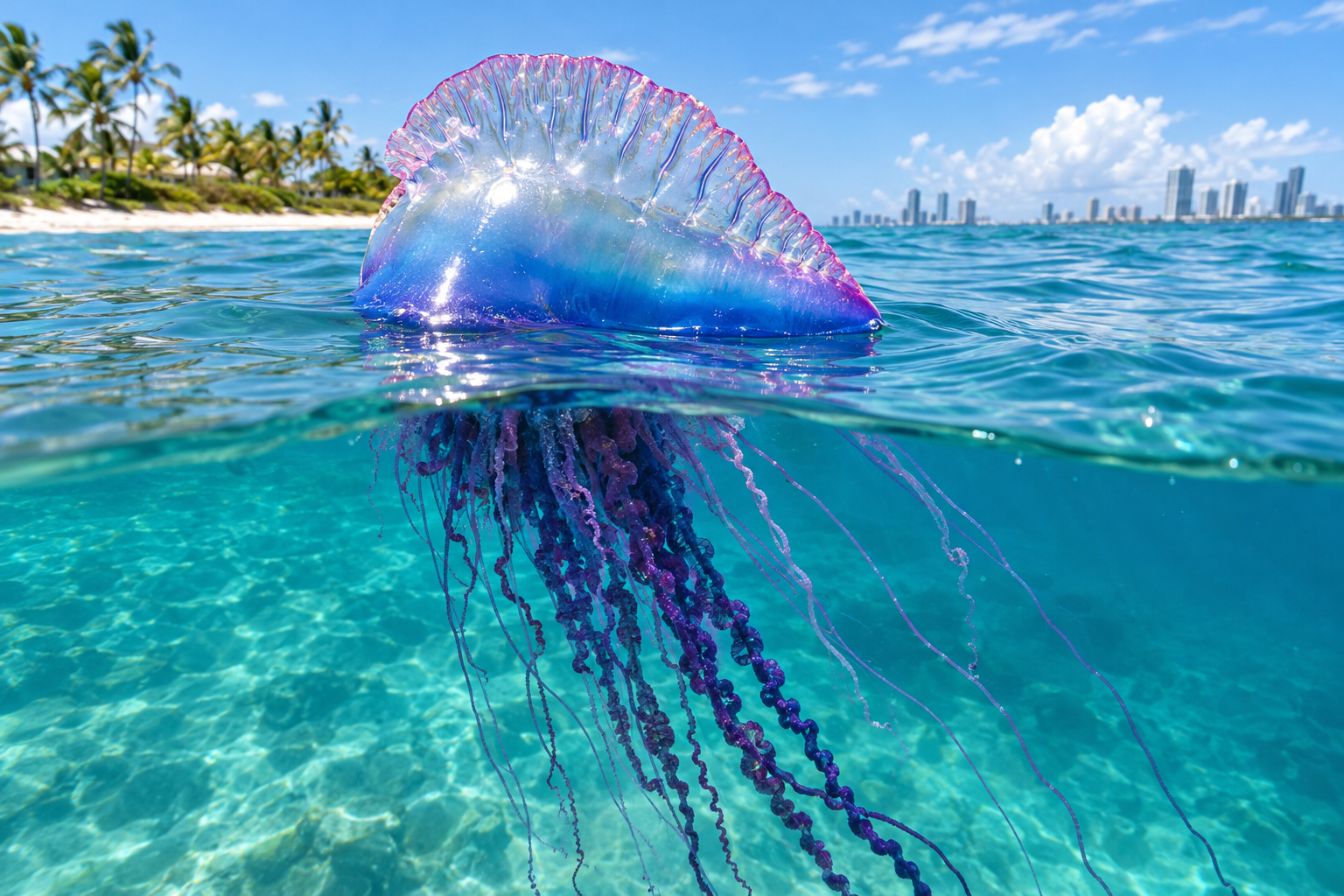
The Portuguese man o’ war (Physalia physalis) is not actually a jellyfish but a floating colony of animals that drifts onto Miami-Dade, Broward and Palm Beach beaches when easterly winds blow, mostly between November and April. If you are stung, rinse with seawater, lift off any tentacles without rubbing, and soak the area in hot water; call 911 for breathing trouble or chest pain. Whether you searched “man o war jellyfish,” “manowar jellyfish” or “portuguese manawar,” this guide covers what it is, when it shows up here, and exactly what to do.
Quick steps: treat a man o' war sting
- Get out of the water and tell a lifeguard.
- Rinse the area with seawater, never fresh water.
- Lift tentacles off with tweezers or a gloved hand.
- Soak in hot water, as hot as you can stand, for 20 to 45 minutes.
- Take an over-the-counter pain reliever and antihistamine if needed.
- Call 911 for trouble breathing, swelling of the face, or chest pain.
What you need
- Seawater in a bucket or bottle
- Tweezers or a card edge
- Access to hot water (lifeguard stands and most beach showers)
- Oral antihistamine and pain reliever
- Poison Control number saved in your phone
Why a man o’ war is not a jellyfish
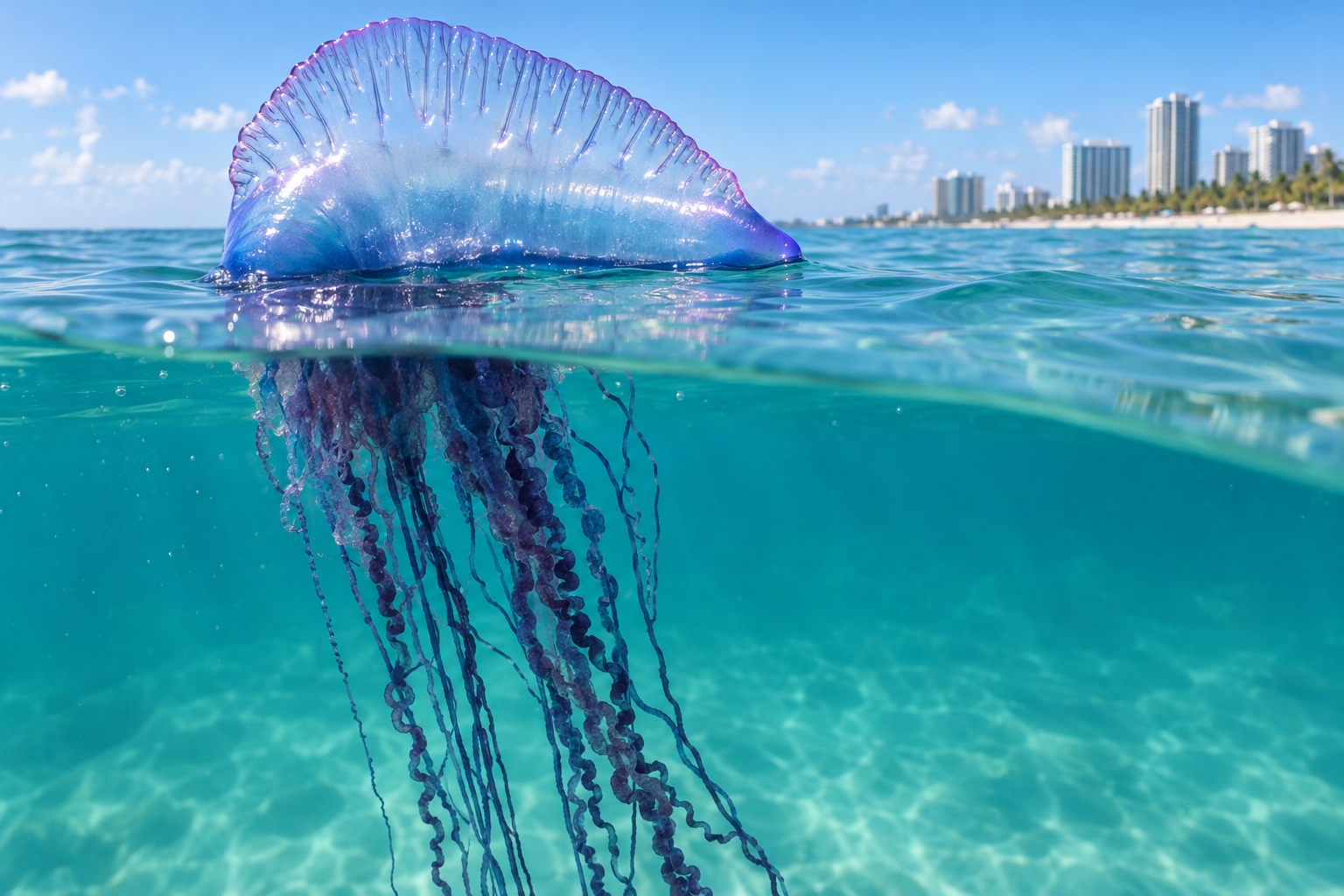
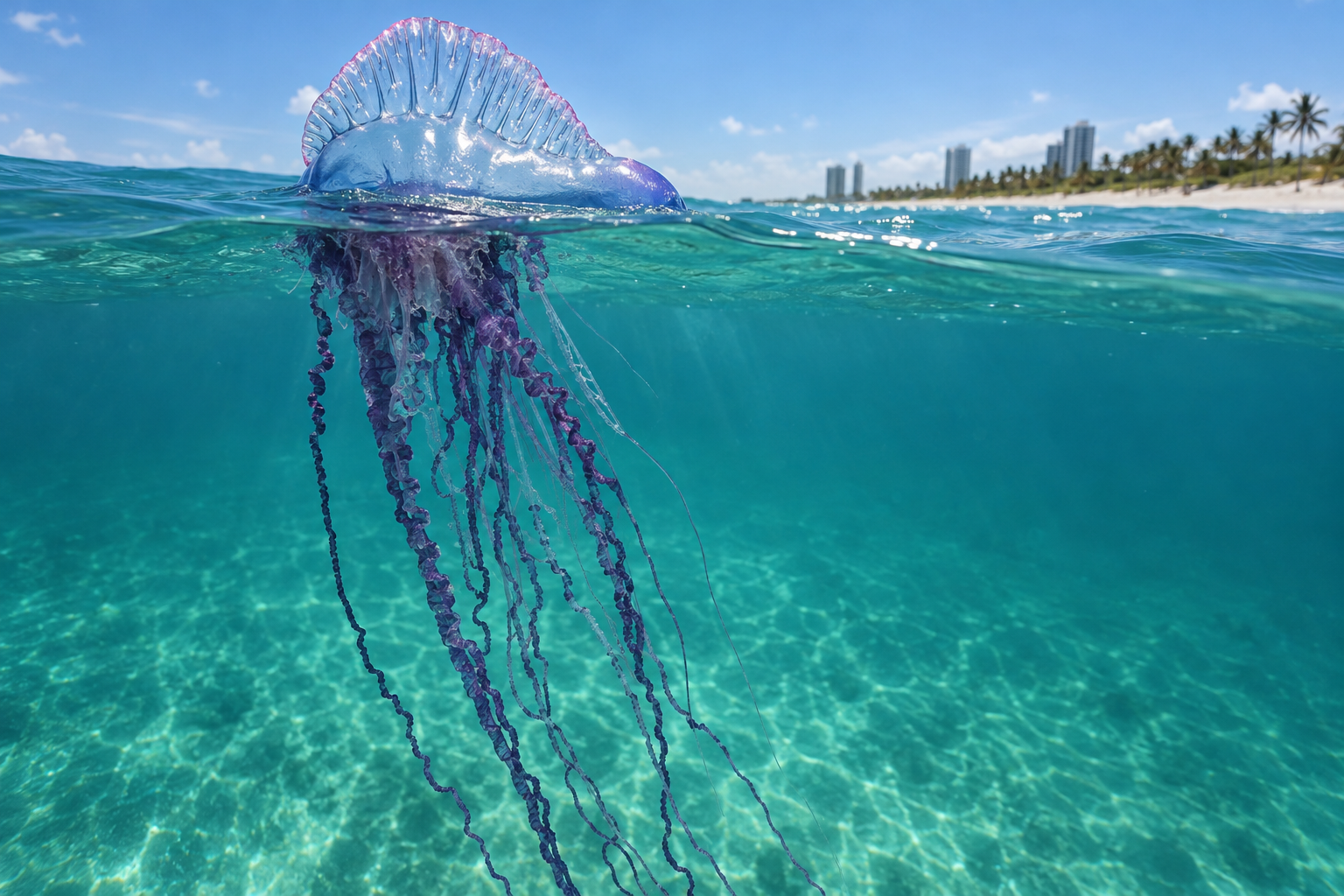
A true jellyfish is one animal. A man o’ war is a siphonophore, a colony of specialized individuals called zooids that cannot survive apart and function together as if they were a single organism. One group forms the gas-filled float, another forms the stinging tentacles, a third digests prey, and a fourth handles reproduction.
The float is the part you notice: a translucent, blue to purple bladder that rides a few inches above the surface and acts as a sail. The colony has no way to swim, so wind and ocean currents decide where it goes. That is the whole reason South Florida sees them in pulses rather than year round.
| Feature | Portuguese man o’ war | True jellyfish (moon, cannonball) |
|---|---|---|
| Body plan | Colony of zooids | Single animal |
| Movement | Wind and currents only | Pulses its bell to swim |
| Position | Floats at the surface | Drifts through the water column |
| Sting on the beach | Stays potent for days | Fades faster once dry |
| Color | Blue, purple, pink | Clear, white, brown |
Key facts at a glance
| Fact | Detail |
|---|---|
| Scientific name | Physalia physalis |
| Float length | Up to about 12 inches |
| Tentacle length | Around 30 feet is typical; large specimens run far longer |
| Prey | Small fish, fish larvae, shrimp and other plankton |
| Weapon | Nematocysts, coiled stinging cells on the tentacles |
| Predators | Loggerhead sea turtles, ocean sunfish, blue sea slugs |
| Name origin | Resembles a Portuguese warship (man-of-war) under full sail |
The tentacles do the hunting. Each one carries thousands of nematocysts that fire a barbed thread on contact, paralyzing small fish, which the feeding zooids then draw up and digest. A few species, including the small man o’ war fish, live among the tentacles with apparent immunity, and the blue sea slug Glaucus atlanticus eats the colony and stores its stinging cells for its own defense.
When they wash ashore in South Florida
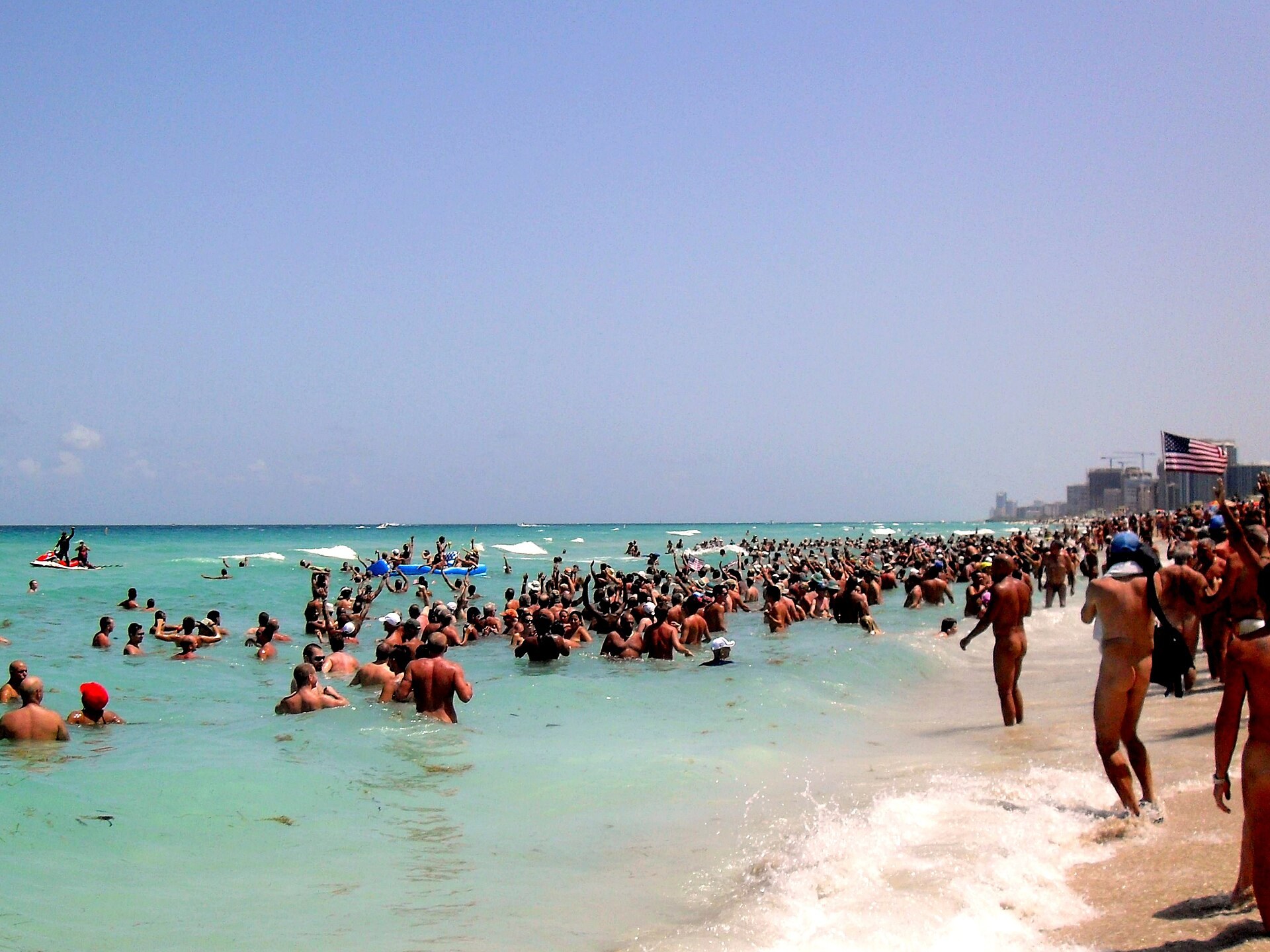
Man o’ war arrive on the beach when sustained east or northeast winds push them across the Gulf Stream and onto the sand. In South Florida that means the cooler months, when cold fronts bring days of onshore wind. January through March tends to produce the heaviest strandings, though a windy week in November or April can do the same.
| Period | What to expect on Atlantic beaches |
|---|---|
| November to December | First arrivals after early fronts |
| January to March | Peak; purple flags common after windy days |
| April to May | Tapering off as winds shift |
| June to October | Uncommon; occasional stragglers after storms |
Every lifeguarded beach in the three counties flies the statewide flag system, and purple means dangerous marine life. Check the flags at Haulover, Crandon Park or Miami Beach in Miami-Dade, Fort Lauderdale, Pompano or Hollywood in Broward, and Boca Raton, Delray or Lake Worth in Palm Beach before you go in. Each county’s ocean rescue or parks department publishes current conditions, and those pages are the place to confirm which beaches are guarded and when stands are staffed.
Good to know
A man o’ war that has washed ashore and looks dead can still sting for days. Children and dogs are the usual victims, so keep them away from anything blue and shiny in the wrack line, and never pop a float.
What a sting feels like and how it progresses
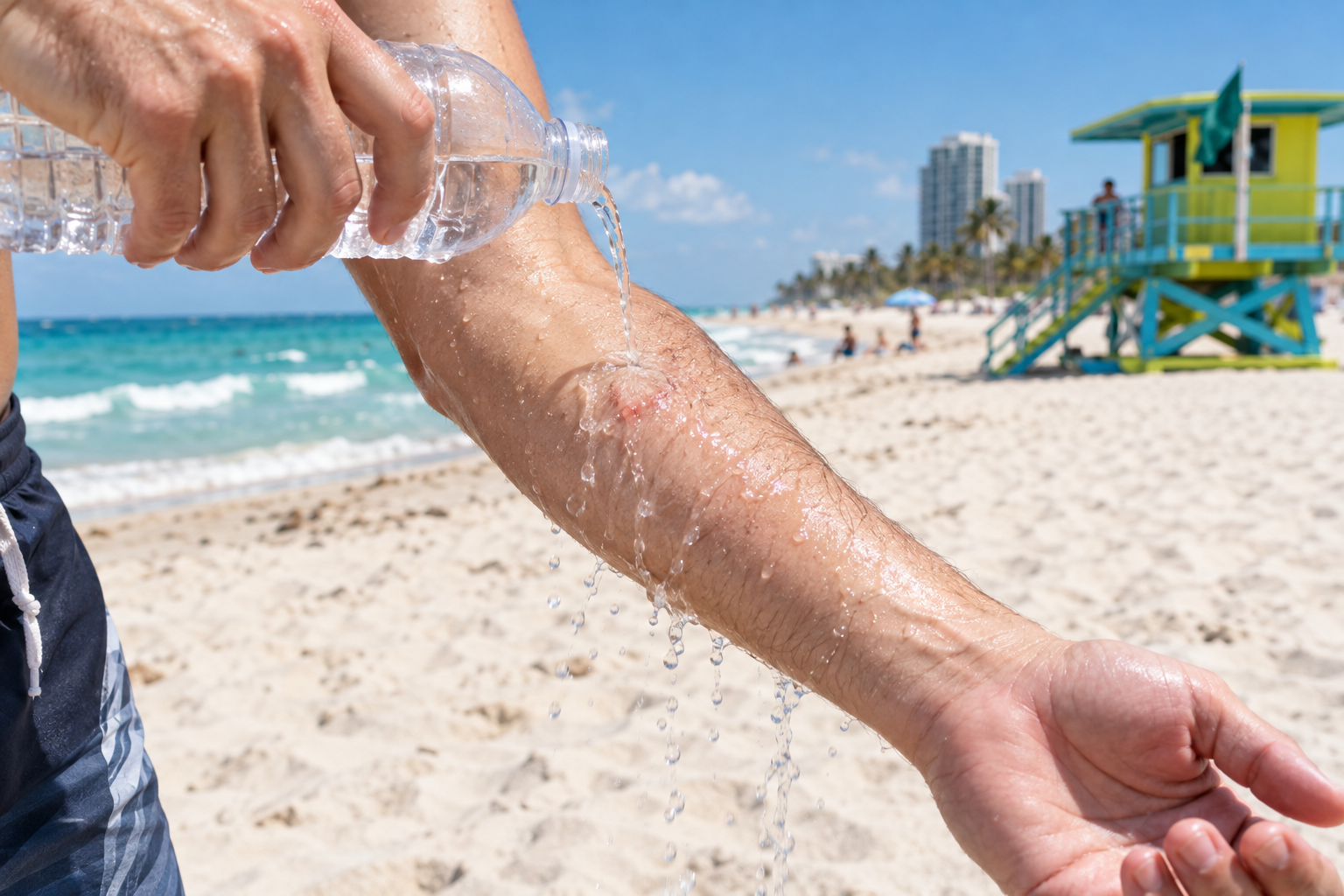
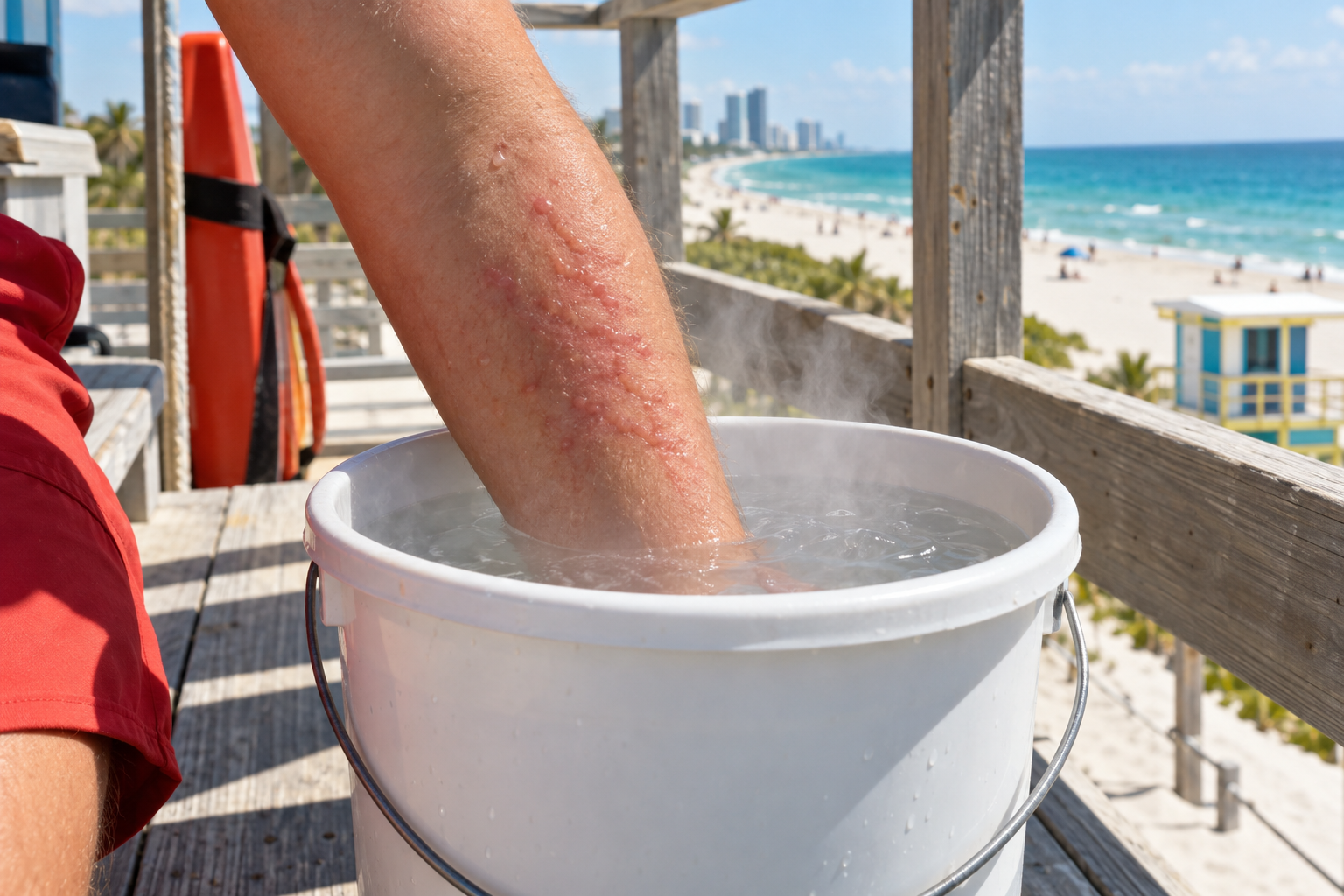
Contact leaves raised red welts in the shape of the tentacle, often a string of beads or a long whip mark. Pain is immediate, sharp and burning, usually worst in the first hour and easing over two to three hours. Welts can stay visible for several days.
Serious reactions are rare but real. Watch for swelling of the lips or face, wheezing, chest pain, a racing heartbeat, nausea or fainting, especially in small children, older adults and anyone stung across a large area. Those symptoms need 911, not a wait-and-see approach.
Skip the folk remedies. Fresh water, urine, alcohol and rubbing with sand all trigger unfired nematocysts and make the sting worse. Vinegar helps with box jellyfish stings but is contested for Physalia, and Florida lifeguards generally use seawater and heat instead, so follow their lead unless a medical professional tells you otherwise.
Local tip
Lifeguard stands along the three counties keep hot water on hand for stings, and the beach showers near most stands run warm enough to help. Head for the nearest stand before you drive home; the relief is faster than anything in your car.
When to get help
Call Florida Poison Control at 1-800-222-1222 for any sting you are unsure about, including stings on the face, around the eyes or on a small child. Call 911 for breathing difficulty, facial swelling, chest pain or collapse.
Spotting one before it spots you
Look for a blue or purple bubble, often with a pink crest, bobbing at the surface or stranded in the seaweed line after a windy night. Tentacles trail downwind and can lie many feet from the float, so give a wide berth on both sides. Winter is also the season when sea cows manatees crowd into warm canals and power plant outflows, which makes a flat calm day better for wildlife and a windy one better for staying out of the surf.
FAQ
How poisonous is a man-o-war jellyfish?
The venom is potent enough to kill small fish instantly and cause severe pain in people, but it is seldom life threatening to a healthy adult. Deaths are extremely rare and usually involve a large contact area, an allergic reaction or drowning after a sting in deep water.
What happens if a man-o-war jellyfish stings you?
You get immediate burning pain and red, beaded welts along the line of contact. Pain typically peaks within an hour and fades in two to three hours, while marks can last days. Rinse with seawater, remove tentacles, soak in hot water and watch for systemic symptoms.
What is deadlier, man o war or box jellyfish?
The box jellyfish, particularly Chironex fleckeri of Australian and Indo-Pacific waters, is far deadlier and has caused many confirmed deaths. The man o’ war is more painful than dangerous for most people. First aid differs too, since vinegar is standard for box jellyfish but debated for man o’ war.
Why are jellyfish called man-o-war?
The name belongs to the Portuguese man o’ war specifically, not jellyfish in general. Sailors thought the inflated float looked like a Portuguese warship, called a man-of-war, running under full sail. In Australia the closely related bluebottle gets its name from the same float.
