
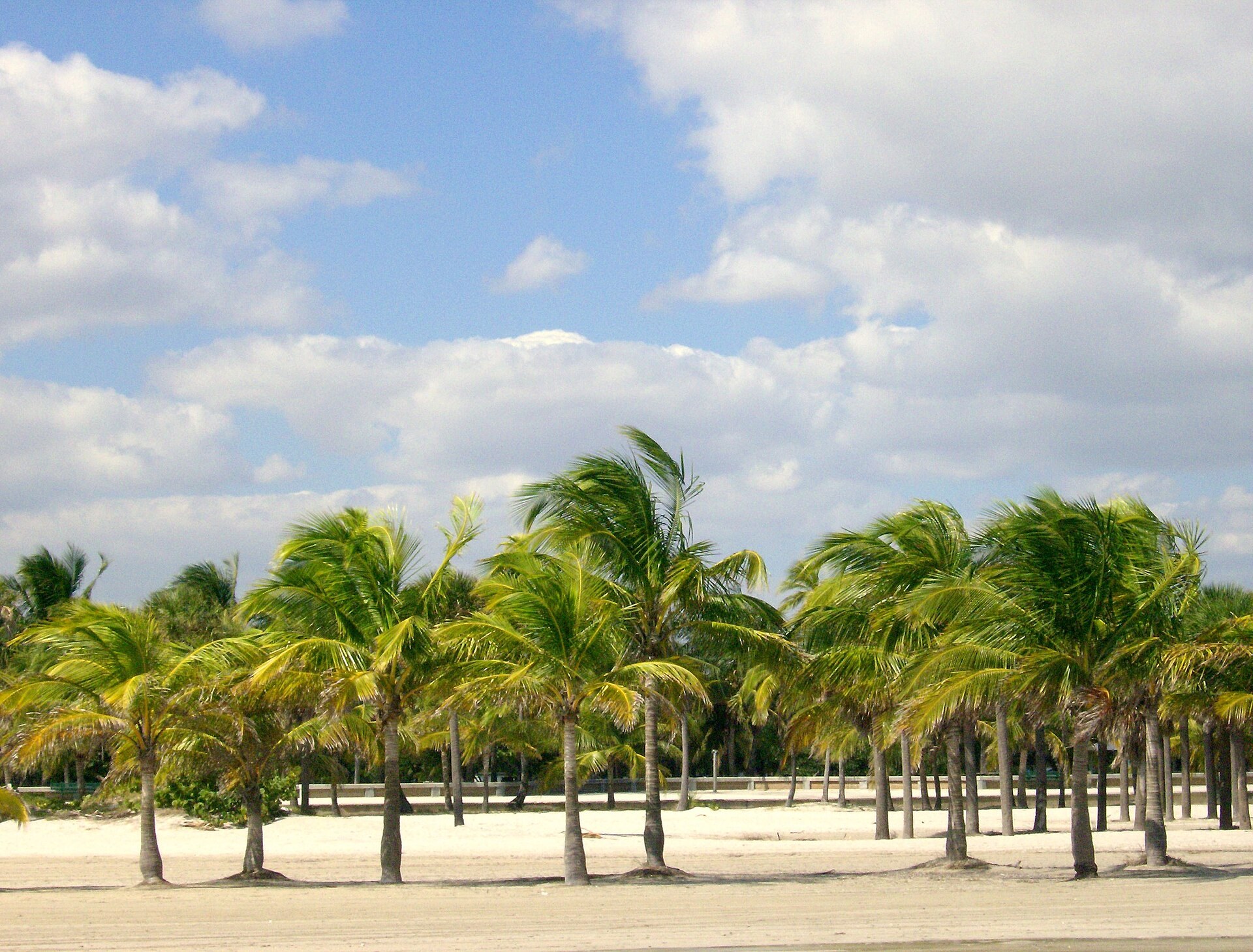
Crandon Park on Key Biscayne is the best all-round beach in Miami, Bill Baggs is the prettiest, and South Beach is the one you go to for the scene rather than the swimming. Below are 14 Miami beaches ranked by people who actually use them, with parking, transit, fees and the honest trade-offs, plus the Broward and Palm Beach alternatives when the Miami-Dade sand is full.
How we ranked them
Locals judge a beach on four things: how the water behaves, how hard the parking is, what the crowd is like at 11 a.m. on a Saturday, and whether you can get a shower, a toilet and a cold drink without a hike. Scenery matters, but a beautiful beach with no parking by 10 a.m. loses points.
Every beach here is on the Atlantic or Biscayne Bay inside Miami-Dade County. Fees and hours below are the pattern at the time of writing; county parks and state parks each publish current rates, so check the Miami-Dade Parks site or the Florida State Parks site before you drive.
Plan your beach day
- Pick ocean (waves, breeze) or bay (calm, shallow) based on who is coming.
- Check the morning surf forecast and the flag colors on the Miami-Dade or Miami Beach ocean rescue pages.
- Arrive before 10 a.m. on weekends; county lots and the Key Biscayne parks fill first.
- Pay parking by plate through the posted app so you can extend without walking back.
- Set up near a staffed lifeguard tower, not in the gaps between them.
- Leave before 4 p.m. in summer to beat the daily thunderstorm and the causeway backup.
What to bring
- Reef-safe sunscreen, reapplied every two hours
- Umbrella or small canopy (rentals exist only at Lummus and the hotel beaches)
- Cash or card for county parking kiosks
- Water shoes for the atoll pools and rocky inlet areas
- A bag for your trash, since cans overflow on weekends
- Photo ID if you plan to buy chairs or drinks at a concession
1. Crandon Park Beach, Key Biscayne
Crandon is the beach most Miami parents would pick if they could only have one. An offshore sandbar knocks down the swell, so the water inside is usually waist deep and gentle for a long way out, and the sand runs roughly two miles with sea grape and palm shade behind it.
The county charges a per-vehicle fee at the gate, higher on weekends and holidays, and the lot is enormous but still fills on holiday weekends. Cabanas can be rented by the day for larger groups, and there are picnic shelters, grills, restrooms and outdoor showers spread along the length of the beach.
Lifeguards from Miami-Dade Ocean Rescue staff towers daily. The Crandon Park Nature Center at the north end runs guided walks and has a small exhibit on the fossilized reef and mangroves, which is worth the detour if the kids need a break from the sun.
Getting here means crossing the Rickenbacker Causeway, which has an electronic toll (SunPass or toll-by-plate, no cash). Metrobus route 102 runs from Brickell onto the key and stops at the park if you would rather skip the car. The causeway also has a protected bike path that is busy with cyclists every weekend morning.
Local tip
Drive past the first big lot and park toward the north end near the nature center. The crowd thins out dramatically and the sandbar protection is just as good.
2. Bill Baggs Cape Florida State Park, Key Biscayne
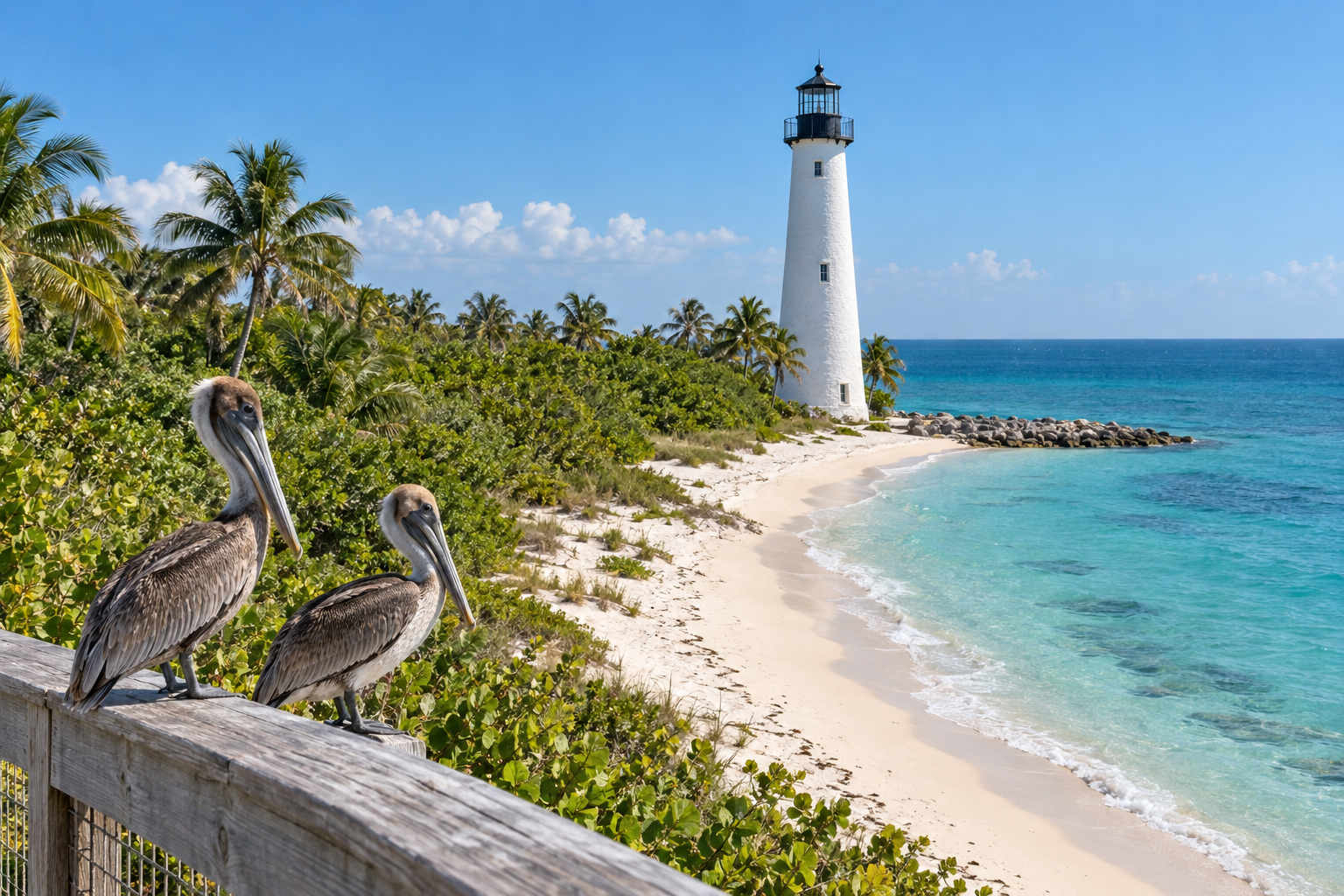
Bill Baggs sits at the southern tip of Key Biscayne, a mile of pale sand ending at the 1825 Cape Florida Lighthouse, the oldest standing structure in Miami-Dade. It regularly lands on national best-beach lists, and once you see the water color on a calm winter morning you understand why.
Entry follows the Florida State Parks pattern: at the time of writing that is $8 per vehicle for two to eight people, less for a single occupant, and a small fee for walkers and cyclists. Confirm the current rate on the Florida State Parks site, and know that the park closes at sunset and the gate can close early on busy days when the lots are full.
The beach itself is less protected than Crandon, so you get a bit more wave action and occasionally sargassum in summer. Lighthouse climbs run on a limited schedule led by park staff. Two restaurants inside the park, Boater’s Grill on the bay side and the Lighthouse Cafe near the beach, mean you do not need to pack a cooler.
Rent a bike at the concession and ride the paved loop to the No Name Harbor side, where the water is flat and the seawall is a local fishing and swimming spot.
Good to know
Both Key Biscayne parks sit behind one two-lane causeway. On a holiday Sunday the return trip to Brickell can take over an hour. Leave before the afternoon storm clears the beach and everyone hits the road at once.
3. South Beach (Lummus Park), Miami Beach
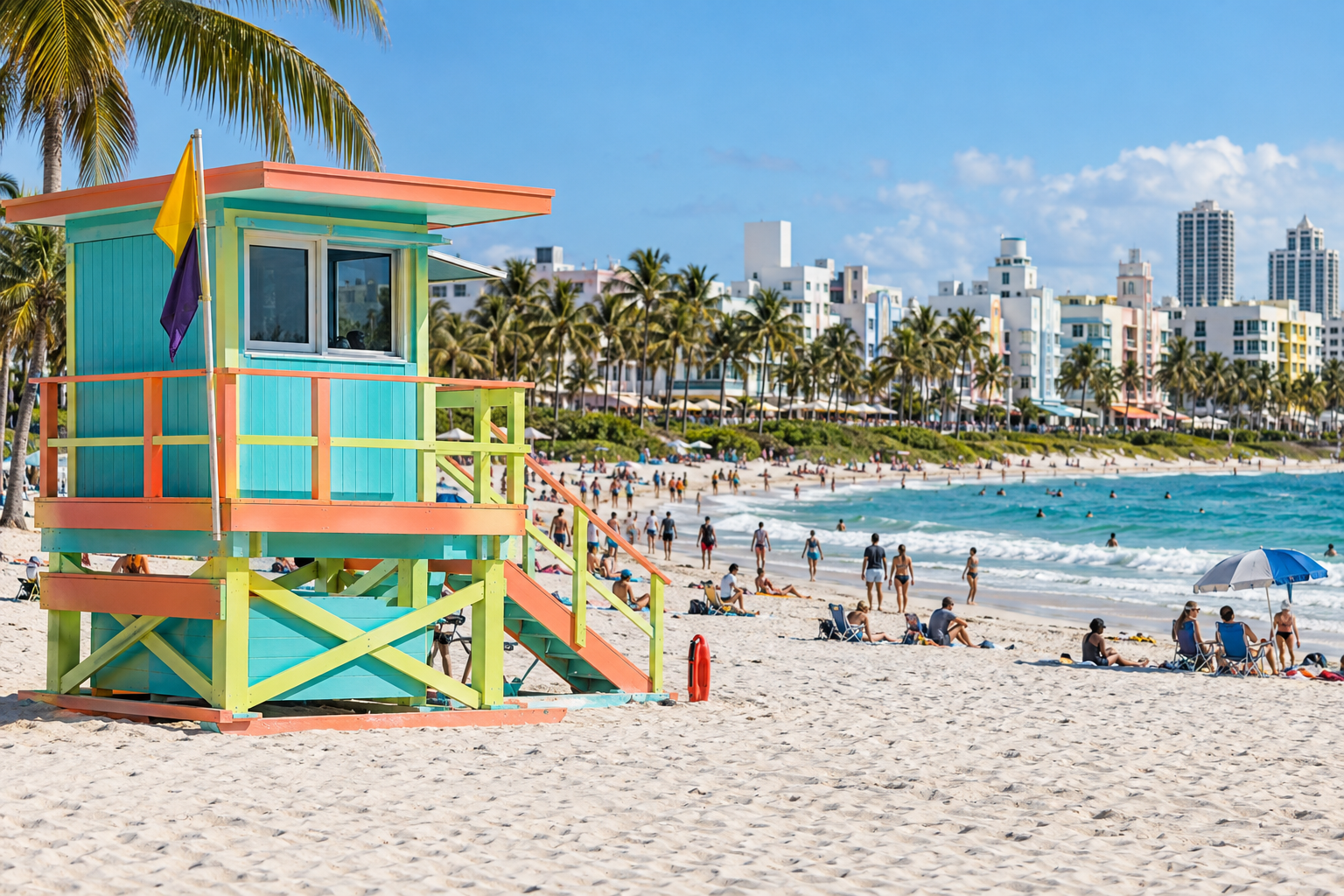
South Beach is the beach every visitor has already seen in photos, with the colorful lifeguard stands, the wide sand, and Ocean Drive’s art deco hotels across the street. Locals do go, mostly on weekday mornings, and mostly to the stretch south of 10th Street where the swimming is good and the lifeguard towers are close together.
The beach fronts Lummus Park, which has a paved path, showers and restrooms at several street ends, and a concession that rents loungers and umbrellas by the day. Prices for rentals are posted at the stands. No alcohol and no glass are allowed on the sand, no dogs either, and the City of Miami Beach enforces this in high season.
Parking is the pain point. City garages at 7th Street and 13th Street on Collins Avenue are the reliable choices, and street meters along Ocean Drive and Collins are both expensive and short-term. Pay through the city’s posted app and watch the rate, which climbs on event weekends.
Every March the city imposes spring break measures that in recent years have included early beach closures, road restrictions and curfews around Ocean Drive. If you are planning a March visit, check the City of Miami Beach site a week ahead.
From downtown, Metrobus route 120 (Beach MAX) runs across the MacArthur Causeway to Washington Avenue, and the free Miami Beach trolley loops the South Beach streets once you are over the bridge.
4. South Pointe Park Beach, Miami Beach
South Pointe is the southern tip of Miami Beach, a 17-acre park with a beach on one side and Government Cut, the shipping channel, on the other. The cutwalk along the rocks gives you an eye-level view of cruise ships leaving port on Saturday and Sunday afternoons, which is the closest thing Miami has to a free show.
The beach here is narrower than Lummus but the pier and jetty break up the current, and a lifeguard tower sits near the park. There is a playground, a splash fountain, clean restrooms and a grassy lawn where locals picnic at sunset with the downtown skyline lit up across the bay.
Parking is a mix of a small park lot and meters along Washington Avenue and South Pointe Drive. The 7th Street garage is a short walk if the lot is full. Surfers use the stretch just north of the jetty when a winter swell comes through; it is one of the few reliable breaks in Miami-Dade.
5. Haulover Beach Park, North Miami Beach
Haulover is the county’s big ocean park north of Bal Harbour: about a mile and a half of beach backed by real dunes rather than condo towers, with the Haulover Inlet at its southern end. The inlet funnels swell onto the beach, so this is where you come when you want actual waves and a strong breeze.
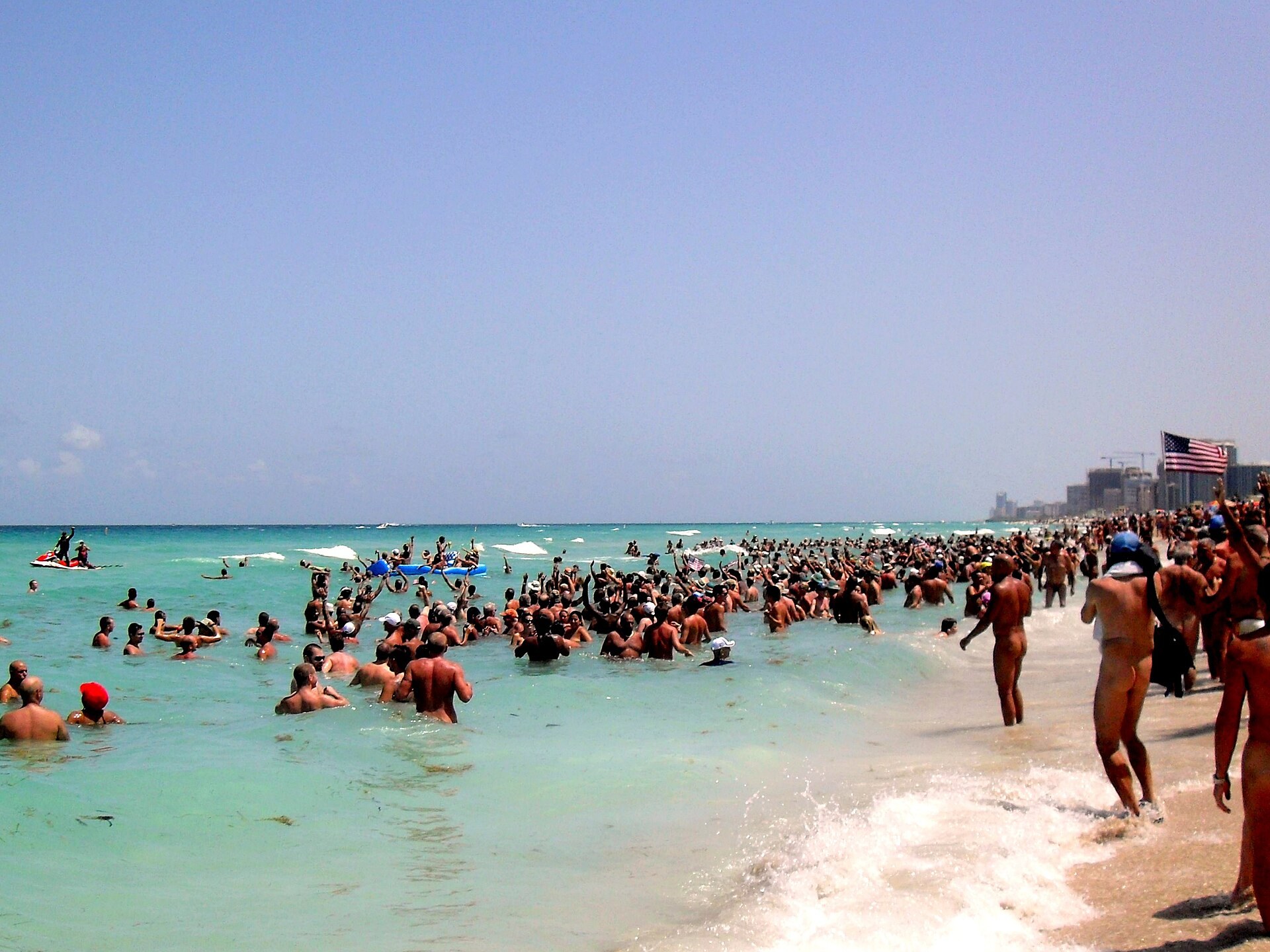
The north end of the park, clearly marked with signs between specific lifeguard towers, is the only legally recognized clothing-optional beach in South Florida. It has been that way for decades and is managed by the county with its own lifeguards. Families who want to avoid it simply park at the south lot and walk the other way.
Beyond the beach there is a kite field that fills with giant kites on windy afternoons, the Bill Bird Marina, a par-three golf course, picnic shelters and a concession. Parking is a per-vehicle fee paid at kiosks, and the lots run on both sides of Collins with a pedestrian tunnel under the road.
The inlet jetty draws anglers and spectators; on a rough day, watching boats negotiate the cut is a spectator sport in itself.
Good to know
The current near the inlet is serious. Swim between the flags in front of a staffed tower, never near the jetty rocks, and respect a red flag even if the water looks inviting.
6. North Beach Oceanside Park, Miami Beach
North Beach is where Miami Beach residents go when they want the ocean without the Ocean Drive crowd. The oceanside park between 79th and 87th Streets keeps a thick canopy of sea grape and native trees between the road and the sand, with picnic tables, a paved path and restrooms, so you can eat lunch in real shade before going back in.
The sand is wide, the lifeguard towers are staffed by Miami Beach Ocean Rescue, and the neighborhood behind it is a working one with Argentine bakeries and cafes along Collins and Harding. The Band Shell at 73rd Street hosts free concerts and a weekend market; check the city’s calendar if you want to combine the two.
City lots along Collins and metered street spaces fill later here than down south, and rates are lower. The Beachwalk, the paved path that now runs most of the way from South Pointe to 87th Street, makes this a good endpoint for a bike ride along the whole island.
7. Mid Beach (21st to 46th Street), Miami Beach
Mid Beach is the stretch of Miami Beach in front of the Fontainebleau, Faena and the other big resorts, and it is the easiest place on the island to find space on the sand. Public access points sit at every few street ends, and the old wooden boardwalk between 23rd and 46th, now mostly a paved beachwalk, runs behind the dunes the whole way.
The 21st Street beach next to Collins Park is the most practical entry, with a city lot, restrooms and the Bass Museum across the street if a storm comes in. Further up, Indian Beach Park at 46th Street has its own lot and showers and is the quiet default for people who live in the neighborhood.
Hotel beach clubs stake out their chairs but cannot claim the sand itself; everything seaward of their rental rows is public. Lifeguard towers are spaced further apart than on South Beach, so pick your spot near one.
Local tip
Weekday mornings at 35th Street are about as empty as Miami Beach gets. The hotels’ guests sleep in and the residents are at work.
8. Surfside and Bal Harbour Beach
Surfside is a small town wedged between North Beach and Bal Harbour with a beach that feels private because most of the parking is reserved for residents. Public access is at the street ends off Collins, and the Surfside Community Center at 93rd Street anchors the middle of the beach with restrooms and a few metered spaces.
Bal Harbour, immediately north, ends at the Haulover Inlet jetty. The public access by 96th Street puts you on wide, well-groomed sand in front of the Ritz-Carlton and St. Regis, and the jetty itself is the best sunrise spot on the north side of the county. Bal Harbour Shops sits directly across Collins if the heat wins.
Metered parking in both towns is limited and strictly enforced, so arrive early or take the Metrobus S route, which runs the length of Collins Avenue. The water here is similar to Haulover’s, with a bit more movement than the protected Key Biscayne beaches.
9. Sunny Isles Beach
Sunny Isles Beach is a two-mile wall of high-rises with a surprisingly good public beach in front of it. The city maintains access points every few blocks and three parks that matter: Pier Park beside the rebuilt Newport Fishing Pier, Samson Oceanfront Park a few blocks north, and Heritage Park, whose garage is the parking answer for most of the strip.
The pier charges a small fee to fish or walk out, and the water around it is a reliable spot for snook and tarpon in season. Lifeguards staff towers along the city’s beach, and the sand is cleaned nightly.
One real local trade-off: the towers throw long shadows across the sand by mid-afternoon, which is either a blessing in August or a nuisance if you came to tan. Morning is the better session here. Confirm current parking rates and pier fees on the City of Sunny Isles Beach site.
10. Historic Virginia Key Beach Park
Virginia Key Beach was the segregated Black beach of Miami from 1945 until the 1960s, and after decades of closure it reopened in 2008 as a city park with a restored carousel, a mini train, picnic areas and a nature trail through coastal hammock. The beach faces the ocean but sits in the lee of Key Biscayne, so the water is calmer than Miami Beach and the crowd is noticeably more local.
The park charges a per-vehicle fee on weekends and holidays and often opens for free on weekdays; the park’s own site lists the current schedule. It also hosts concerts and festivals that close the beach to general use, so check the events calendar before you go.
Next door, the Virginia Key North Point trails are the county’s main mountain bike network, and the Virginia Key Outdoor Center on the causeway rents kayaks and paddleboards for the mangrove channels behind the beach. Metrobus route 102 stops at the park entrance on its way to Key Biscayne.
11. Hobie Island Beach Park, Rickenbacker Causeway
Hobie Beach is the strip of bay-side sand along the Rickenbacker Causeway, and it is the best known dog beach in Miami-Dade. The water is knee deep and flat for a long way out, which makes it the home of the city’s windsurfing and kiteboarding schools and the easiest place to launch a paddleboard without a ramp.
There are no lifeguards, the bottom is sea grass and shell rather than soft sand, and water shoes are a good idea. Parking is pull-in spaces along the causeway shoulder paid through the posted app, and the spaces go early on winter weekends when the wind is up.
Nobody comes here for a classic beach day. You come to let the dog swim, rent a windsurfer, or sit on the tailgate at sunset with the skyline across the bay. For that, nothing else in the county compares.
12. Matheson Hammock Park, Coral Gables
Matheson Hammock has no ocean beach at all. Instead it has a man-made atoll pool, a circle of sand enclosing a saltwater lagoon that flushes with the tide, with water that rarely gets above a small child’s chest. For parents of toddlers it beats every surf beach on this list.
The pool faces Biscayne Bay with the Brickell skyline across the water, and the park behind it has mangrove trails, a marina, picnic shelters under old oaks and a waterfront restaurant. The county charges a per-vehicle fee, and the lot fills early on weekends because the whole South Miami and Coral Gables family crowd arrives at once.
Expect a strong sun with little shade on the sand, mosquitoes once the breeze drops at dusk, and some algae in the pool after a hot still week. Fairchild Tropical Botanic Garden is a few minutes south on Old Cutler if you want to pair the two.
13. Oleta River State Park, North Miami Beach
Oleta is the largest urban state park in Florida, a wedge of mangroves and hardwood hammock on Biscayne Bay in North Miami Beach. Its beach is small and bay-facing, more of a swim stop than a destination, but the water is calm and the setting is nothing like the rest of the county.
Most people come for the kayak and paddleboard rentals at the outdoor center, which put you into the mangrove channels of the Oleta River within minutes, and for the mountain bike trails that wind through the park for miles. Rustic cabins can be reserved for overnight stays.
Entry follows the state park vehicle rate, around $6 per car at the time of writing; confirm on the Florida State Parks site. The park closes at sunset. Bring bug spray and do not expect a lifeguard.
14. Homestead Bayfront Park
Homestead Bayfront is the far south answer to Matheson Hammock: another atoll pool on Biscayne Bay with a marina, a playground, picnic shelters and a restaurant, run by the county with a per-vehicle fee. For families in Homestead, Cutler Bay and the Redland it saves a 45-minute drive to the coast.
It sits next to the Dante Fascell Visitor Center of Biscayne National Park, so you can combine a morning in the pool with a boat tour or a snorkel trip out to the reefs and the keys of the national park. The pool is shallow and calm, the sand is coarse, and the crowd is almost entirely local.
Dog-friendly beaches in Miami and nearby
Miami-Dade is stingy with dog beaches. Hobie Island Beach on the Rickenbacker Causeway is the only place where dogs on a leash are welcome all day, every day, with no permit. Haulover Park runs a fenced dog beach area at certain hours; the schedule and any fee are posted on the Miami-Dade Parks site and change seasonally.
Miami Beach bans dogs on the sand from South Pointe to 87th Street, and the Key Biscayne parks do too. Rangers write tickets.
In Broward, Fort Lauderdale’s Canine Beach at Sunrise Boulevard and A1A opens for limited weekend hours and requires a city permit, and the Dog Beach of Hollywood operates on a similar weekend schedule at the north end of the Broadwalk. Jupiter’s dog beach in northern Palm Beach County is the regional favorite because it runs for more than two miles with no fee and no permit, though it is a 90-minute drive from Miami.
A dog-on-the-sand ticket written by Fort Lauderdale or county officers in Broward ends up with the broward county clerk of courts, the same office that handles other municipal citations there, if you decide to contest it.
When Miami-Dade is full: Broward and Palm Beach
South Floridians treat the three coastal counties as one long beach. When the Key Biscayne gate closes or the Miami Beach garages hit capacity, these are the standard alternatives within an hour.
| Beach | County | Why locals go | Watch out for |
|---|---|---|---|
| Hollywood Beach Broadwalk | Broward | 2.5-mile paved walk, cheap eats, garages | Weekend garage lines |
| Fort Lauderdale Beach | Broward | Wide sand, Las Olas, big lifeguard presence | Expensive meters on A1A |
| Dania Beach and Mizell-Eula Johnson State Park | Broward | Pier, natural dunes, uncrowded | State park fee, few shops |
| Lauderdale-by-the-Sea | Broward | Snorkel reef a short swim off the pier | Rocky entry, bring water shoes |
| Pompano and Deerfield piers | Broward | Fishing, surf, free street parking inland | Spring crowds |
| Red Reef Park, Boca Raton | Palm Beach | Nearshore reef for beginner snorkelers | Parking fee, small lot |
| Delray Beach municipal beach | Palm Beach | Atlantic Avenue right behind the sand | Meters fill by 10 a.m. |
| Juno Beach pier | Palm Beach | Turtle center next door, clear water | Long drive from Miami |
Tri-Rail does not reach the sand, but it gets you to Hollywood, Fort Lauderdale and Boca Raton stations, where Broward County Transit and Palm Tran buses finish the trip to A1A.
Getting to Miami beaches without a car
Rail does not cross to the barrier islands, so every transit route involves a bus for the last leg.
From downtown Miami or Brightline’s MiamiCentral station, Metrobus route 120 Beach MAX crosses the MacArthur Causeway to South Beach in about 20 minutes outside rush hour. Once on the island, the free Miami Beach trolley system runs separate North, Middle and South Beach loops.
Metrobus route S runs the full length of Collins Avenue from downtown through Mid Beach, North Beach, Surfside, Bal Harbour and Haulover to Sunny Isles and Aventura, which makes it the single most useful beach bus in the county.
For Key Biscayne and Virginia Key, take Metrorail to Brickell and transfer to Metrobus route 102, which stops at Virginia Key Beach, Crandon Park and the village before ending near Bill Baggs. Cyclists use the causeway’s separated path; the climb over the William Powell Bridge is the only real hill in Miami.
Rideshare works everywhere but surge pricing on a Saturday evening off Key Biscayne or Ocean Drive routinely doubles the fare. Agree on a pickup spot away from the beach exits.
Flags, rules and safety on Miami-Dade sand
Lifeguards on Miami Beach and at the county parks fly the standard warning flags, and knowing them is the one piece of local knowledge that matters most.
| Flag | Meaning | What to do |
|---|---|---|
| Green | Low hazard, calm surf | Swim near a tower anyway |
| Yellow | Moderate surf or currents | Weak swimmers stay waist deep |
| Red | High surf or strong currents | Experienced swimmers only, near a tower |
| Double red | Water closed | Stay out, no exceptions |
| Purple | Dangerous marine life | Jellyfish or man-of-war, usually winter |
Rip currents are the main killer on Florida beaches, and they are most common at Haulover and near any jetty or pier. If you are pulled out, swim parallel to the shore until you are free, then angle back in. Do not fight it directly.
The rules are consistent across the county: no alcohol on the sand, no glass, no open fires, no dogs except where noted, and no sleeping on the beach overnight. Miami Beach restricts tents and large canopies during peak periods. Sea turtle nesting season runs May through October; fill in any holes you dig, flatten sandcastles before you leave, and keep flashlights off the beach after dark.
Good to know
Summer afternoons bring a lightning storm almost every day between 2 and 5 p.m. Lifeguards clear the water when thunder is audible. Plan a morning session and treat the afternoon as a bonus.
When to get help
Walk to the nearest lifeguard tower for any swimmer in trouble, lost child, jellyfish sting or heat illness; the towers have radios, first aid and direct contact with fire rescue. For emergencies call 911. For park rules, fee disputes and lost property at Crandon, Haulover, Matheson or Homestead Bayfront, contact the Miami-Dade Parks office listed on the county site.
Best time to go
Winter, December through March, is the comfortable season: dry air, highs in the mid 70s, and the ocean on the cool side for Floridians but fine for everyone else. The trade-off is crowds, high parking rates and, in March, spring break on Miami Beach.
Summer is hotter and stormier but the ocean is bathwater warm, the mornings are gorgeous, and the beaches north of Haulover and on Key Biscayne are half empty on weekdays. The catches are sargassum, which can pile up on the east-facing beaches from late spring into early fall, and hurricane season from June 1 through November 30, when a tropical system can close every beach for a day or two.
Shoulder months, late April through May and late October through November, are the sweet spot for locals: warm water, thinner crowds, and lower hotel and parking rates. If a storm wipes out your afternoon, the standard rainy-day fallback for families is the dolphin mall out by the Turnpike, which has the parking and the indoor space the beach towns lack.
FAQ
Which Miami beach has the calmest water for kids?
Crandon Park, thanks to its offshore sandbar, is the calmest ocean beach, and Matheson Hammock’s atoll pool is the calmest water of any kind. Hobie Beach is shallow too, but it has no lifeguards and a grassy bottom.
Are Miami beaches free?
The sand is free everywhere in the county. What you pay for is parking: city garages and meters on Miami Beach, per-vehicle fees at the county parks (Crandon, Haulover, Matheson, Homestead Bayfront), and a vehicle entry fee at the two state parks, Bill Baggs and Oleta. Walking or cycling in is free or nearly free at all of them.
Can you drink alcohol on Miami beaches?
No. Alcohol is prohibited on the sand across Miami Beach and the county and state parks, and officers do write citations in high season. Beachfront bars and hotel decks are where drinking happens.
Is Miami Beach the same as Miami?
No. Miami Beach is a separate city on a barrier island east of Miami, connected by causeways, and it contains South Beach, Mid Beach and North Beach. Key Biscayne, Surfside, Bal Harbour and Sunny Isles Beach are also separate municipalities. “Miami beaches” in practice means all of them plus the county parks.
Where is the nude beach in Miami?
The north end of Haulover Beach Park, between the lifeguard towers marked with signs, is the county’s designated clothing-optional beach. The rest of Haulover and every other beach in the county is clothing required.
Which beaches have lifeguards?
Miami Beach Ocean Rescue staffs towers from South Pointe to 87th Street daily. Miami-Dade Ocean Rescue covers Crandon, Haulover and the Sunny Isles and Surfside stretches. Bill Baggs has lifeguards on the main beach, while Hobie Beach, Oleta’s beach and the atoll pools at Matheson and Homestead have limited or no lifeguard coverage; check the posted signs when you arrive.
Where can I find current hours and fees?
The City of Miami Beach site for its parking and beach rules, the Miami-Dade Parks site for county park fees and hours, the Florida State Parks site for Bill Baggs and Oleta, and each small town’s site (Surfside, Bal Harbour, Sunny Isles Beach, Key Biscayne) for local parking. Hours and rates change seasonally, so confirm the morning you go.
