
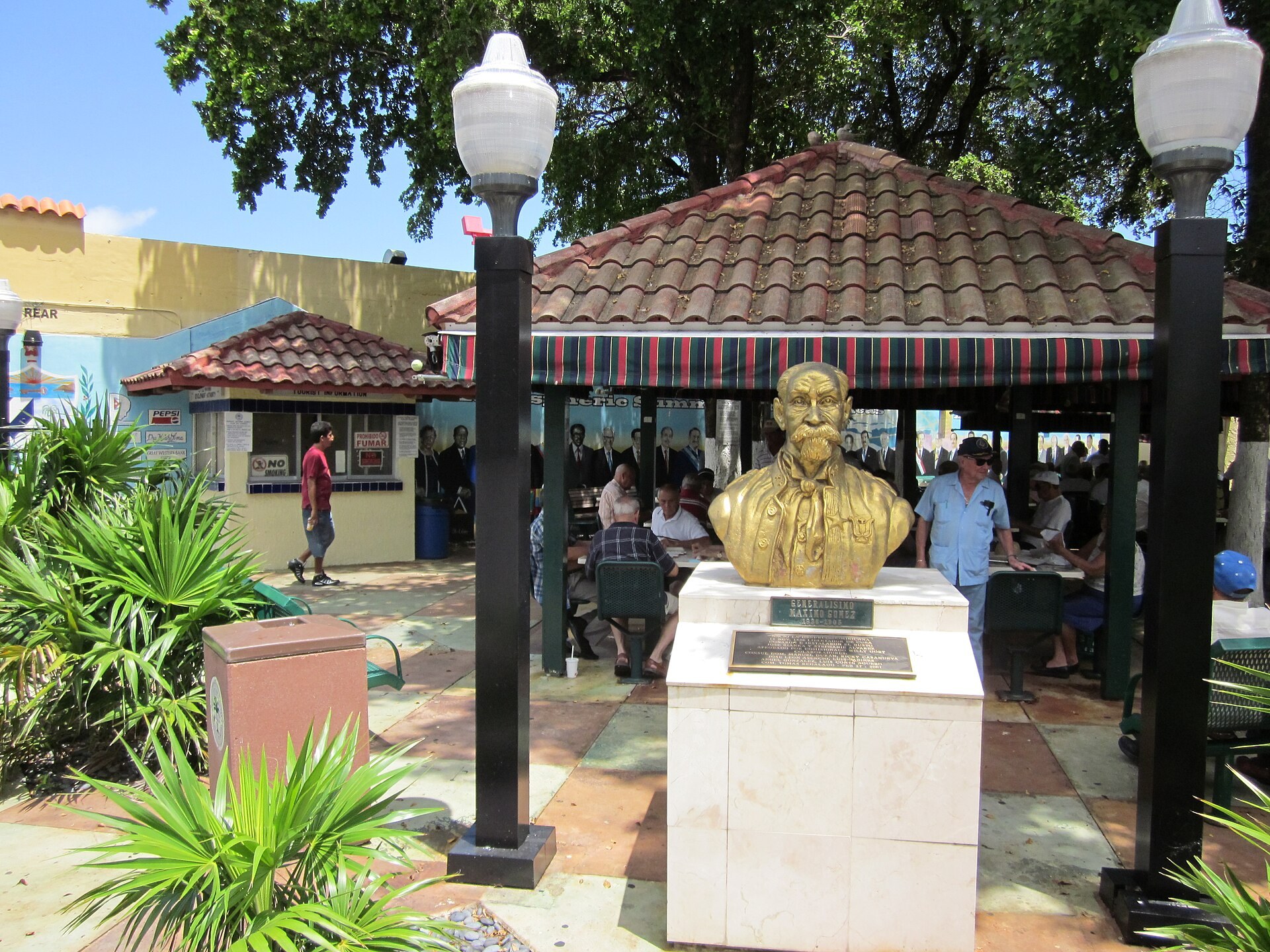
Cuban food in Miami means slow-cooked pork, shredded beef, black beans, fried plantains, pressed sandwiches and very sweet espresso, and the best of it is served in Little Havana, Westchester, Hialeah and a handful of Broward and Palm Beach strip malls rather than on Ocean Drive. This guide covers the dishes worth ordering, how to order them, and the specific restaurants where residents actually eat, from Versailles on Calle Ocho to Old’s Havana, Havana 1957 and Marabú.
Quick steps: eat Cuban in Miami like a local
- Start at a ventanita with a cafecito and a croqueta.
- Order lunch at a counter spot on Calle Ocho or Flagler.
- Pick one main: ropa vieja, lechón or vaca frita.
- Add a side of moros or maduros, never skip the yuca.
- Finish with flan or a pastelito de guayaba.
- Book dinner at Marabú, Old’s Havana or Havana 1957.
- End the night with a daiquiri at Café La Trova.
What you need
- Cash for ventanitas and older counters (most take cards, a few prefer cash)
- A few words of Spanish for the window: cafecito, colada, croqueta, pastelito
- Reservations for weekend dinner in Brickell and South Beach
- Loose clothing and an appetite; portions run big
- The restaurant’s own website or social page to confirm hours
What Cuban cuisine actually is
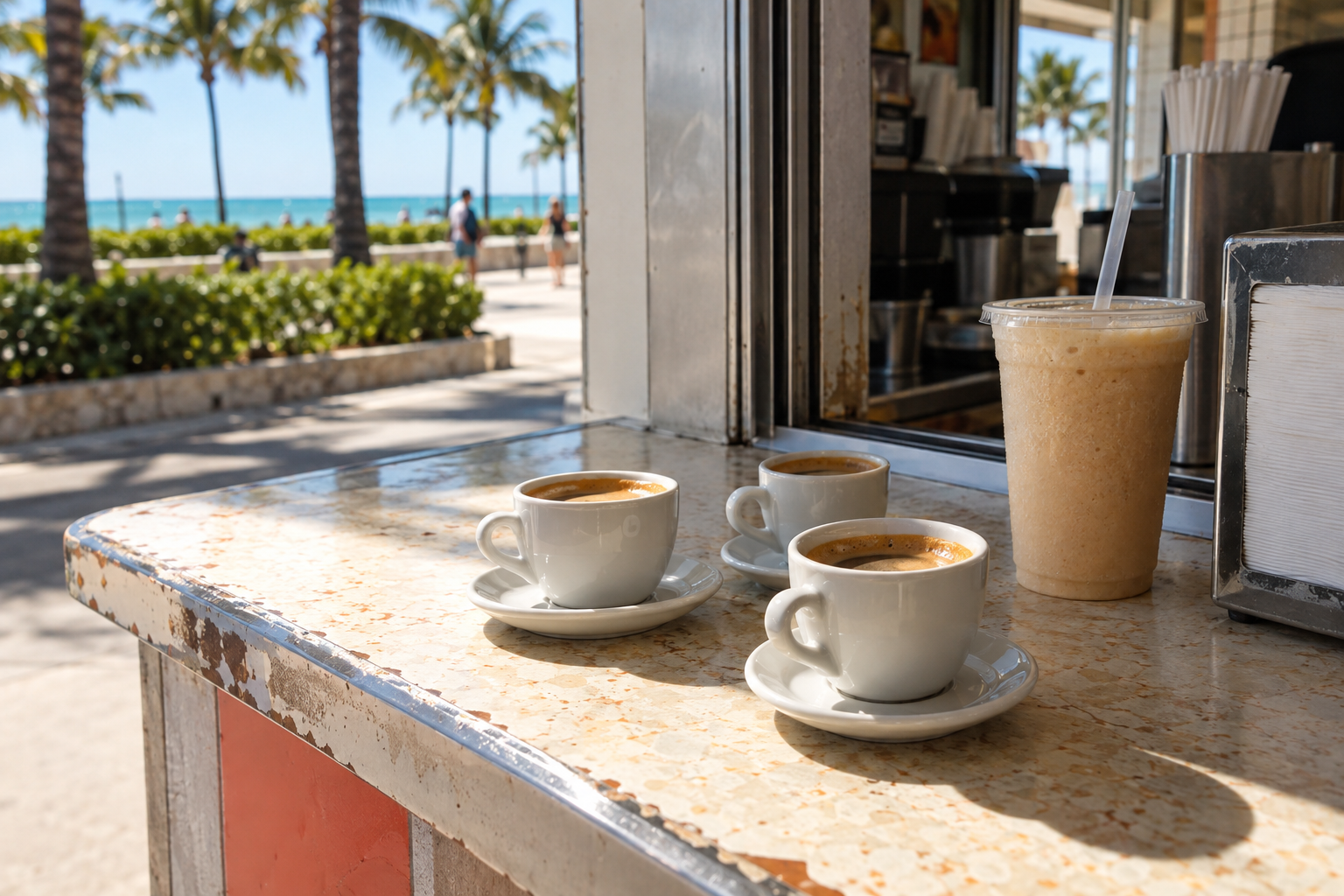
Cuban cuisine is Spanish cooking that moved to the Caribbean and picked up African and Taíno ingredients along the way. Pork, rice, beans, root vegetables, garlic, citrus and cumin do most of the work. Almost nothing is spicy. The flavour comes from sofrito (onion, green pepper, garlic cooked down in oil), mojo (sour orange juice with garlic and oregano) and long, slow cooking.
Miami matters because it is the largest Cuban community outside Cuba, and the food here is often richer and more generous than what you would find on the island today. Ingredients that are scarce in Havana, beef above all, are everyday here. So dishes like vaca frita and palomilla steak are arguably more “Miami Cuban” than Cuban.
The culture around the food is as important as the recipes. Lunch is the big meal. Coffee happens at a walk-up window called a ventanita, standing up, several times a day. Sunday is for family tables that stretch for three hours. If you want to understand the city, eat the way it eats.
The 12 dishes to try, and what to order them with
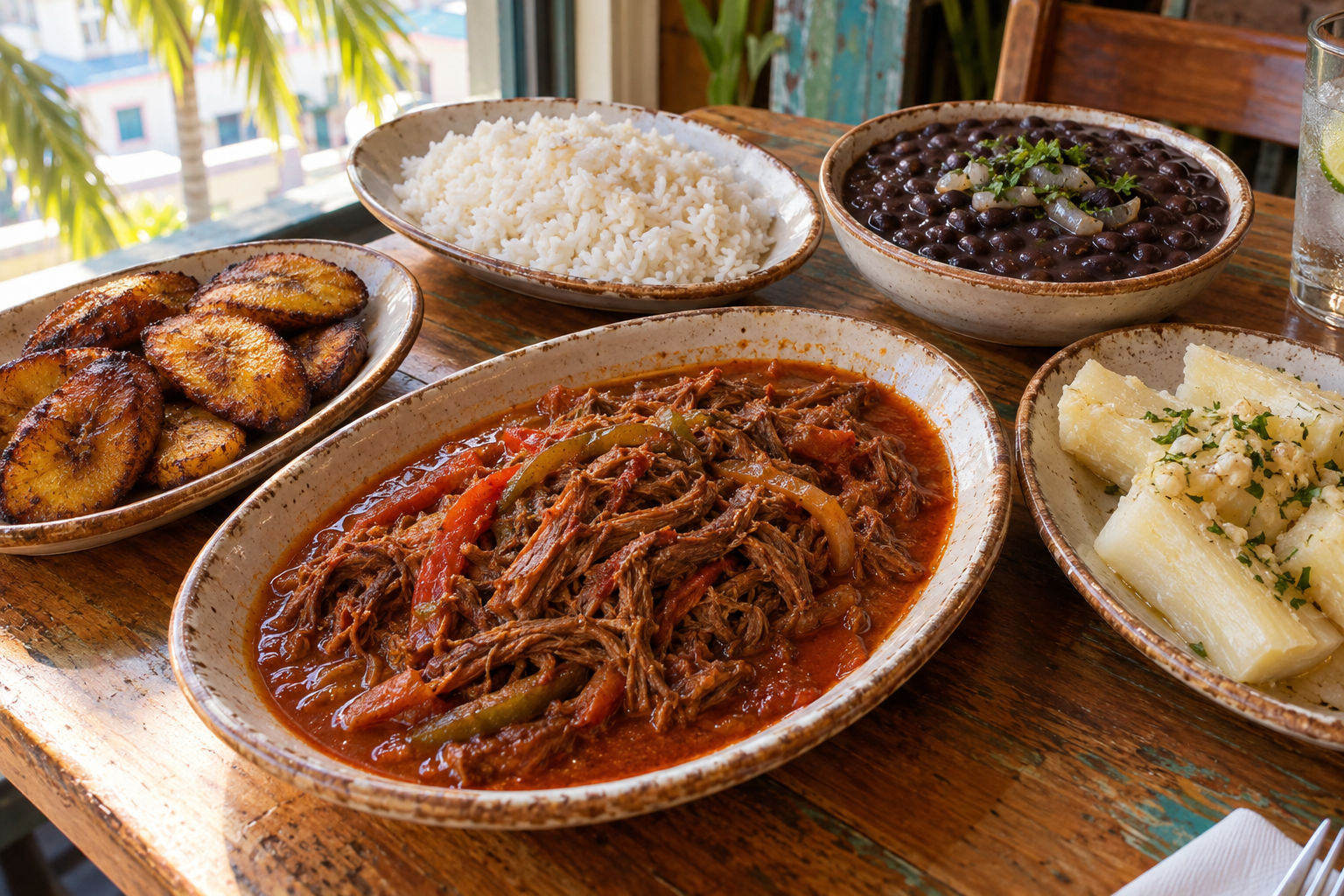
| Dish | What it is | Best order | Where locals get it |
|---|---|---|---|
| Cubano | Pressed ham, roast pork, Swiss, pickles, mustard on Cuban bread | Lunch, to go | Sanguich de Miami, Enriqueta’s |
| Medianoche | Same filling on soft sweet egg bread | Late night | Versailles, Las Olas Cafe |
| Ropa vieja | Shredded flank steak in tomato sofrito | With white rice and maduros | Islas Canarias, Old’s Havana |
| Lechón asado | Mojo-marinated roast pork | With moros and yuca | El Palacio de los Jugos, Versailles |
| Vaca frita | Crispy fried shredded beef with onions | With lime, black beans | Islas Canarias, La Carreta |
| Picadillo | Ground beef with olives and raisins | Over white rice | Any counter spot, home kitchens |
| Moros y cristianos / congrí | Rice cooked with black beans | Side with everything | Everywhere |
| Tostones and maduros | Fried green plantain, fried ripe plantain | Order both | Everywhere |
| Yuca con mojo | Boiled cassava in garlic citrus | Side with lechón | Palacio de los Jugos |
| Croquetas | Fried ham or chicken béchamel fingers | Breakfast, snack | Islas Canarias, Sergio’s |
| Pastelitos | Flaky pastry with guava, cheese or meat | With cafecito | Vicky Bakery, Karla Bakery |
| Flan and tres leches | Caramel custard; milk-soaked cake | Dessert | Versailles, Marabú |
Cuban sandwiches: Cubano vs. medianoche
Both sandwiches use the same filling: sweet ham, mojo roast pork, Swiss cheese, dill pickles and yellow mustard. The difference is the bread and the time of day you eat it.
| Cubano | Medianoche | |
|---|---|---|
| Bread | Cuban bread, crisp crust, lard in the dough | Pan suave, soft sweet egg bread |
| Size | Long, flat, pressed hard | Smaller, pillowy, pressed lightly |
| When | Lunch | After midnight (that is what the name means) |
| Tampa variation | Adds salami | Not a thing |
| Miami rule | No salami, no lettuce, no tomato | Same rule |
Miami takes the no-salami rule seriously. The Tampa version is a separate argument you can have in Ybor City. Here, if a menu lists lettuce or mayo on a Cubano, that is a sign to eat somewhere else.
The hallmark of a good one is the press. The bread should shatter slightly when you bite, the cheese should be fully melted, and the pork should be sliced from a real roast rather than deli meat. Sanguich de Miami on Calle Ocho cures its own ham and roasts its own pork, and the result is the sandwich most chefs in town point to. Enriqueta’s Sandwich Shop in Edgewater is the older, cheaper, louder version, with a line of contractors and lawyers at the counter by 11:30.
Ropa vieja
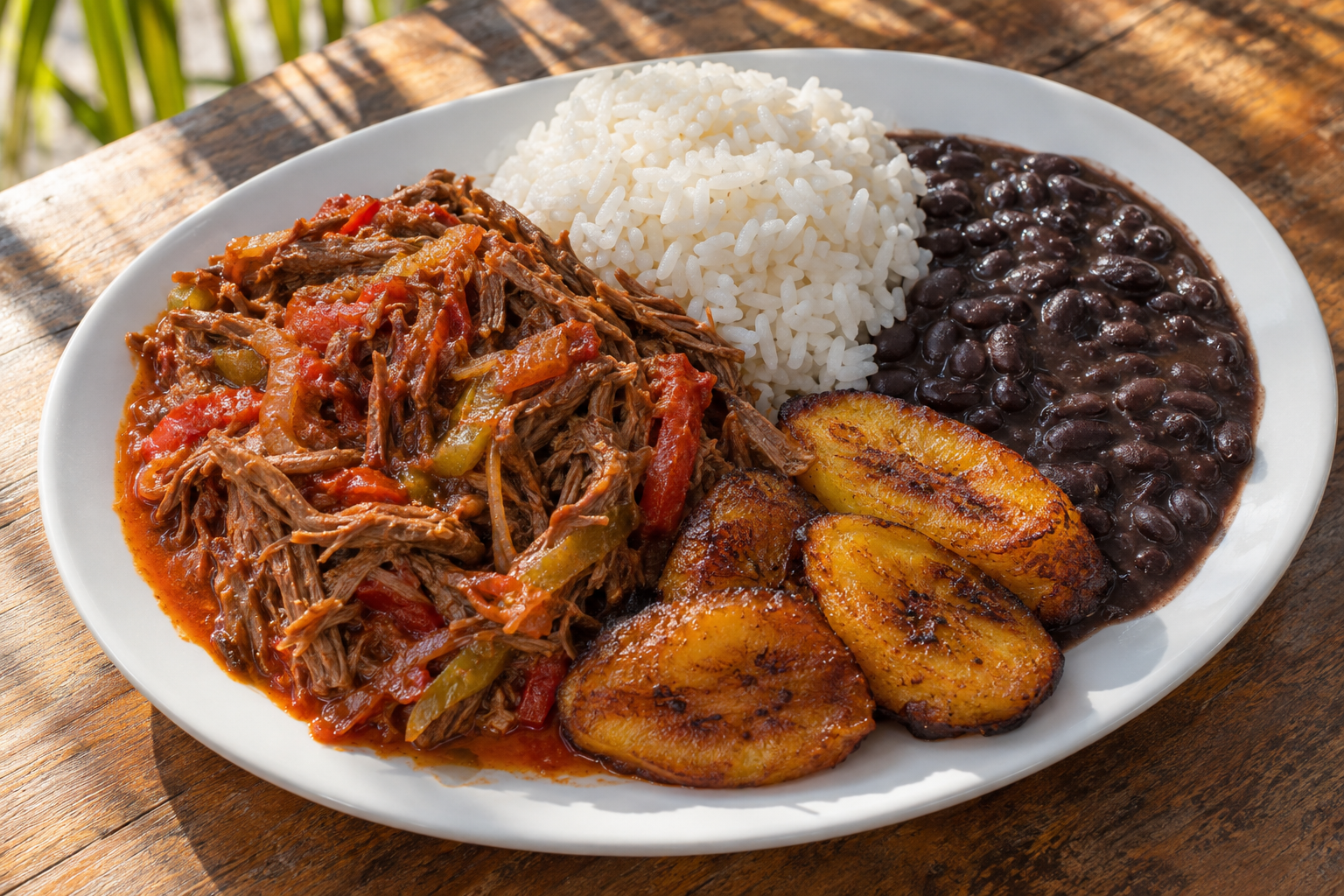
Ropa vieja translates as “old clothes,” because the shredded beef looks like rags. Flank steak is boiled until it falls apart, then stewed in a tomato sofrito with peppers, cumin and a splash of wine. It is the dish most visitors order first, and it is a fair test of a kitchen. Dry, stringy ropa vieja means a reheated batch. Good ropa vieja is glossy and wet and pools under the rice.
Order it with white rice, black beans on the side and maduros. Islas Canarias in Westchester makes a version many Cuban grandmothers in that neighbourhood will admit is better than their own. Old’s Havana on Calle Ocho does a tourist-friendly plate that still holds up.
Lechón asado
Lechón is a whole pig or pork shoulder marinated overnight in mojo and roasted until the skin crackles. Every Cuban family cooks one on Noche Buena, December 24, often in a caja china, the plywood roasting box you will see on sale outside Hialeah hardware stores in December.
The year-round place to eat it is El Palacio de los Jugos, a chain of open-air cafeteria markets that started on Flagler Street. You point at trays of pork, chicharrón, yuca and moros, pay by the pound at the counter, and eat at plastic tables next to a juice bar pressing sugarcane. It is loud, cheap and the most Cuban hour you will spend in Miami. The original location on West Flagler at 57th Avenue is the one to visit.
Vaca frita and palomilla
Vaca frita starts the same way as ropa vieja, with boiled shredded flank, but then the meat is marinated in lime and garlic and fried hard in a pan until the edges crisp. It comes topped with sautéed onions. Squeeze more lime on it. This is the dish to order when you are tired of stewed food.
Bistec de palomilla is a thin top-round steak, pounded flat, marinated in sour orange and fried fast with onions. It is cheap, fast and on every counter menu in the city. La Carreta, the sister chain to Versailles, does a dependable one, and there is a La Carreta inside the terminal at “miami international airport” if you need a last plate of moros before a flight.
Picadillo
Picadillo is Cuban weeknight food: ground beef cooked down with sofrito, tomato, green olives and, in most families, raisins. It is sweet and salty at once. Restaurants serve it over white rice with fried eggs on top, and the leftovers become the filling for empanadas and papas rellenas (stuffed, fried mashed potato balls) the next day. If a Cuban coworker brings lunch from home, it is probably picadillo.
Congrí and moros y cristianos
These are the two rice-and-bean dishes, and people use the names loosely. Moros y cristianos (“Moors and Christians”) is white rice cooked together with black beans. Congrí is technically the same idea made with red beans, and it is the eastern Cuban term, but in Miami most places call black-bean rice “moros” or “congrí” interchangeably.
The distinction that matters is on the plate: moros is rice and beans cooked together, “arroz blanco y frijoles negros” is white rice with a separate ladle of black bean soup. Ask for the second if you want beans you can taste on their own. The bean soup should be thick, dark and a little sweet from green pepper. Watery beans are a bad sign.
Tostones, maduros and yuca
Plantain shows up in two forms. Tostones are green plantain, sliced thick, fried, smashed flat and fried again, then salted. They should be crisp and a little starchy, like a thick potato chip, and they want a dip of mojo or a squeeze of lime. Maduros are ripe plantain, fried soft until the edges go black and caramelised. They are sweet and go with anything stewed.
Yuca con mojo is boiled cassava root dressed in hot garlic and sour orange oil. Get it with lechón. Fried yuca (yuca frita) shows up on bar menus, and Ball & Chain on Calle Ocho does a decent version to go with cocktails.
Croquetas, pastelitos and other snacks
Cuban snacks are what you eat standing at a ventanita between 7 and 10 a.m. or at 3 p.m. when everyone needs a second coffee. The lineup is nearly fixed: croquetas (fried fingers of ham or chicken in thick béchamel), pastelitos (flaky pastry filled with guava, guava and cream cheese, or picadillo), empanadas, and tostada, which is Cuban bread split, buttered and pressed flat.
Bakeries do these better than restaurants. Vicky Bakery and Karla Bakery are the two neighbourhood chains most families use; both have multiple locations across Miami-Dade, and Vicky has pushed into Broward. Islas Canarias runs a separate bakery and its croquetas are the ones people drive across the county for.
Seafood
Cuba is an island, so the seafood tradition is real, even if Miami’s Cuban restaurants lean toward pork. Look for camarones enchilados (shrimp in a mild tomato-garlic sauce, nothing like Mexican enchiladas), pescado a la plancha (grilled whole snapper or a fillet with mojo) and arroz con mariscos.
The best Cuban seafood lunch in the city is at La Camaronera on West Flagler, a fish market with a standing counter and a few small tables that bills itself as the home of the pan con minuta: a whole fried snapper, tail still attached, on a bun with onions, ketchup and tartar sauce. It is the one place in this guide where you may have to stand to eat. Go before noon.
Hearty breakfasts
Cuban breakfast is bread, coffee and eggs, in that order of importance. A standard order is tostada with café con leche, or huevos (fried or scrambled) with ham, served with Cuban toast and a cafecito. Some counters do a Cuban “sandwich de desayuno” with egg, ham and cheese on pressed bread.
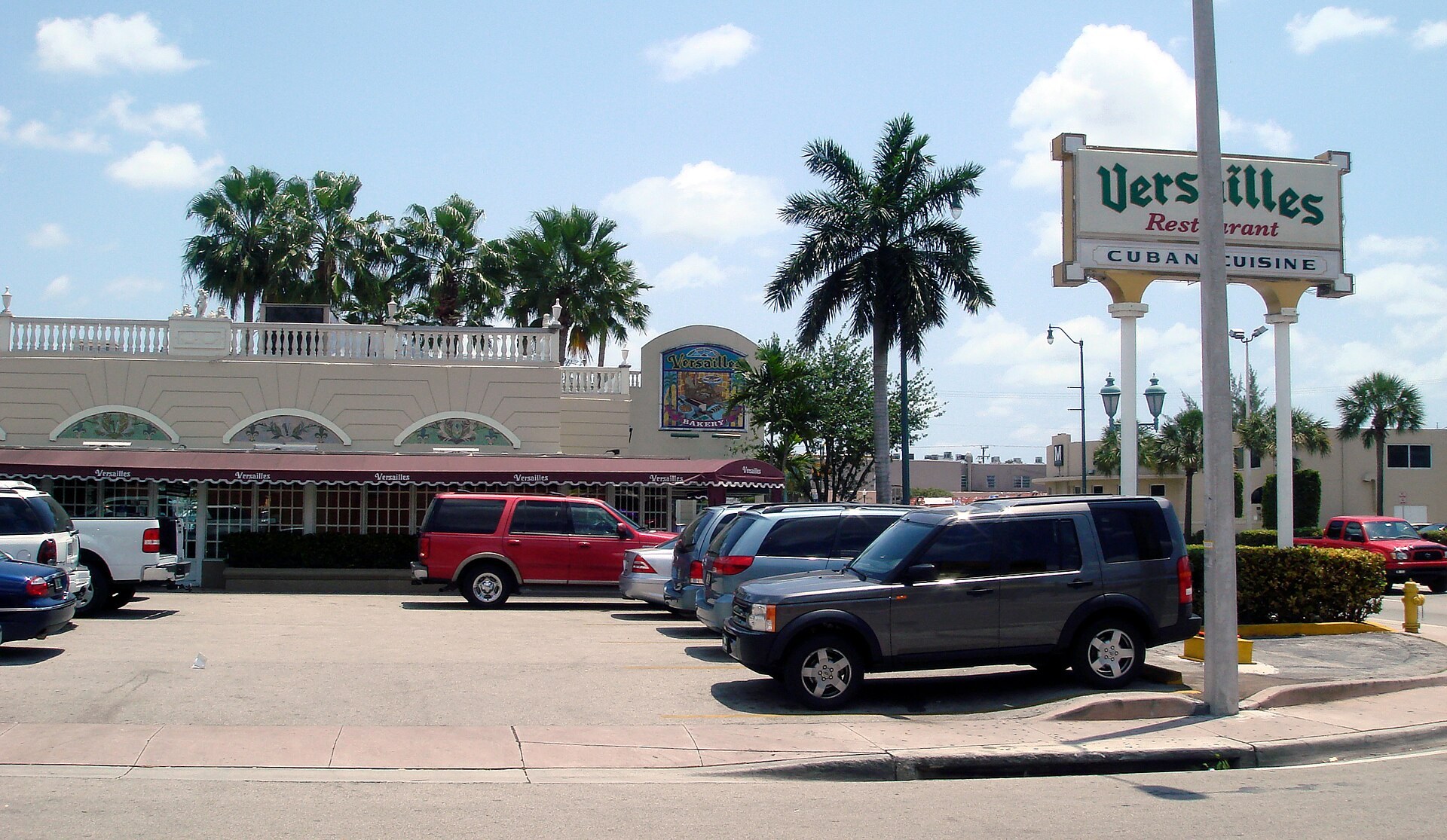
Versailles opens early and has a proper dining room breakfast. La Carreta and Sergio’s are the family-friendly versions. For the true Miami experience, though, take your café con leche at the Versailles ventanita on the SW 8th Street sidewalk, where retirees have been arguing about politics since 1971.
Desserts
Flan is the baseline: dense caramel custard, often made with condensed milk, sometimes with cream cheese (“flan de queso”) for a thicker texture. Tres leches is sponge soaked in three milks. Arroz con leche is rice pudding with cinnamon. Natilla is a thinner vanilla custard. Most counters also sell guava shells in syrup with a slice of white cheese, which is the dessert your abuela would order.
Azucar Ice Cream Company on Calle Ocho, directly across from Ball & Chain, makes Cuban flavours like Abuela Maria (vanilla with guava, cream cheese and galletas Maria) and is the right end to a Little Havana walk.
Cuban coffee, decoded
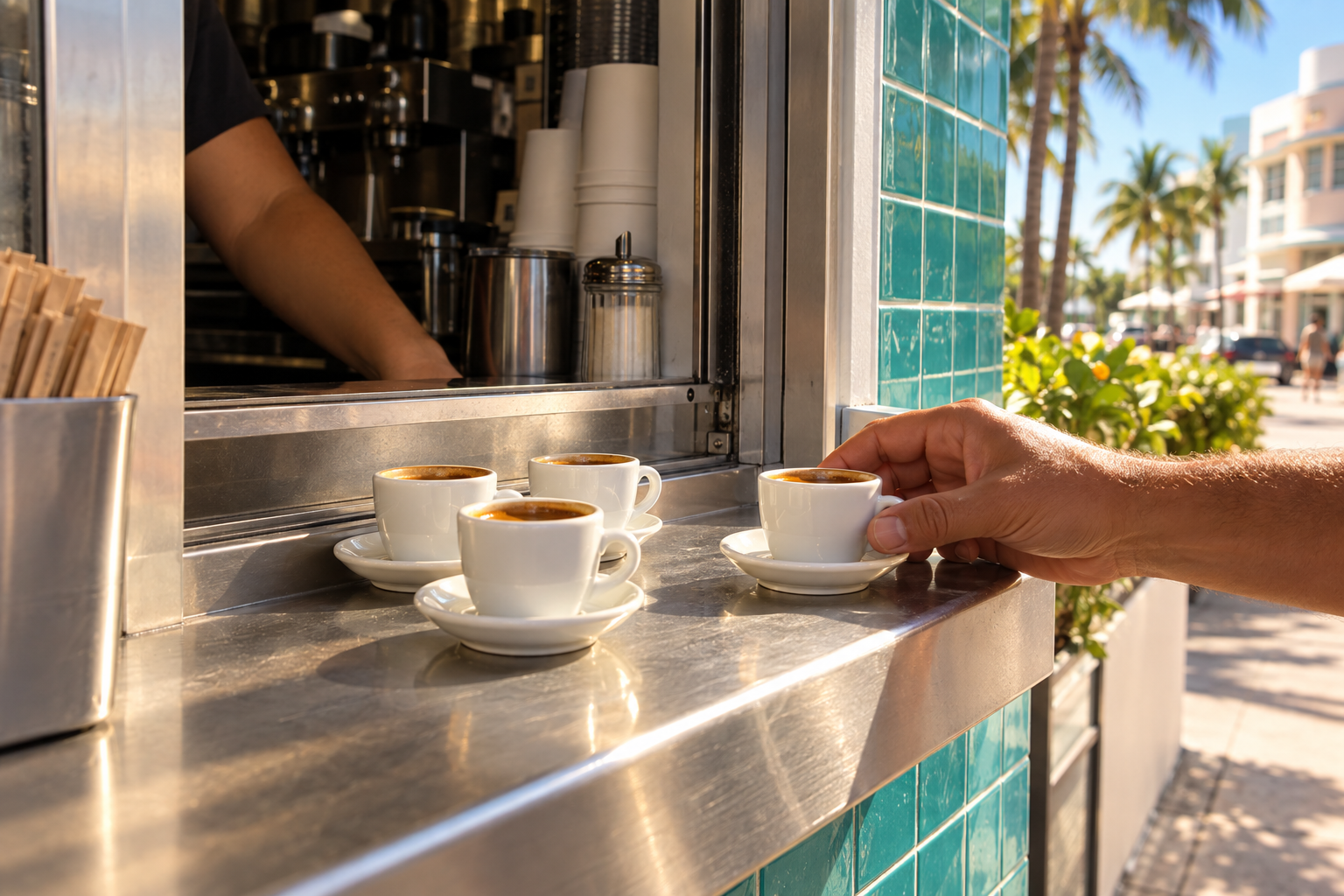
| Order | What you get | When |
|---|---|---|
| Cafecito / café cubano | A shot of espresso whipped with sugar into a foam (espumita) | Any time, standing at the window |
| Colada | A paper cup of cafecito with a stack of thimble cups to share | For the office or group |
| Cortadito | Cafecito cut with a splash of steamed milk | Mid-morning |
| Café con leche | Espresso in a cup of hot milk | Breakfast, with tostada |
A colada is meant to be shared. Taking a full colada to your desk and drinking it alone is a Miami rite of passage, and also why you will not sleep. The coffee itself is usually Café Bustelo or Pilón, the same brands you will find on the shelf at any Publix; the trick is the espumita, which the ventanita makes by beating the first few drops of espresso with sugar until it turns pale.
Rum cocktails and where to drink them
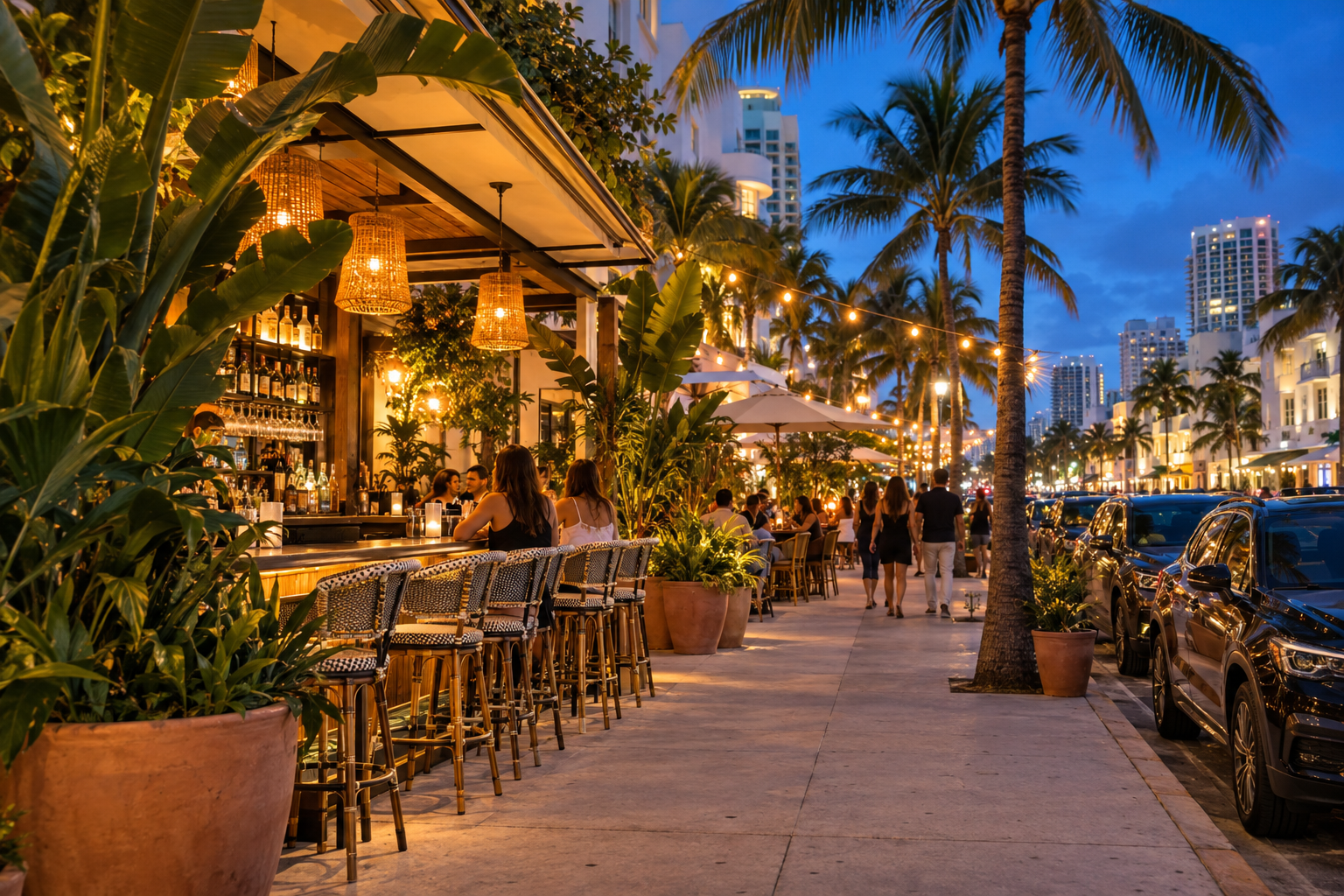
The classic Cuban drinks are the mojito (white rum, lime, sugar, mint, soda), the daiquiri (rum, lime, sugar, shaken or frozen), the Cuba libre (rum, cola, lime) and the Hemingway daiquiri (grapefruit and maraschino added). Because of the embargo you will not get Havana Club from Cuba; Miami bars pour Bacardí, which started in Santiago de Cuba in 1862 and now runs its North American operations from Coral Gables.
Café La Trova on Calle Ocho is the serious address. Chef Michelle Bernstein handles the food and Julio Cabrera, a cantinero trained in Cuba’s bartending tradition, runs the bar in a white jacket. Ball & Chain, a few blocks west, is the rowdier option with a live band most nights and a back patio built around a pineapple-shaped stage. Old’s Havana, between the two, has the longest cocktail list for tourists and a good mojito.
Where to eat: Miami-Dade
Versailles Restaurant
Versailles is the most famous Cuban restaurant in the world, and it has earned its status without being the best kitchen in the city. Go for the room (mirrors, chandeliers, green vinyl booths), the breakfast, the pastry counter next door and the ventanita on the sidewalk. Order the ropa vieja or the palomilla, ask for extra maduros, and finish with flan. Politicians campaign here, and when something happens in Cuba, news crews set up in the parking lot. It opens early and closes late most nights; confirm current hours on the restaurant’s website, since holiday schedules shift.
Old’s Havana Cuban Bar & Cocina
Old’s Havana sits in the busiest block of Calle Ocho, a short walk from Ball & Chain and Domino Park, and it is built for visitors: a colonial-style dining room, a sidewalk patio, a long rum list and musicians most evenings. The menu covers every pillar dish and the lechón and ropa vieja are both solid. It is pricier than counter spots a mile west, and weekends draw tour groups. Book ahead on weekend nights and expect a wait for the patio even then. Hours and the live-music schedule are posted on the restaurant’s own site and social pages.
Havana 1957
Havana 1957 is a small chain with a retro theme (the name refers to pre-revolution Havana), and its anchor location on Española Way in Miami Beach is the easiest Cuban dinner if you are spending the day on “miami beaches” and do not want to cross the bridge. There are additional locations on Ocean Drive and Lincoln Road, and in Pembroke Pines for Broward residents. The food is reliable rather than remarkable: vaca frita, churrasco, a long cocktail list and a decent Cubano. Mojitos are the draw. Check the chain’s website for the current list of locations, because South Beach restaurants change often.
Marabú Restaurant
Marabú is the modern end of the spectrum, a Cuban restaurant in “miami brickell” run by a team with roots in Havana’s privately owned paladar scene. The menu starts with familiar names (ropa vieja, lechón) and plates them with a chef’s hand, alongside grilled seafood and a wine list you will not find on Calle Ocho. Prices match the neighbourhood. Reserve ahead for weekend dinners; the host stand and hours are listed on the restaurant’s site.
Sanguich de Miami
A narrow counter a few blocks west of the main tourist strip, Sanguich cures and roasts its own meats and bakes to its own spec, and the Cubano and medianoche are the standard by which the rest of the city is judged. Also get the croquetas and a batido (milkshake) made with real fruit. Seating is limited, so lunch means a line.
Islas Canarias
Islas Canarias is the restaurant Cuban Miamians name when you ask where they eat on Sundays. It is in a shopping plaza in Westchester, far from any tourist route, with a full dining room and a separate bakery counter. The croquetas are the famous item. The vaca frita and the arroz con pollo are the mains to split with a table.
El Palacio de los Jugos
Covered above under lechón. Bring cash to be safe, point at what you want, and pay by weight. The sugarcane juice (guarapo) and the mamey batido are the drinks. El Palacio de los Jugos has several other locations across Miami-Dade and the chain’s site lists them.
Enriqueta’s Sandwich Shop
A diner counter in Edgewater that has survived the condos going up around it. The pan con bistec (thin steak, onions, potato sticks on Cuban bread) is the order, with a cortadito. Lunch is a crush; mornings are calm.
Where to eat: Broward and Palm Beach
| Restaurant | City | Known for | Notes |
|---|---|---|---|
| Padrino’s Cuban Cuisine | Plantation, Hallandale Beach, Boca Raton | Family dining, ropa vieja, mojitos | Multiple locations since the 1970s; check the chain’s site for current list |
| Las Vegas Cuban Cuisine | Hollywood, Fort Lauderdale, Davie, Pembroke Pines, Boca Raton | Big portions, churrasco, late hours | Broward’s go-to chain; locations vary, confirm online |
| Havana 1957 | Pembroke Pines | South Beach chain, suburban outpost | Same menu as the beach, easier parking |
| Havana’s Cuban Cuisine | West Palm Beach, S Dixie Hwy | 24-hour walk-up window, Cubanos | The ventanita runs around the clock; dining room hours posted on site |
| Don Ramon | West Palm Beach, S Dixie Hwy | Old-school dining room, lechón | Palm Beach County’s family-table pick |
Havana’s in West Palm Beach deserves a specific mention because its walk-up window serves coffee and Cuban sandwiches 24 hours a day, which makes it the north end of South Florida’s late-night Cuban food map. Padrino’s and Las Vegas are the two names Broward families argue about; both are chains, both are consistent, and both are easier to park at than anything on Calle Ocho.
Good to know
Some Calle Ocho restaurants add an automatic service charge of 18 percent or more, even for small tables, and tourists often tip on top of it. Read the bottom of the bill. Street parking on SW 8th Street is metered and enforced, and the small lots fill by 7 p.m. on weekends.
Local tip
Skip the Versailles dining room line at lunch and eat at the bakery counter next door, or walk two blocks to the quieter counters. The ventanita is open to everyone, no table required, and a cafecito there is the cheapest Cuban experience in the city.
Best time to go
Weekday lunch, 11:30 to 1:30, is when Cuban counters are at full strength and the food is freshest. Dinner service at the counter spots can mean reheated trays. For the destination restaurants (Marabú, Old’s Havana, Café La Trova), Thursday and Friday evenings have the best music without the Saturday crowds.
On the calendar, three dates matter. Viernes Culturales is a street festival on Calle Ocho on the last Friday of each month, with galleries open and food vendors out. The Calle Ocho Music Festival, part of Carnaval Miami, closes SW 8th Street for a day in March and draws hundreds of thousands of people; the Kiwanis of Little Havana runs it and posts the date each year. Noche Buena on December 24 is when every Cuban restaurant sells out of lechón and families roast at home. If you want a whole roast pig for the holiday, order from a bakery or Palacio de los Jugos at least a week ahead.
Summer heat makes Little Havana walking tours a morning activity. July and August afternoons regularly hit the mid 90s with storms around 4 p.m.
Getting there and parking
Little Havana’s restaurant strip runs along SW 8th Street (Calle Ocho) roughly from SW 12th Avenue to SW 17th Avenue, with Versailles further west near 35th Avenue. Metered street parking is the main option; the City of Miami uses the PayByPhone app at most spots. Rideshare drop-off on side streets is easier than hunting for a space on a Friday night.
By transit, Miami-Dade’s Route 8 bus runs the length of Calle Ocho from downtown and Brickell out past Versailles. The Little Havana trolley, free, loops the neighbourhood on a route the city publishes online. Westchester, Hialeah and Flagler Street spots are drive-only in practice.
Marabú is walkable from the Brickell Metromover and Metrorail stations. Havana 1957 on Española Way is a short walk from any South Beach hotel and parking garages on Collins or Washington Avenue are the sane option over hunting for a meter.
When to get help
For a wedding, Noche Buena or office party, call the restaurant’s catering line (Versailles, Islas Canarias and Palacio de los Jugos all cater) at least two weeks out, longer in December. For dietary questions, ask directly; nearly every dish contains pork fat or is fried in oil shared with pork, and vegetarian options at traditional spots are usually limited to rice, beans, plantains and yuca.
Cooking Cuban at home in South Florida
South Florida grocery stores make this easy. Publix bakes Cuban bread in-house at most locations, and Sedano’s, the Hialeah-based Hispanic chain, stocks sour oranges, yuca, malanga, boniato, chicharrón and pre-made mojo in bottles. Goya and La Lechonera mojo are the common brands.
The three dishes worth learning first are picadillo (30 minutes, one pan), black beans from dried (soak overnight, simmer with sofrito and a bay leaf) and mojo pork shoulder, which is a weekend project but a forgiving one: marinate overnight, roast low for several hours, crank the heat at the end for skin. Pork shoulder, rice and canned beans rotate through “publix bogo” weeks often enough that a full lechón dinner for eight can be a cheap one.
FAQ
What is the most famous Cuban food?
The Cuban sandwich, followed by ropa vieja and lechón asado. In Miami the Cubano is the dish people travel for, and Sanguich de Miami and Versailles are the two names most often attached to it.
Is Cuban food spicy?
No. Cuban cooking uses garlic, cumin, oregano, bay leaf and sour orange for flavour, and almost no chili. If you want heat you will have to ask for hot sauce, and many traditional counters will not have it.
What is the difference between a Cubano and a medianoche?
The filling is identical: ham, mojo pork, Swiss cheese, pickles and mustard. A Cubano is pressed on crusty Cuban bread and eaten at lunch. A medianoche is smaller, on soft sweet egg bread, and was traditionally eaten after midnight in Havana nightclubs.
Where is the best Cuban food in Miami?
For an everyday answer, Islas Canarias in Westchester, Sanguich de Miami and El Palacio de los Jugos. For a night out, Marabú in Brickell or Café La Trova and Old’s Havana in Little Havana. Versailles is worth one visit for the room and the ventanita.
Is Cuban food in Miami the same as food in Cuba?
Not quite. The recipes are shared, but Miami kitchens have beef, pork, butter and cheese in quantities that are hard to find in Cuba, so plates here are bigger and richer. Dishes like vaca frita and the loaded Cubano are more common in Miami than in Havana.
What should I order at a ventanita?
A cafecito (sweet espresso shot) or a cortadito, plus a croqueta or a pastelito de guayaba. Say “un cafecito y una croqueta de jamón” and you are set. A colada is a larger cup meant for sharing with a group.
How do I confirm hours and prices?
Every restaurant in this guide posts hours on its own website or social page, and most change them around Christmas, New Year and the summer. Call or check the day you plan to go. Festival dates for Calle Ocho and Viernes Culturales are published by their organisers each year.
