Little Haiti is the Haitian heart of Miami, a neighborhood north of downtown along NE 2nd Avenue where you can see Serge Toussaint’s murals, browse the Caribbean Marketplace, eat griot with pikliz and hear Creole on every corner. The Little Haiti Cultural Complex at 212 NE 59th Terrace is the anchor, and a half day is enough to cover the core blocks between 54th and 62nd Streets on foot.
Plan your visit
Plan your visit
- Check the Little Haiti Cultural Complex calendar for an event night.
- Drive or bus to NE 2nd Avenue and 59th Terrace.
- Walk the Caribbean Marketplace and the complex gallery.
- Browse Libreri Mapou a block north.
- Eat lunch at Chef Creole or Naomi’s Garden.
- Walk NE 2nd Avenue for murals and botanicas.
- Finish with records at Sweat Records on 55th.
What you need
- Cash for small vendors and market stalls
- Sunscreen and a hat for the walk
- A phone with the PayByPhone app for metered blocks
- A few words of Creole: bonjou, mèsi, kijan ou ye
I have lived in Miami-Dade long enough to remember when visitors confused this area with Little Havana. They are different neighborhoods with different languages, food and rhythm. If you want Cuban Miami, “little havana” and Calle Ocho are the place. Little Haiti sits further north, between I-95 and the railroad tracks, and it rewards a slower, more curious kind of visit.
Where Little Haiti is and how to get there
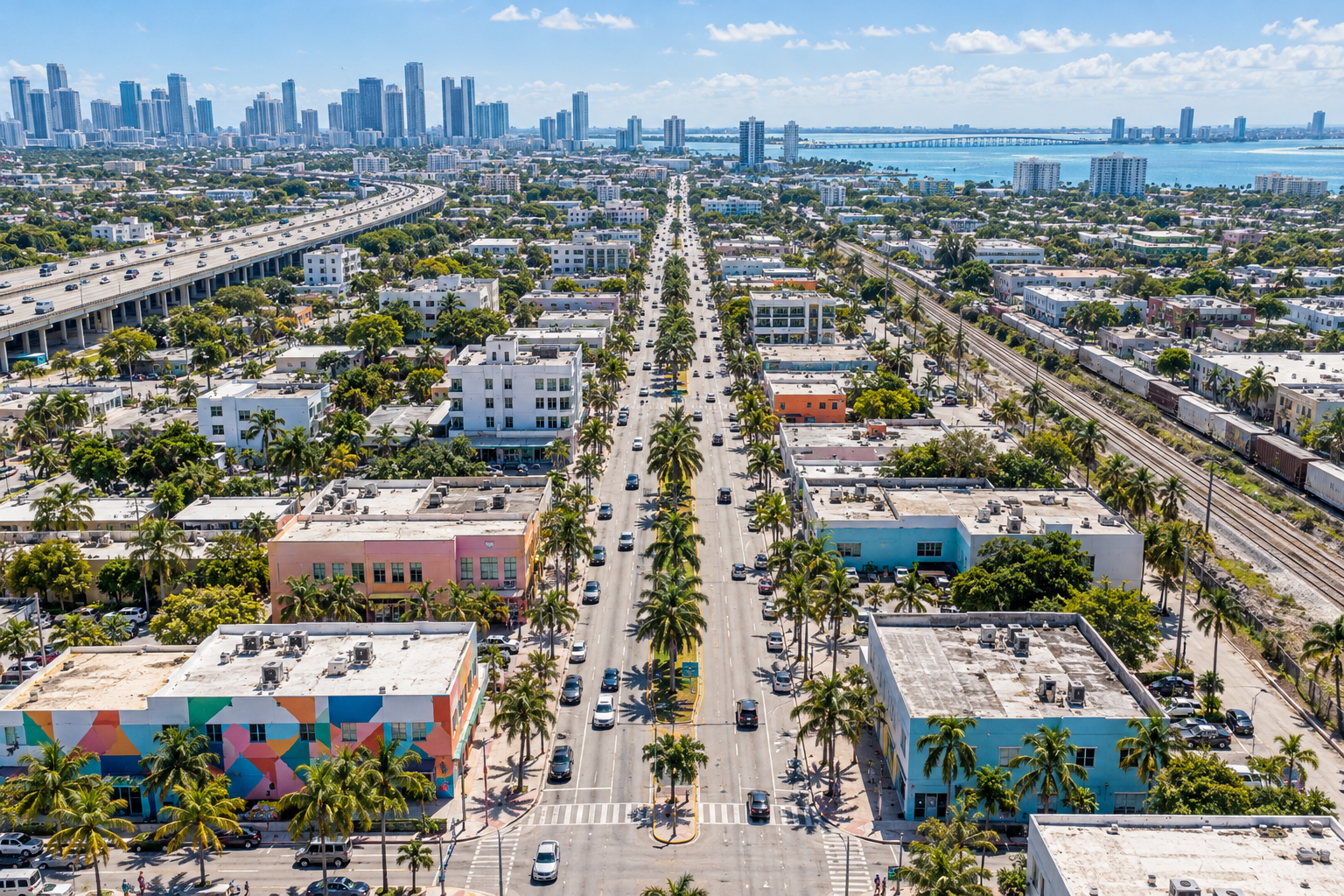
The City of Miami formally named the neighborhood Little Haiti in 2016 after years of Haitian families calling it home. The commonly used boundaries run from roughly NE 54th Street north to the 79th Street area, with I-95 on the west and the Florida East Coast railway corridor on the east. Older maps still call parts of it Lemon City, and you will see that name on a few signs.
NE 2nd Avenue is the spine. Almost everything a first-time visitor wants is on or within two blocks of it, between 54th Street and 63rd Street.
By car: From “miami international airport” it is about a 20-minute drive east on SR 112 then north on I-95, exiting at NW 62nd Street or 54th Street and heading east. From “miami brickell” or downtown, take Biscayne Boulevard north and turn west on NE 54th or 59th.
By bus: Miami-Dade Transit runs Metrobus routes along NE 2nd Avenue and along Biscayne Boulevard, and both drop you within a short walk of the cultural complex. There is no Metrorail or Brightline stop in the neighborhood. Use the county’s transit trip planner or the GO Miami-Dade app to confirm current routes and times.
Parking: The cultural complex has its own small lot, which fills on event nights. Street parking along NE 2nd Avenue and the side streets is the usual fallback. Where blocks are metered, payment runs through the Miami Parking Authority’s PayByPhone system. On a weekday morning I have never struggled to park; on a Big Night or Haitian Flag Day, arrive early or plan to walk several blocks.
Little Haiti Cultural Complex
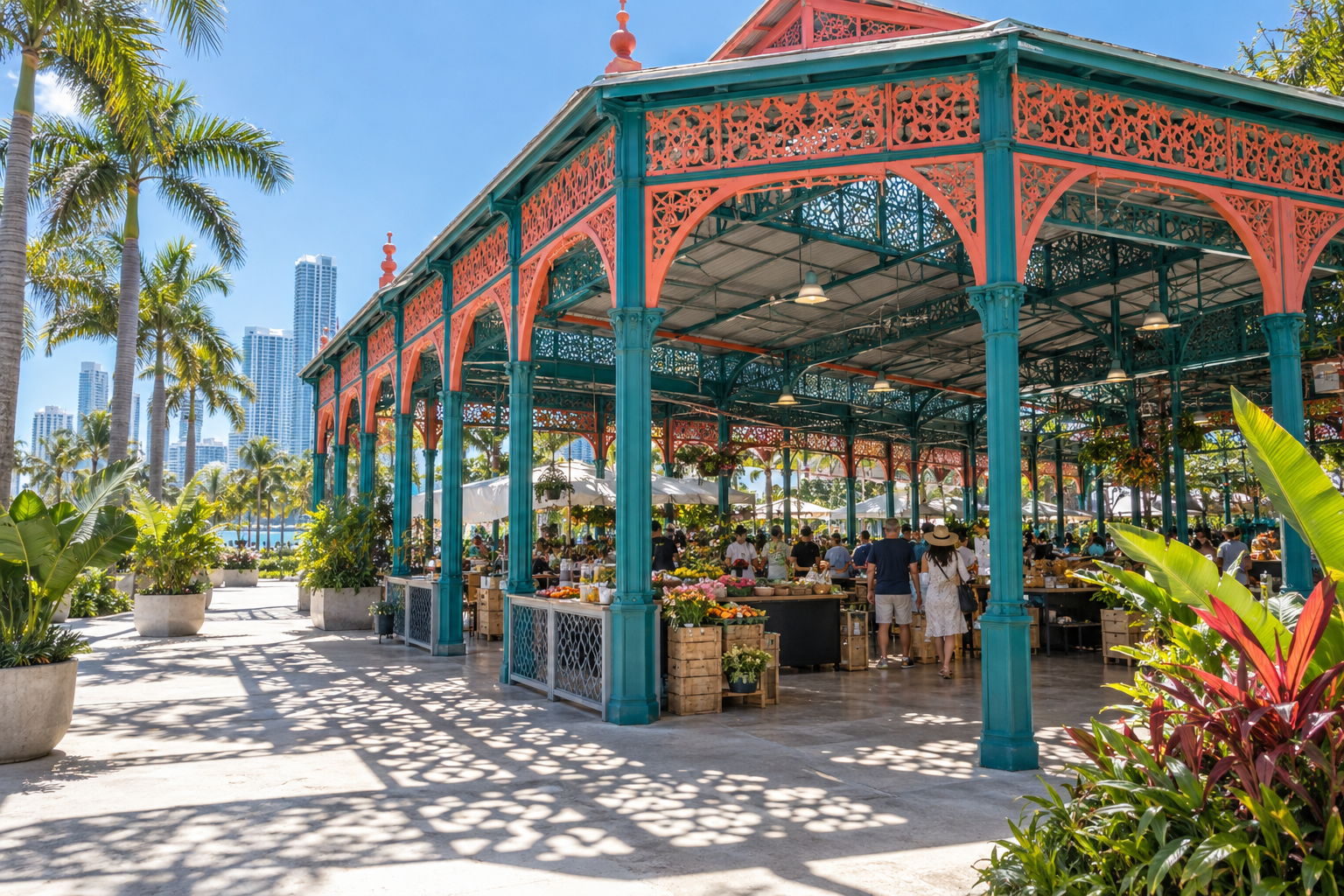
The city-owned complex on NE 59th Terrace, just off NE 2nd Avenue, is where I send everyone first. It holds an art gallery, dance and music studios, a proscenium theatre and the Caribbean Marketplace. Admission to walk the grounds and the gallery has been free in my experience, but hours shift and the theatre is often closed between productions, so check the complex’s page on the City of Miami website before you go.
Caribbean Marketplace
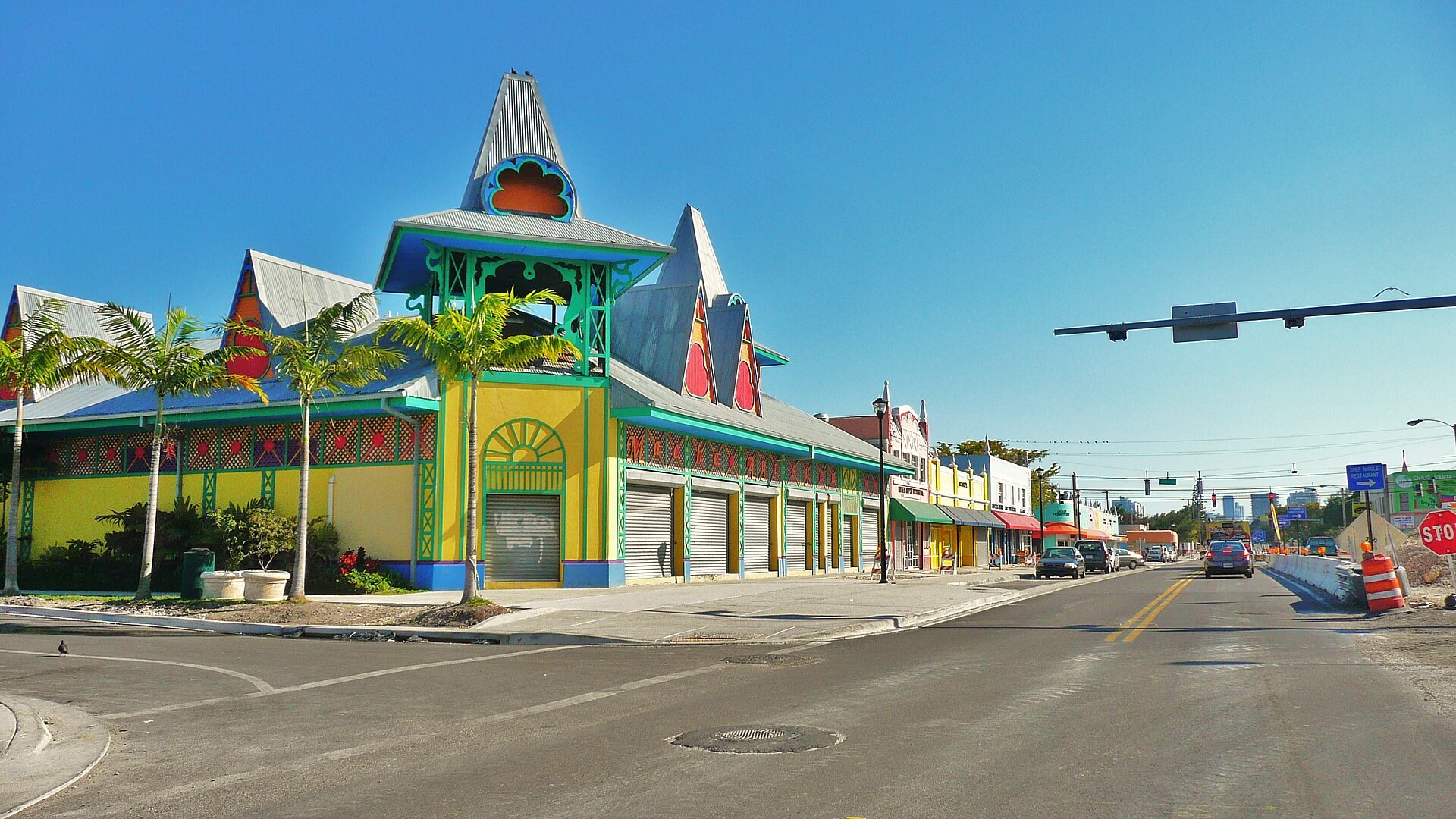
This is the building most people photograph. Its bright, open-sided design is modeled on the Marché en Fer, the historic Iron Market in Port-au-Prince. Inside you will find vendors selling Haitian art, beaded Vodou flags, jewelry, clothing and food, though the number of stalls varies a lot by day. Weekend afternoons and event nights are when it feels fully alive. On a quiet Tuesday you may find only a handful of sellers.
Art gallery and theatre
The gallery rotates exhibitions of Haitian and Caribbean artists, and it is a genuine gallery rather than a gift shop. The theatre hosts dance, konpa and roots music concerts, plays in Creole and film screenings. The complex has run a monthly free music night for years, usually branded Big Night in Little Haiti, and that remains the single best evening to experience the neighborhood. Confirm the current schedule and whether it is still monthly through the complex’s events listing.
Along NE 2nd Avenue
Libreri Mapou
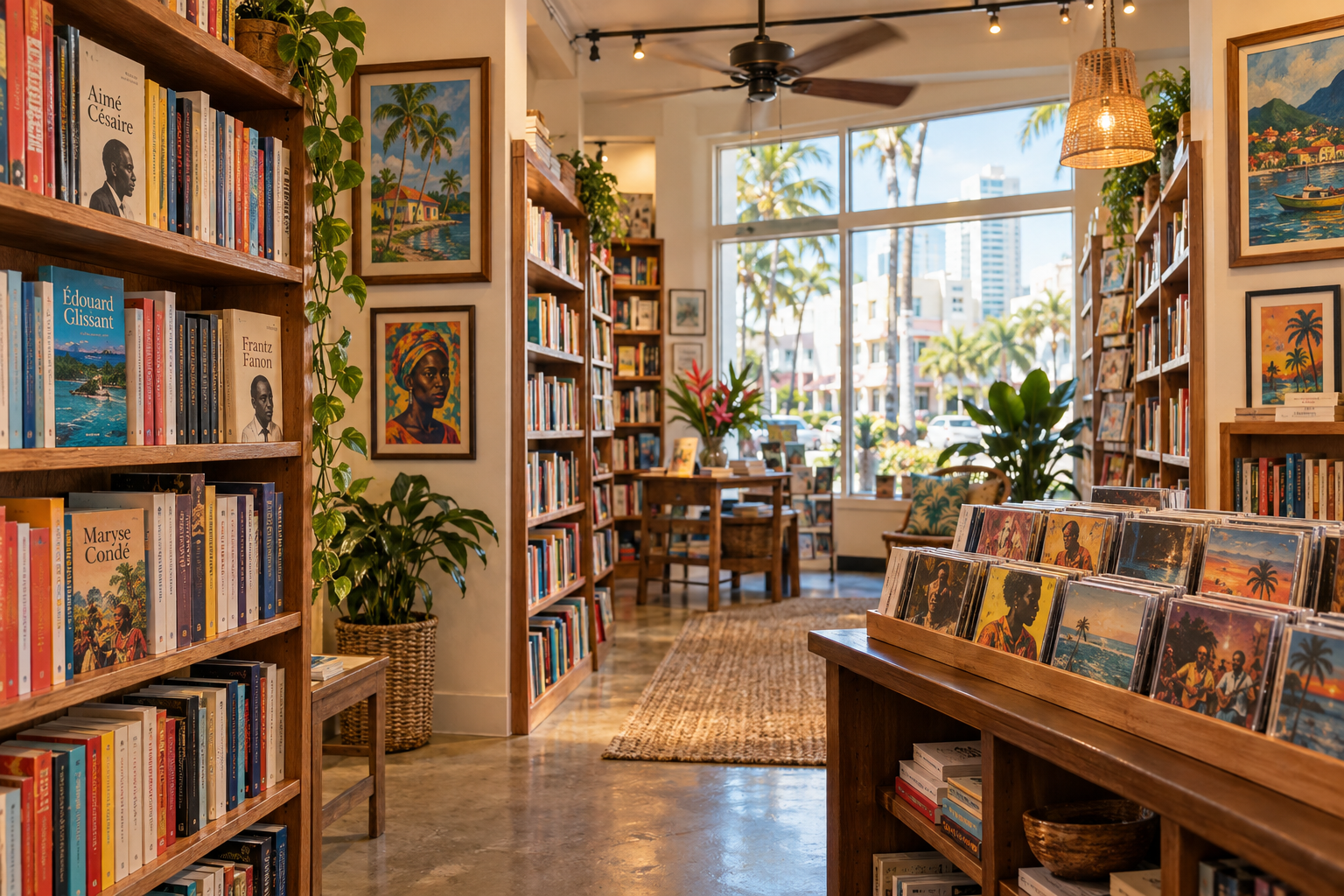
At 5919 NE 2nd Avenue, Libreri Mapou is a Haitian bookstore run by Jan Mapou, a writer and cultural organizer who has anchored this block for decades. It sells books in Creole, French and English, plus music, art and newspapers. If you want to understand the neighborhood rather than just look at it, spend twenty minutes here and ask questions.
Murals and the Toussaint Louverture statue
Muralist Serge Toussaint has painted storefronts across Little Haiti for years, and his work is the visual signature of the avenue. Look for portraits of Haitian heroes, musicians and shop owners, often with the business name worked into the painting. Near NE 62nd Street and 2nd Avenue stands a statue of Toussaint Louverture, the leader of the Haitian Revolution. The avenue and surrounding streets also hold botanicas selling candles, herbs and religious items. Be respectful: these are working shops serving people’s spiritual lives, not photo backdrops.
Notre Dame d’Haiti
The Catholic church at 110 NE 62nd Street is the spiritual center of Haitian Miami. Mass in Creole draws large crowds on Sunday mornings, and the church is a hub during Haitian Flag Day and after any crisis in Haiti. Visitors are welcome at services if dressed appropriately.
Sweat Records and Churchill’s
At the southern end of the strip, around NE 55th Street, Sweat Records is an independent record store with a strong local following, sitting beside Churchill’s Pub, a long-running live music bar. Neither is Haitian, but both are part of the neighborhood’s identity and make a good final stop.
Eat and drink
Haitian food is the reason many locals come up here, and it is distinct from the “cuban food” most visitors already know. Expect slower cooking, more heat and a lot of citrus.
Dishes worth ordering:
- Griot with pikliz: marinated fried pork with spicy pickled cabbage and carrots
- Diri djon djon: rice cooked with black Haitian mushrooms
- Legim: a thick vegetable stew, usually with beef
- Lambi: conch, stewed or grilled
- Poisson gros sel: whole fish in a salty, peppery broth
- Pate: flaky Haitian patties, the best cheap breakfast around
- Soup joumou: pumpkin soup served on New Year’s Day for Haitian independence
Where I eat:
- Chef Creole, 200 NW 54th Street. Ken Sejour’s seafood shack is the most famous Haitian restaurant in the city. Order at the window, eat at the picnic tables. The conch and the grilled fish are the draw.
- Naomi’s Garden, 650 NW 71st Street. Outdoor seating under trees, generous plates of griot and legim, a short drive north of the core.
- Clive’s Cafe, on NW 2nd Avenue near 59th. Jamaican rather than Haitian, but a neighborhood institution for jerk chicken and oxtail.
Wash it down with a Prestige beer or a Cola Couronne. Prices and hours change, so check each restaurant’s own social pages before a special trip.
Good to know
Many small spots are cash-preferred and close early on Sundays. Summer heat on NE 2nd Avenue is brutal by noon, with little shade between the complex and 54th Street.
Events and the best time to go
Haitian Flag Day on May 18 is the biggest day of the year, with music, flags and food along NE 2nd Avenue and at the cultural complex. The Little Haiti Book Festival, run with Miami Book Fair, usually lands in May as well. Big Night at the complex gives you a free concert most months. The City of Miami’s cultural complex page and the Miami Book Fair site are the places to confirm dates.
For a regular visit, I prefer Saturday late morning. The market has vendors, restaurants are fully stocked and the light on the murals is good before the heat peaks. November through April is the comfortable season for walking.
Local tip
Skip the complex lot on event nights and park on the residential streets west of NE 2nd Avenue around 60th and 61st. It is a two-minute walk and you will leave faster.
What to know about the neighborhood’s future
Little Haiti sits on the Miami Rock Ridge, some of the highest ground in the city, which has made it a target for developers worried about sea-level rise closer to the bay. The Magic City Innovation District, a large mixed-use project approved along NE 2nd Avenue around 60th to 64th Streets, is the most visible example. Residents and longtime business owners have pushed back against rising rents and displacement. Spending money at the Haitian-owned shops and restaurants is the simplest way a visitor supports the community that gives the neighborhood its name.
Haitian South Florida beyond Little Haiti
The Haitian community extends well past these blocks. North Miami and North Miami Beach have large Haitian populations and their own restaurants and churches. In Broward, look to Fort Lauderdale’s northwest neighborhoods and Pompano Beach, and in Palm Beach County, Delray Beach has a long-established Haitian community. The Haitian Heritage Museum, at 4141 NE 2nd Avenue #105C on the southern edge of Little Haiti in the Design District, is a good stop for history before you walk the avenue.
When to get help
For event dates, call or email the Little Haiti Cultural Complex through its listing on the City of Miami website. For transit questions, use Miami-Dade Transit’s customer line or trip planner.
FAQ
Is Little Haiti safe to visit?
Yes, during the day along NE 2nd Avenue and around the cultural complex. Treat it like any urban neighborhood: keep valuables out of sight and stick to busier blocks after dark unless you are heading to an event.
How is Little Haiti different from Little Havana?
Little Havana is Cuban, Spanish-speaking and built around Calle Ocho southwest of downtown. Little Haiti is Haitian, Creole-speaking and sits north along NE 2nd Avenue. The food, music and atmosphere are completely different.
Does the Little Haiti Cultural Complex charge admission?
Walking the grounds, the marketplace and the gallery has been free. Ticketed performances in the theatre are priced separately. Confirm current details on the complex’s official page.
How long do I need?
Two to three hours covers the complex, Libreri Mapou, the murals and a meal. Add an evening if a Big Night or festival is on the calendar.