SoFla Guide Editors
Stephen Ross just sold another sliver of the Miami Dolphins, and the price tag tells you everything about where NFL money is headed. Sports Business Journal reported that Ross agreed to sell a 2.1% stake to Chilean billionaire Jean Eric Salata, chairman of EQT AB, at a valuation slightly above $12.5 billion, a new record for an NFL minority-stake deal. It is the fourth time in less than two years that Ross has carved off a piece of his sports empire, and the number keeps climbing.
What’s in the deal
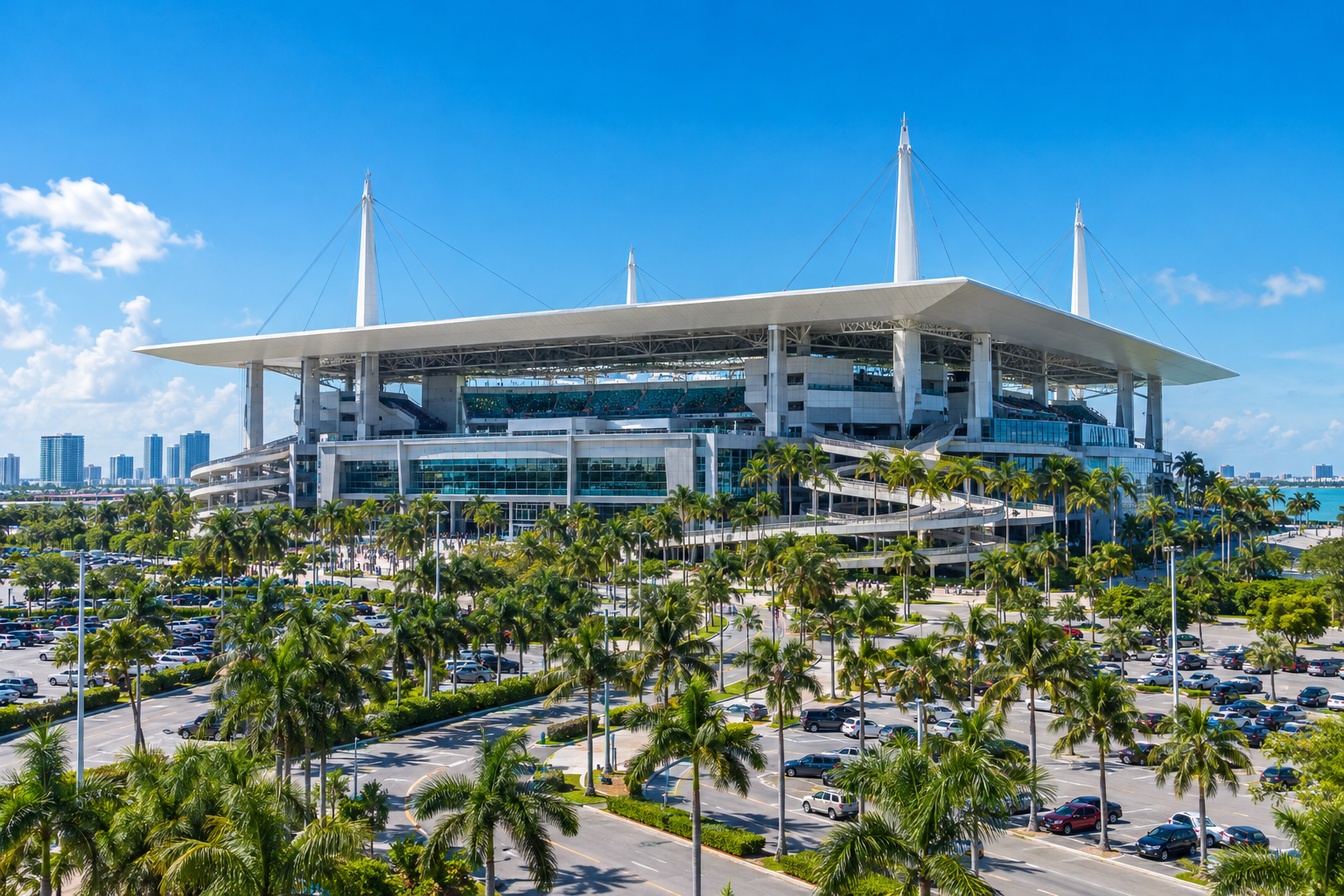
This is not just a football transaction. According to The Palm Beach Post’s Nick Pugliese, the 2.1% stake includes minority interests in Hard Rock Stadium, the F1 Hard Rock Miami Grand Prix and the Miami Open tennis championships, all of which sit under the Ross Sports & Entertainment umbrella. So Salata is buying into the whole Miami Gardens show, from Sundays in the fall to race weekend in the spring to the tennis crowd in between.
The deal still needs the league’s blessing. The Palm Beach Post, via Yahoo Sports, reported that the NFL’s finance committee approved the Salata transaction last month, with full owner approval expected at the league’s Fall Meeting in New York the week of October 20, 2026.
How we got to $12.5 billion
Rewind to 2009. Ross bought the Dolphins for approximately $1 billion, according to The Palm Beach Post’s Hal Habib. Now small slices of the operation are being valued as if the whole thing were worth twelve and a half times that.
The sell-off started in December 2024. CBS Miami reported that Ross sold a stake in the Dolphins and affiliated properties to Ares Management, which CBS Miami put at 13% while other outlets including The Associated Press and Bloomberg reported it as 10%, plus a combined 3% stake to Brooklyn Nets owner Joe Tsai and minority owner Oliver Weisberg, at an $8.1 billion valuation. Those deals came five months after NFL owners voted 31-1 to open the door to private equity investment in franchises, The Palm Beach Post reported via Yahoo Sports.
Ross framed that first round as a sign of demand. “As we continue our relentless pursuit of building a best-in-class organization, we were fortunate to attract significant interest from multiple investors,” he said, according to CBS Miami. Tsai, for his part, told CBS Miami: “I am privileged to have the opportunity to invest with Miami Dolphins owner Steve Ross, a world-class operator.”
Then the valuation jumped. In March 2026, Ross agreed to sell 1% of the team to Xiaomi co-founder Lin Bin at a $12.5 billion valuation, a deal announced by the team and approved by the NFL, The Associated Press reported via Fortune. The Palm Beach Post’s Habib noted that a league source confirmed the stake to the paper, and Sportico also reported it.
Lin Bin sounded a lot like Tsai. “I am privileged to have the opportunity to invest in the Miami Dolphins and the amazing sports business built by the great entrepreneur Stephen Ross,” he said, per The Associated Press via Fortune.
Add it all up and Ross has sold approximately 16.1% of his sports enterprise across four deals while keeping majority control. For perspective, the record for a controlling-interest NFL sale stands at $9.612 billion for the Seattle Seahawks, which means the Dolphins’ minority valuations have outrun any full-team sale on the books.
Why is Ross selling?
Not because he wants out, by all indications. Habib reported in The Palm Beach Post that Ross said he was offered nearly $15 billion for the Dolphins and declined, without naming the would-be buyer. Treat that as a report rather than a done fact, but it fits the pattern: Ross keeps the wheel and sells seats in the back.
Succession appears to be part of the picture. In August 2026, Ross named his son-in-law Daniel Sillman as CEO and head of football operations, The Palm Beach Post reported via Yahoo Sports, and Ross’s succession plan reportedly includes Sillman along with Ross’s two daughters, Kimberly and Jennifer. Bringing in deep-pocketed minority partners while that transition takes shape is one way to lock in a valuation on your terms.
What it means for South Florida
For fans, nothing changes at the turnstile. Ross still runs the Dolphins, Hard Rock Stadium is still the home of the team, the Grand Prix and the Miami Open, and Sillman is the one steering the day-to-day. What does change is the scoreboard in the boardroom: a Miami sports property is now setting the national benchmark for what a piece of an NFL team is worth.
Next up is the owners’ vote in New York the week of October 20. If the pattern of the Lin Bin and Ares deals holds, expect approval, and expect the $12.5 billion-plus figure to become the new floor the rest of the league gets measured against.