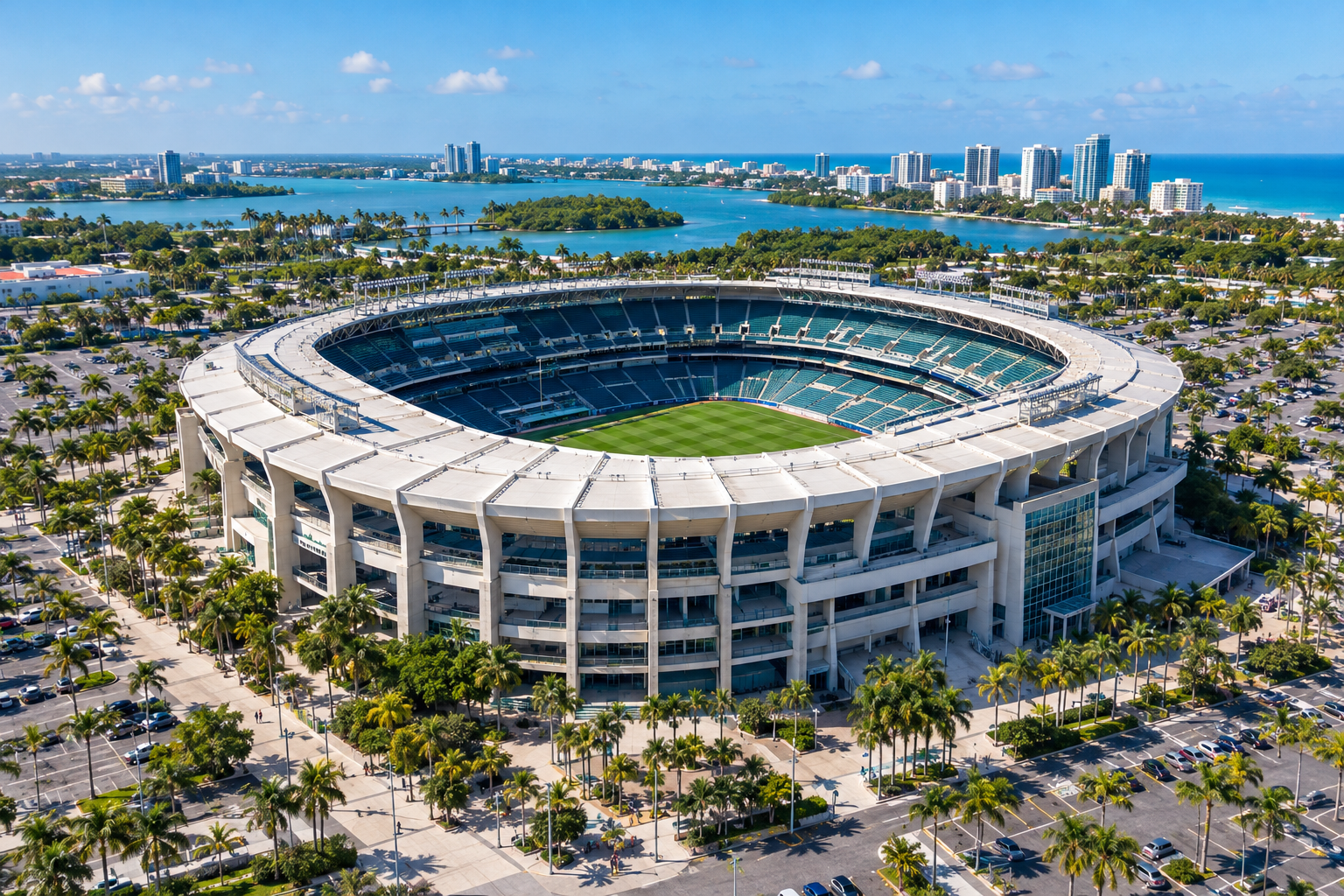
The Miami Open runs for roughly two weeks every late March at Hard Rock Stadium in Miami Gardens, with 96-player ATP and WTA draws, a 14,000-seat Stadium Court built over the Dolphins’ field, and grounds passes that get you onto every other court. Tickets sell through the tournament’s official Ticketmaster pages, parking is prepaid, and the exact dates, session times and prices shift each year, so confirm them on the official Miami Open site before you buy.
The key facts at a glance
Here is what you are dealing with, in numbers you can plan around.
- Two tours, one site. The Miami Open is an ATP Masters 1000 and a WTA 1000, played at the same venue in the same fortnight. Only a handful of events worldwide combine the tours at this level, which is why the phrase “Miami Masters” still gets used by fans who followed the men’s event before the combined branding took over.
- 96-player singles draws. Both the men’s and women’s fields are 96 deep, and the 32 seeds skip the first round. That means the top names do not appear until the third or fourth day of main-draw play.
- Around 14,000 seats on Stadium Court. The temporary arena is assembled inside the football bowl each year. The Grandstand holds roughly 5,000 and the outer courts seat a few hundred to a few thousand each.
- Attendance well past 300,000. The tournament has drawn record crowds since the 2019 move from Key Biscayne, so weekend sessions and finals fill up.
- Prize money close to $9 million per tour. The exact figure changes annually; the official site posts it each spring.
- Presenting sponsor Itaú. You will see the Brazilian bank’s branding across the grounds and on the official name, “Miami Open presented by Itaú.” It matters for one practical reason: Itaú cardholders sometimes get presale access.
The address is 347 Don Shula Drive, Miami Gardens, FL 33056, the same stadium that hosts Dolphins games and the Orange Bowl each year.
How the schedule works
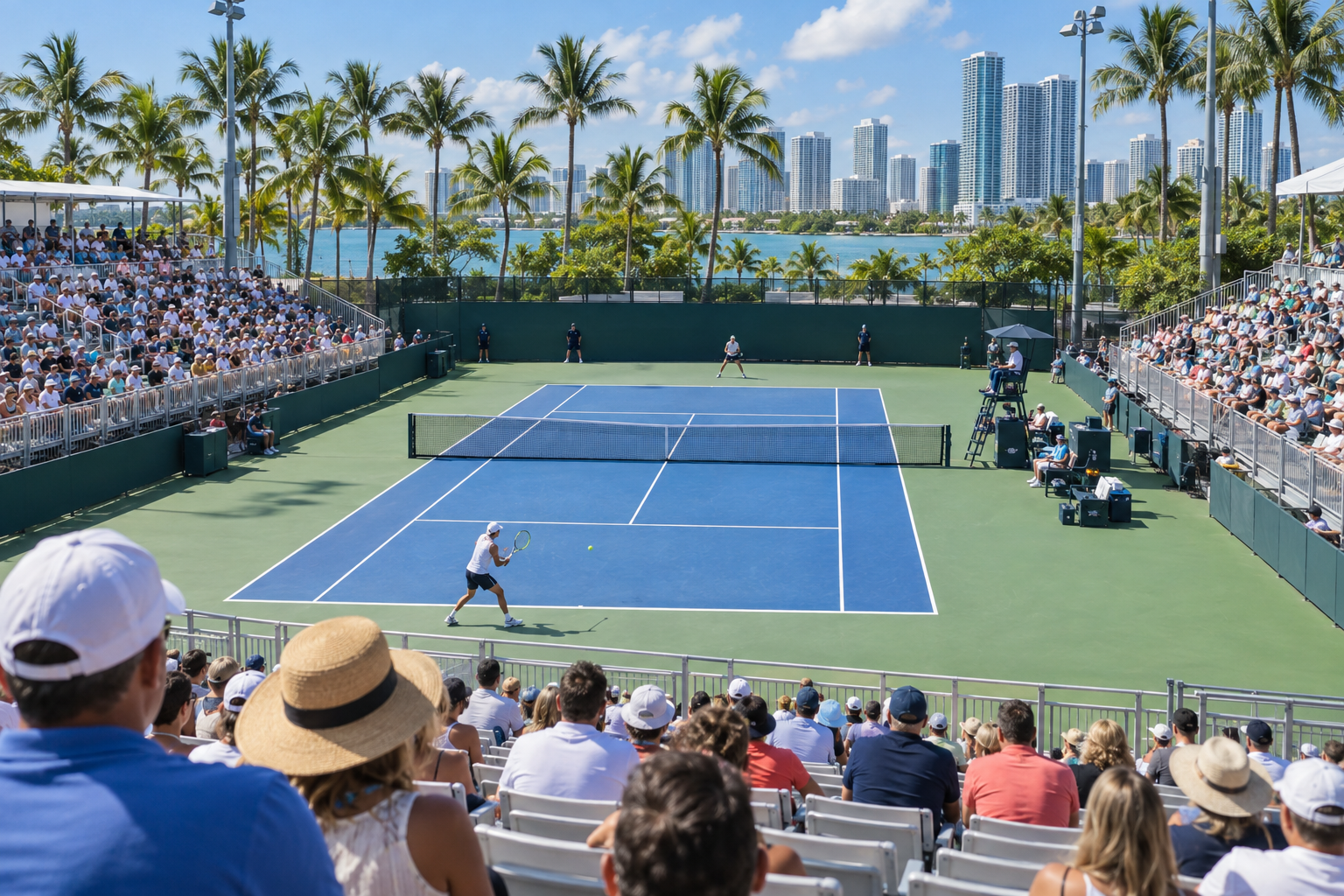
The tournament follows the same shape every year, even though the calendar dates move by a few days. Dates are announced on the official site and the ATP and WTA calendars months in advance, so lock them in before booking flights or hotel nights.
Qualifying weekend. Two days before the main draw, players ranked outside direct entry fight for the last spots. Crowds are thin, the courts are open, and tickets are the cheapest of the fortnight. Some years qualifying admission has been free or close to it; check the ticket page rather than assuming.
Main draw, days one through four. First and second rounds on all courts. This is when the grounds pass is at its most valuable. You can wander from Court 1 to the Grandstand to the practice courts and see 30 or more matches in a day if your legs hold up.
Middle weekend. Third rounds, big names, big crowds. Stadium Court sessions and grounds passes both tighten up, and parking lots fill earlier.
Second week. Round of 16, quarterfinals and semifinals move almost entirely onto Stadium Court and the Grandstand. Fewer matches, higher stakes, higher prices.
Finals weekend. The women’s singles final is played on the Saturday, the men’s singles final on the Sunday, with doubles finals slotted around them.
Session times follow a day and night pattern. Day sessions typically start play around 11 a.m. with gates opening roughly an hour before; night sessions on Stadium Court start in the early evening, usually around 7 p.m. Treat those as the normal pattern, not a promise, and read the daily order of play.
The order of play for the next day is published the evening before on the official site and in the Miami Open app. Until then, nobody can tell you which court a player will be on, including the players.
Getting tickets
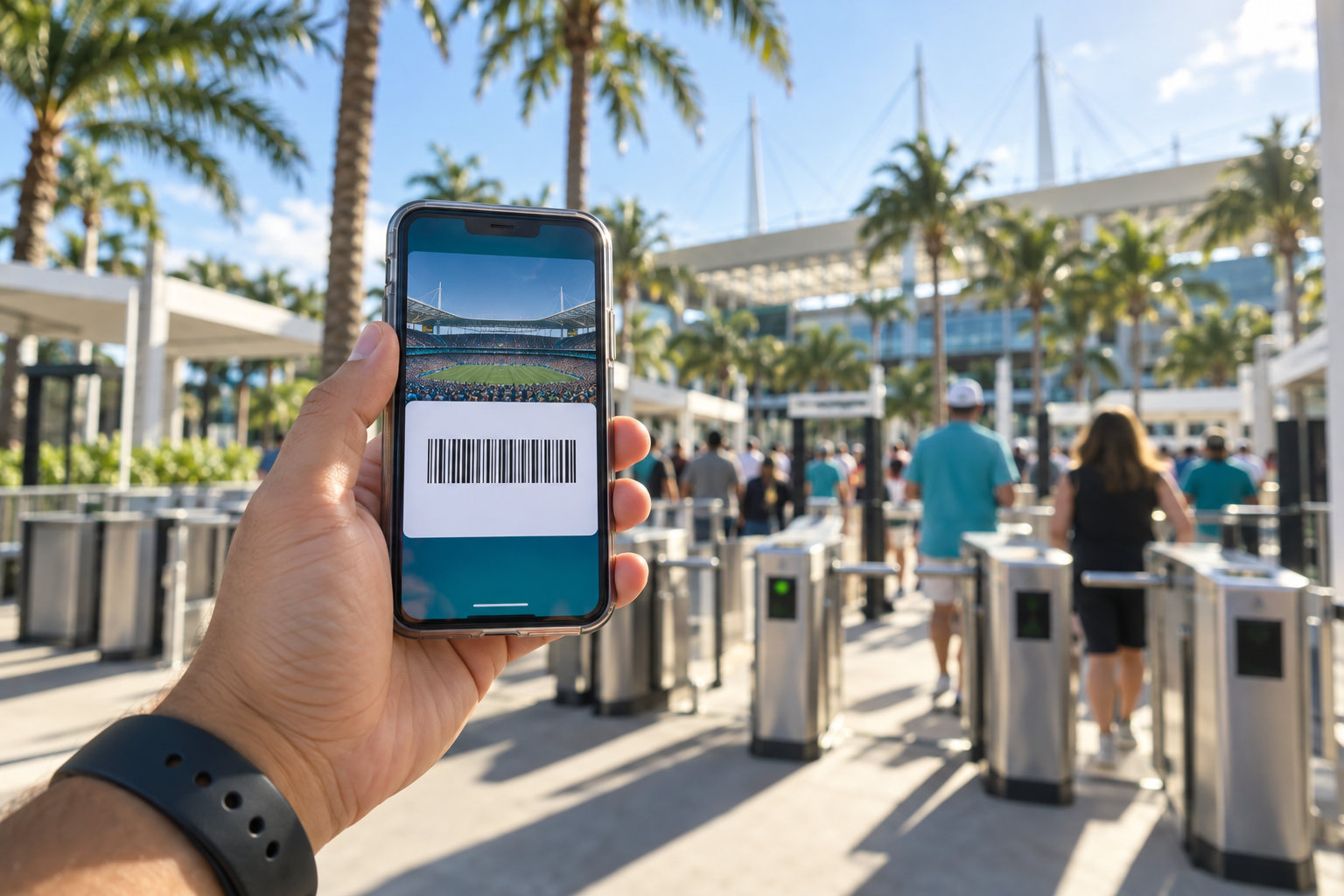
Quick steps: buying Miami Open tickets
- Decide between a Stadium Court ticket and a grounds pass.
- Pick your day: week one for variety, week two for stars.
- Open the ticket section of the official Miami Open site.
- Buy through the linked Ticketmaster page, not a search ad.
- Add a prepaid parking pass to the same order if driving.
- Download the app and link your tickets before you travel.
Which ticket type you actually want
There are two basic products, and the difference is bigger than the price gap suggests.
A grounds pass gets you onto every court except Stadium Court. In the first week that means the Grandstand, Butch Buchholz Court and all the field courts, plus the practice courts where you can stand a few feet from top-ten players hitting. Seating on those courts is mostly first come, first served.
A Stadium Court ticket is a reserved seat for one session, day or night, and it includes grounds access for that session. Day session tickets typically cover two or three matches on the main court; night sessions cover one or two.
For most first-timers in the opening week, the grounds pass is the better buy. You are not locked to one court, and the early-round matches on the outer courts are often tighter than the lopsided seeded matches in the stadium. By the quarterfinals, though, the outer courts go quiet and a grounds pass buys you little more than practice sessions and doubles. From that point on, you need the stadium seat.
Where to buy
The tournament sells through Ticketmaster, and the official Miami Open website links straight to it. Type the site address yourself or use the app rather than clicking the first search result, because resale brokers buy ads on the words “tennis Miami Open” every spring and their pages look official.
Ticket packages and mini-plans go on sale in the autumn, and single-session tickets follow, usually by December or January. Signing up for the tournament’s email list is the simplest way to be the first to know about presale windows. Itaú and other sponsor cardholders have had early access in past years.
Resale and prices
Single-session prices range from modest for weekday grounds passes to several hundred dollars for lower-bowl finals seats, and the tournament uses demand-based pricing, so there is no fixed chart to quote. What you can rely on:
- Weekday day sessions in week one are the floor.
- Night sessions cost more than day sessions for the same round.
- Weekend and finals pricing climbs steeply.
- Verified resale on Ticketmaster is safer than third-party sites, and prices on the secondary market often drop below face value for weekday sessions once the day arrives.
Good to know
Afternoon thunderstorms are routine in late March. Tickets are for a session, not a match, and the refund policy for rain is strict. Read the weather policy on the ticket page before buying a night session you can only attend once.
Getting there and parking
Hard Rock Stadium sits in Miami Gardens between I-95 and Florida’s Turnpike, about 15 miles north of downtown Miami and a similar distance south of Fort Lauderdale. From the Turnpike, use the dedicated stadium exit; from I-95, follow signs toward NW 199th Street and Dan Marino Boulevard. Both approaches back up in the hour before a session, so leave more time than the map app suggests.
Quick steps: getting to the Miami Open
- Buy a prepaid parking pass with your ticket if driving.
- Leave 90 minutes before the session on weekends.
- Follow Turnpike or I-95 signage to the stadium.
- Enter the lot printed on your parking pass.
- Walk to the tennis gates, not the football gates.
- Note your lot and row for the walk back after dark.
Driving and prepaid parking
Parking for the tournament is sold in advance, usually as an add-on when you buy tickets and also as a standalone pass. Prices follow stadium-event norms rather than tennis-club norms, and buying ahead is cheaper than paying at the gate when gate sales are even offered. If you already know the hard rock stadium lot layout from football, you have a head start; the tournament uses the same numbered lots but closes some of them to build the outer courts and fan areas.
Lots open before gates. Arriving early gives you a close space and lets you catch the first practice sessions, which start well before the first match.
Rideshare and taxis
Uber and Lyft work well on the way in and poorly on the way out. The stadium runs designated pickup zones, and after a night session several thousand people request cars within fifteen minutes. If you take rideshare, either leave before the final match ends or expect to wait and pay surge pricing. Walking a few blocks away from the stadium before requesting often cuts both the wait and the fare.
Public transit
There is no rail station within walking distance. Tri-Rail‘s Golden Glades station and Brightline’s Aventura station are each a few miles away, so you will need a bus or rideshare for the last leg. Miami-Dade Transit routes along NW 27th Avenue serve the stadium area; use the county’s transit planner for the current route and schedule, because the tournament’s own shuttle offerings have varied from year to year. Check the “Getting Here” section of the official site each spring for any park-and-ride or shuttle partner.
From the airports
From miami international airport, the drive is roughly 25 to 35 minutes outside peak traffic, mostly via the Palmetto Expressway or I-95. Fort Lauderdale-Hollywood is about the same. If you are flying in for the tournament, Fort Lauderdale is often cheaper and no further away.
Local tip
Night sessions clear faster than day sessions because there is no second wave of arrivals. If you can only do one Stadium Court session and dread the traffic, pick the night session, arrive at gate opening to watch the practice courts, and leave as the last point ends.
Seats, courts and food
Stadium Court
The main arena is built on the football field with temporary stands rising into the lower bowl. Every seat is closer than it would be for football, but the sun is a real factor. In the afternoon, the sun sits high and then drifts west, so the shaded side changes through the session. There is no roof. Night sessions are the comfortable option in a hot year.
The lower rows near the baseline are the premium reserved seats. The upper rows of the temporary stands are the value seats on Stadium Court and still give a full view of the court. Courtside boxes, suites and club areas are sold separately as hospitality.
Grandstand and outer courts
The Grandstand is the second show court and the best bargain on the grounds. It holds around 5,000, gets top-20 players in the early rounds, and in week one you can usually walk in with a grounds pass. Butch Buchholz Court, named for the tournament’s founder, is the third stage and tends to host the most competitive unseeded matches.
The field courts have a few rows of bleachers. Stand at the fence for the full court-level view. The practice courts are grouped together and have schedules posted on screens and in the app, so you can time a visit to see a specific player warm up.
Food, drink and the fan zone
The grounds between the courts are set up as a food and entertainment village, with South Florida restaurants running stands alongside the stadium’s own concessions. Expect stadium pricing. The venue is cashless, so bring a card or a phone wallet. Water refill stations are available; a sealed or empty reusable bottle is the single most useful thing you can bring.
Live music, sponsor activations and shaded lounges fill the gaps between courts. Many of these areas are open to all ticket holders and are the best place to wait out a rain delay.
What you need
- Mobile ticket downloaded in the app before you arrive
- Prepaid parking pass if driving
- Sunscreen, hat and sunglasses
- Empty reusable water bottle to refill inside
- Card or phone wallet, since the venue is cashless
- Light rain jacket or poncho for afternoon storms
- Portable phone charger for scores and rideshare
Bag policy and gate rules
The tournament publishes its own bag policy each year, and it has differed from the Dolphins’ clear-bag rule for football, so do not assume one carries over to the other. In general: small bags are allowed and searched, large backpacks and coolers are not, and outside food and alcohol stay in the car. Camera rules allow phones and compact cameras but restrict long lenses and tripods. Read the current policy under the fan information or FAQ section of the official site the week you attend.
Re-entry has been permitted in recent years with a scanned ticket, which matters if you want to return to your car during a long day. Confirm before you leave the grounds.
Game-day tips from people who go every year
Go on a weekday in week one. Tuesday and Wednesday of the first main-draw week offer the most tennis per dollar, the easiest parking, and the shortest lines. You can watch a former Grand Slam champion on a field court from the first row.
Chase the practice courts. Practice schedules are posted the night before and updated through the morning. Top players practice for roughly an hour, and the viewing areas are far less crowded than their matches.
Plan for heat and rain on the same day. Late March in Miami-Dade brings highs in the low to mid 80s, humidity that makes it feel hotter, and afternoon storm cells that pass in an hour. Shade is limited on the outer courts. Drink more than you think you need.
Use the app for everything. Live scores, court assignments, maps, food menus and your tickets are all in the Miami Open app. The on-site live webcams on the official site are handy for checking crowd levels before you leave home.
Watch the doubles. Doubles matches on the Grandstand and outer courts are fast, loud and rarely full. They are the easiest place to get close to a famous player, since many singles stars enter the doubles draw.
Stay for the night session’s second match. Crowds thin after the headline match, and the last match of the night often features a rising player in a nearly empty, very loud stadium. Sit anywhere.
Context: why the tournament is in Miami Gardens
You do not need the history to enjoy a day of tennis, but one piece of it affects your plans. From 1987 to 2018 the tournament was played at Crandon Park on Key Biscayne, a lush county park setting with a single road in and out. When the tournament switched to Hard Rock Stadium in 2019, it traded palm trees for parking lots and gained room to grow: more courts, bigger show courts, and a fan village that the Key Biscayne site could never accommodate.
If a friend who last went a decade ago gives you advice about the causeway and the beach, thank them and ignore it. Everything about getting there, parking and seating changed with the move.
Pairing the Miami Open with other South Florida events
Late March is a crowded sports calendar in South Florida, and the stadium’s other tenants matter mostly because they do not overlap: the dolphins schedule runs September to January, so there is no football conflict. The Heat are in the final weeks of the regular season at the same time, and a weeknight game downtown pairs naturally with a day at the tennis if you are picking up miami heat tickets for a short trip. The Marlins typically open their season in the last days of March, so loandepot park may host opening day during finals weekend.
Visitors staying in Palm Beach County should know that the drive to Miami Gardens is about an hour from West Palm Beach via I-95 or the Turnpike, which makes a day session realistic without a hotel move. From Broward, Fort Lauderdale and Hollywood are 20 to 30 minutes away in normal traffic.
If you are making a night of it after an evening session, downtown Miami and Brickell are roughly 30 minutes south. Clubs such as e11even miami stay open late enough that a night session finishing after 11 p.m. is no obstacle.
What it means for your planning
The practical takeaway: the Miami Open is two different events depending on when you go. Week one is a sprawling festival where the grounds pass rules and you can see a dozen top players in a day. Week two is an arena event where Stadium Court seats are the whole point and prices behave like a playoff game.
Match your ticket to your goal. Want to see a specific star? Wait for the draw, which is released the day before main-draw play, then buy a Stadium Court session once the order of play confirms their court. Want the most tennis for the least money? Buy a week-one weekday grounds pass months ahead and let the draw come to you.
What happens next
Each year’s cycle runs on a predictable rhythm. Dates for the following year are confirmed by the tours soon after the current tournament ends. Ticket packages open in the autumn, single sessions by early winter, and the player entry list appears a few weeks before play. The draw ceremony happens the day before main-draw matches, and the order of play drops nightly.
For Miami Open 2026 and every edition after it, the same checklist applies: confirm the dates on the official site, join the email list for presale codes, buy early for week one and wait for the draw for week two.
Common problems and fixes
| Problem | What to do |
|---|---|
| Ticket page shows no availability | Check Ticketmaster’s verified resale and try a weekday day session; weekend inventory moves first |
| You bought a grounds pass but your player is on Stadium Court | Upgrades are sometimes sold at the box office on the day; otherwise watch their practice session instead |
| Rain delay with no end in sight | Stay on the grounds for a possible restart; refunds depend on how much play was completed, so read the policy |
| Parking lot on your pass is full or closed | Follow attendants to the overflow lot; passes are honored across tournament lots |
| Rideshare surge after the night session | Walk a few blocks away from the stadium or wait 20 minutes in the fan village |
| Bag rejected at the gate | Return it to your car if you drove; there is no bag check for oversize items |
When to get help
For ticket problems, use the help section on Ticketmaster’s order page or the tournament’s box office at the grounds on match days. For accessibility seating, request it through the ticket office before the event rather than at the gate. For parking and transit changes, the official Miami Open site’s fan information pages are updated daily during the tournament.
FAQ
When is the Miami Open?
Late March every year, running about two weeks from qualifying through the finals. Exact dates move by a few days annually and are posted on the official site and the ATP and WTA calendars.
Where is the Miami Open played?
Hard Rock Stadium, 347 Don Shula Drive, Miami Gardens, FL 33056. It has been there since 2019 after three decades at Crandon Park on Key Biscayne.
Is the Miami Open the same as the Miami Masters?
Yes. “Miami Masters” is an older fan shorthand for the men’s ATP Masters 1000 event. The combined ATP and WTA tournament is officially the Miami Open presented by Itaú.
What does a grounds pass include?
Access to every court except Stadium Court, including the Grandstand, Butch Buchholz Court, all field courts and the practice courts, plus the fan village. Seating on those courts is mostly unreserved.
Does a Stadium Court ticket include the grounds?
Yes. A Stadium Court ticket for a session also gives you grounds access for that session.
How much is parking?
Parking is prepaid and priced like a stadium event rather than a tennis club. Prices change yearly, so check the parking section when you buy tickets. Buying in advance is cheaper than any gate sale.
Can I take public transit to the Miami Open?
Partly. No train stops within walking distance; Tri-Rail at Golden Glades and Brightline at Aventura each need a bus or rideshare connection. Check Miami-Dade Transit’s planner and the tournament’s Getting Here page for current options.
What happens if it rains?
Play pauses and resumes once courts are dry, often within an hour. Tickets are for a session, not a specific match, and refunds follow the tournament’s published weather policy, so read it before buying.
Where do I confirm this year’s dates, prices and rules?
The official Miami Open website and app. Everything that changes year to year, including session times, bag rules, parking prices and the order of play, is published there first.