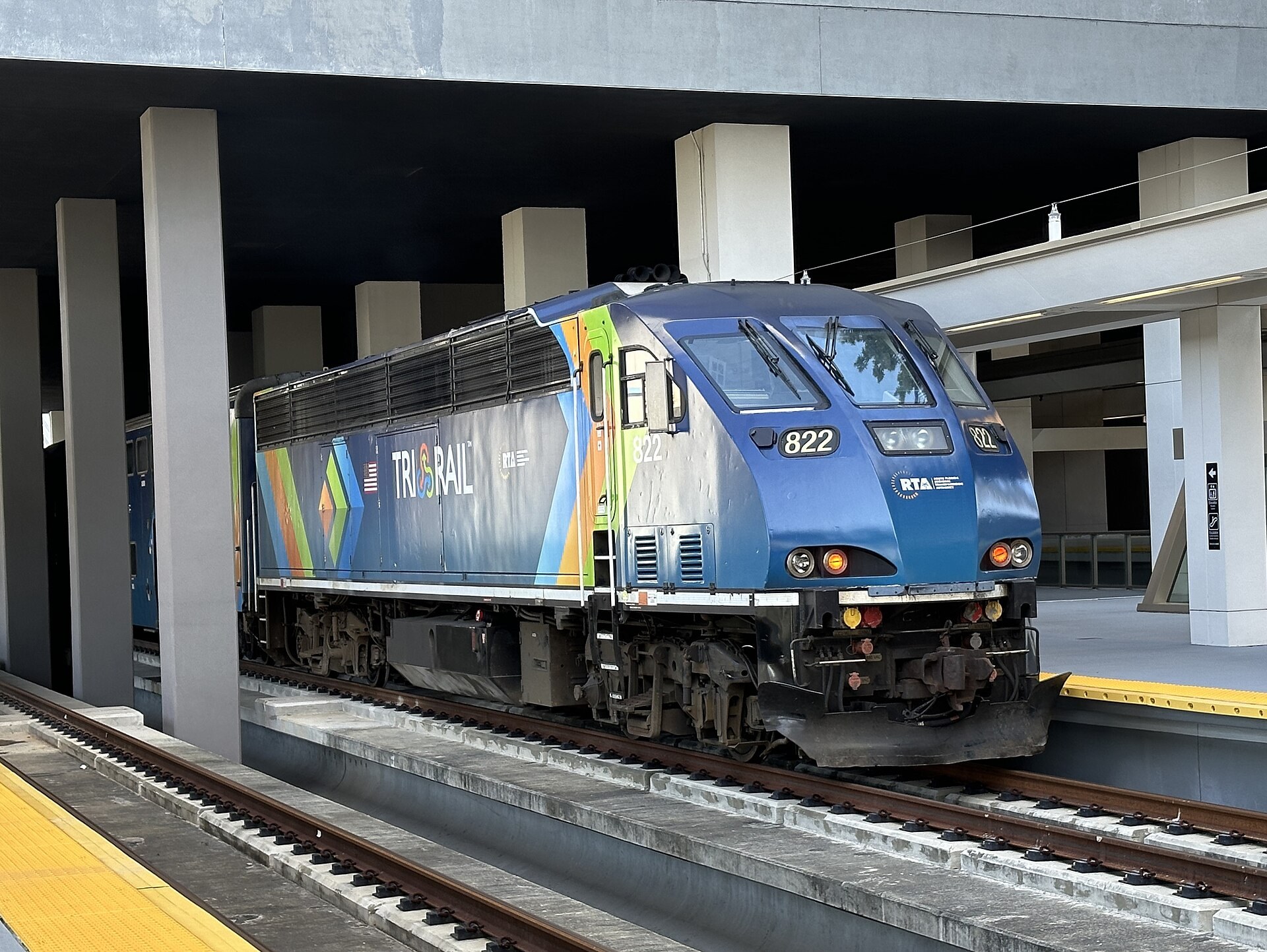
Tri-Rail is the commuter train that runs about 72 miles between Mangonia Park in Palm Beach County and Miami, with stops at Fort Lauderdale and Miami airports and a branch into downtown Miami. A one-way ride costs $3 to $10 on weekdays, parking is free at nearly every station, and trains run roughly every 20 to 60 minutes. Here is how the schedule works and how to ride it without guessing.
Quick steps: ride Tri-Rail
- Find your two stations and count the fare zones between them.
- Check the weekday or weekend timetable on the Tri-Rail site or app.
- Confirm whether your train ends at Miami Airport or MiamiCentral.
- Drive to the free lot or take a connecting bus to the station.
- Buy a ticket at the machine or in the app, or tap an EASY Card.
- Stand on the northbound or southbound platform, not just “the platform.”
- Keep your ticket out for the conductor and tap off when you leave.
What you need
- An EASY Card, a paper EASY Ticket or the Tri-Rail app
- Cash or a bank card for the ticket machine
- Photo ID if you’re using a discount fare
- Your train number and the name of the last stop
- A bus app or rideshare account for the final mile
Tri-Rail in numbers
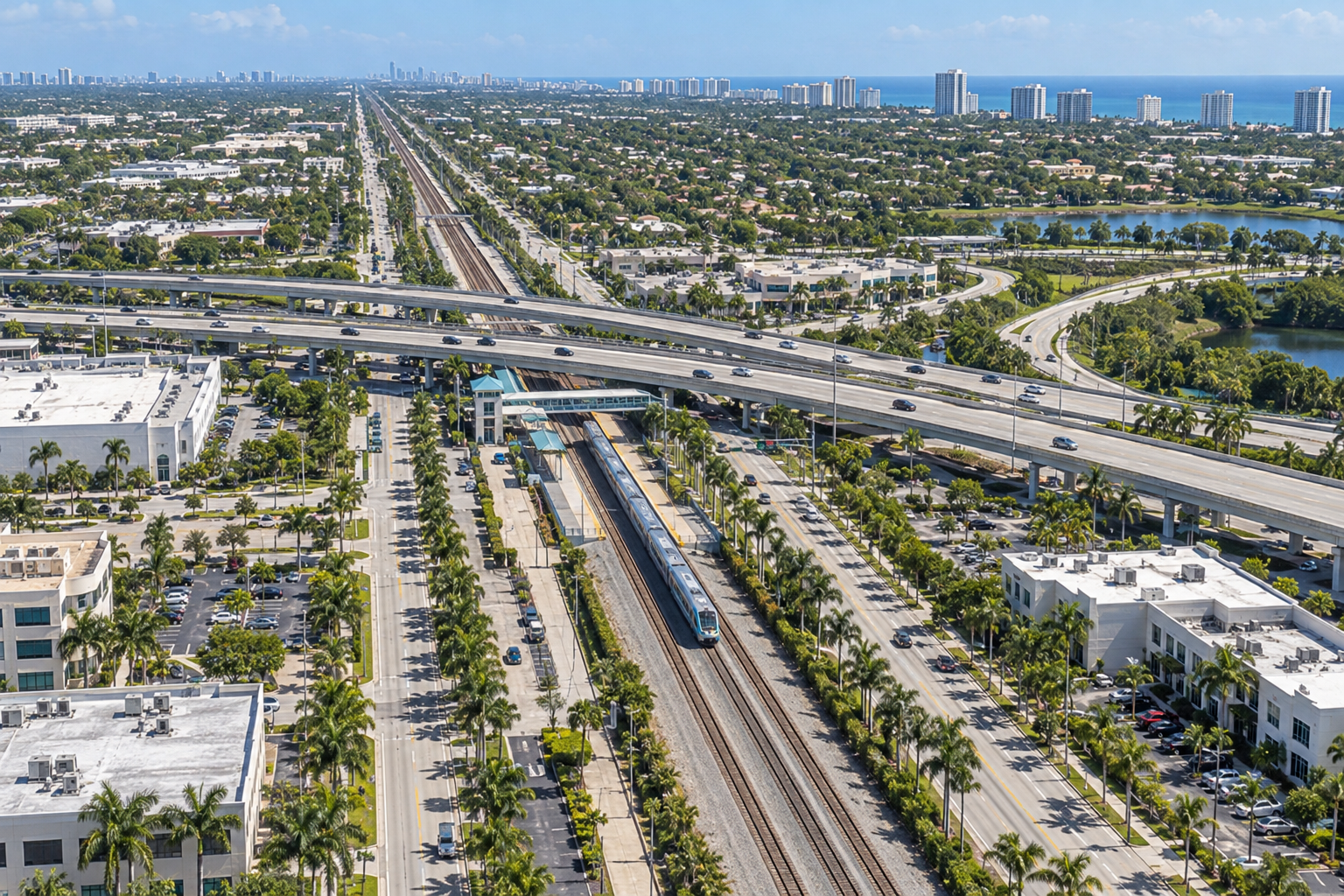
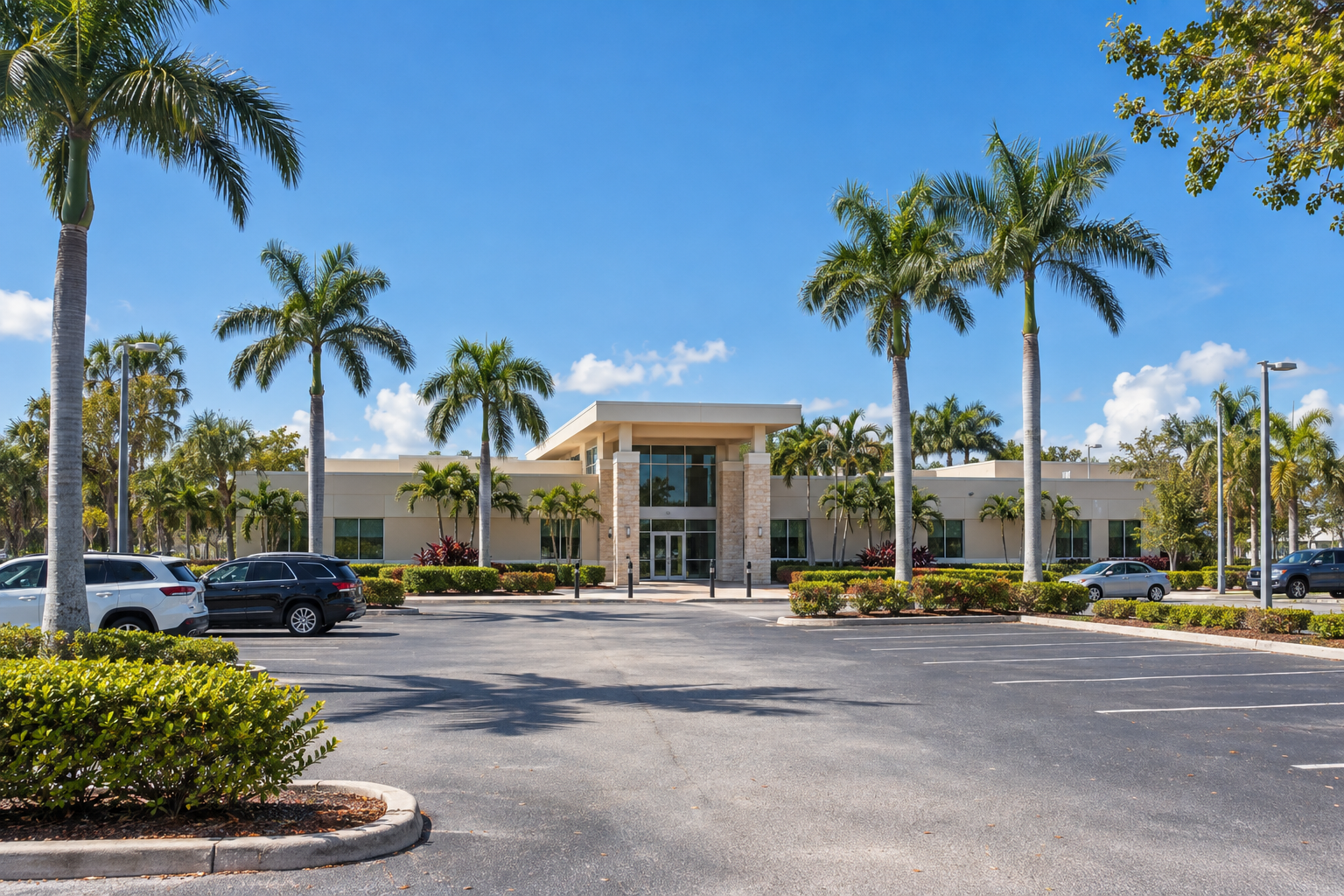
The South Florida Regional Transportation Authority, usually shortened to SFRTA, runs Tri-Rail. Its headquarters are in Pompano Beach, which is why so many search results for the train show that city.
The line began in January 1989 as a stopgap while I-95 was being widened. It never went away. Today it is the only passenger train in the region with stops in all three counties plus both major airports.
A few figures worth keeping in your head before you plan a trip:
- 18 stations on the main line, six in each county, plus MiamiCentral downtown.
- Six fare zones, three stations per zone.
- Weekday fares from $2.50 for one zone to $6.90 for all six.
- A flat $5 round trip on weekends and holidays, any distance.
- Roughly two hours end to end, Mangonia Park to Miami Airport.
- Free parking at every station except the two Miami endpoints.
Fares and hours do change. Confirm anything you’re relying on through the Fares and Schedules sections of the official Tri-Rail website or by calling 1-800-TRI-RAIL. Everything below reflects the long-standing pattern of the system, not a promise about next week.
Step 1: Pick your stations and count the zones
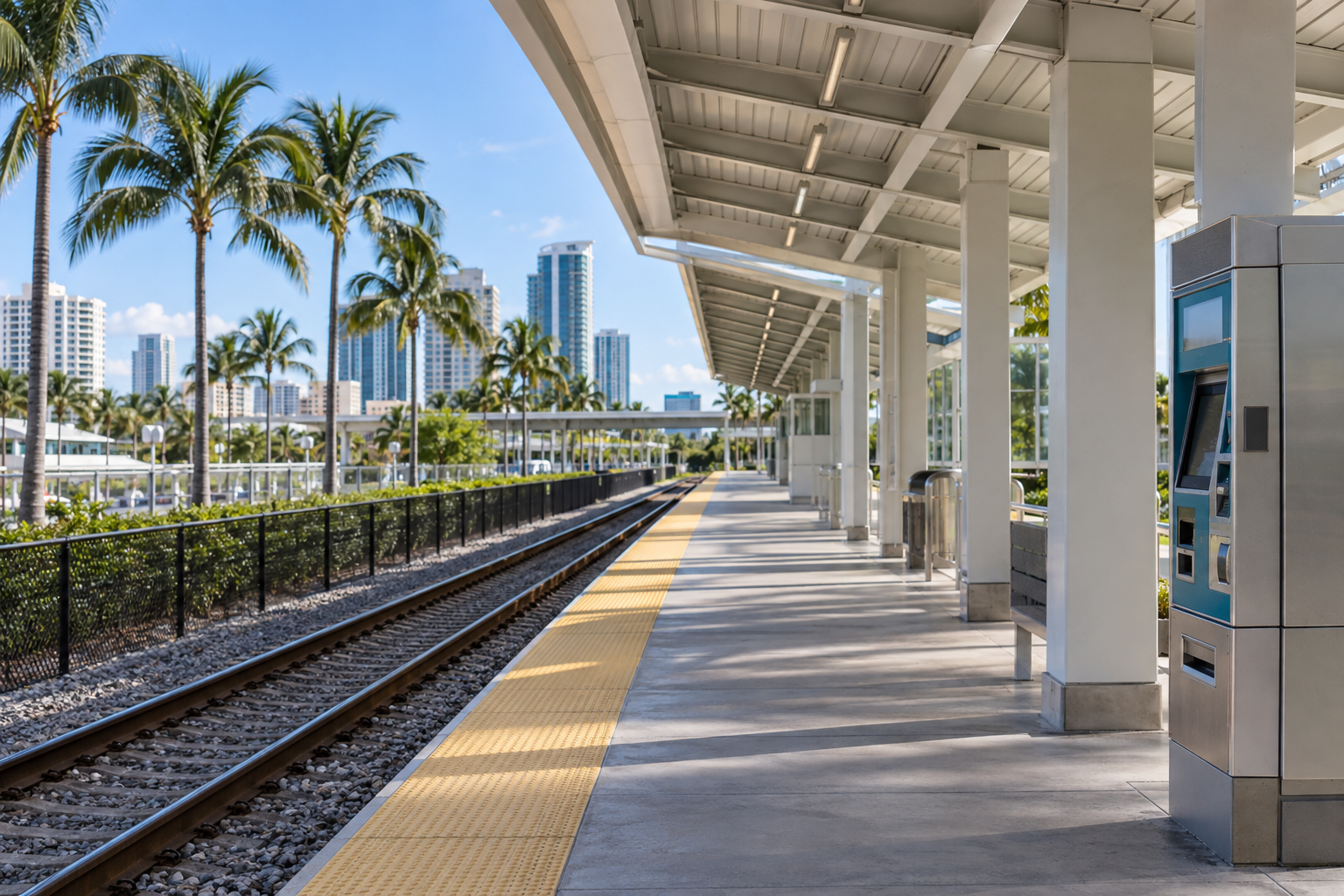
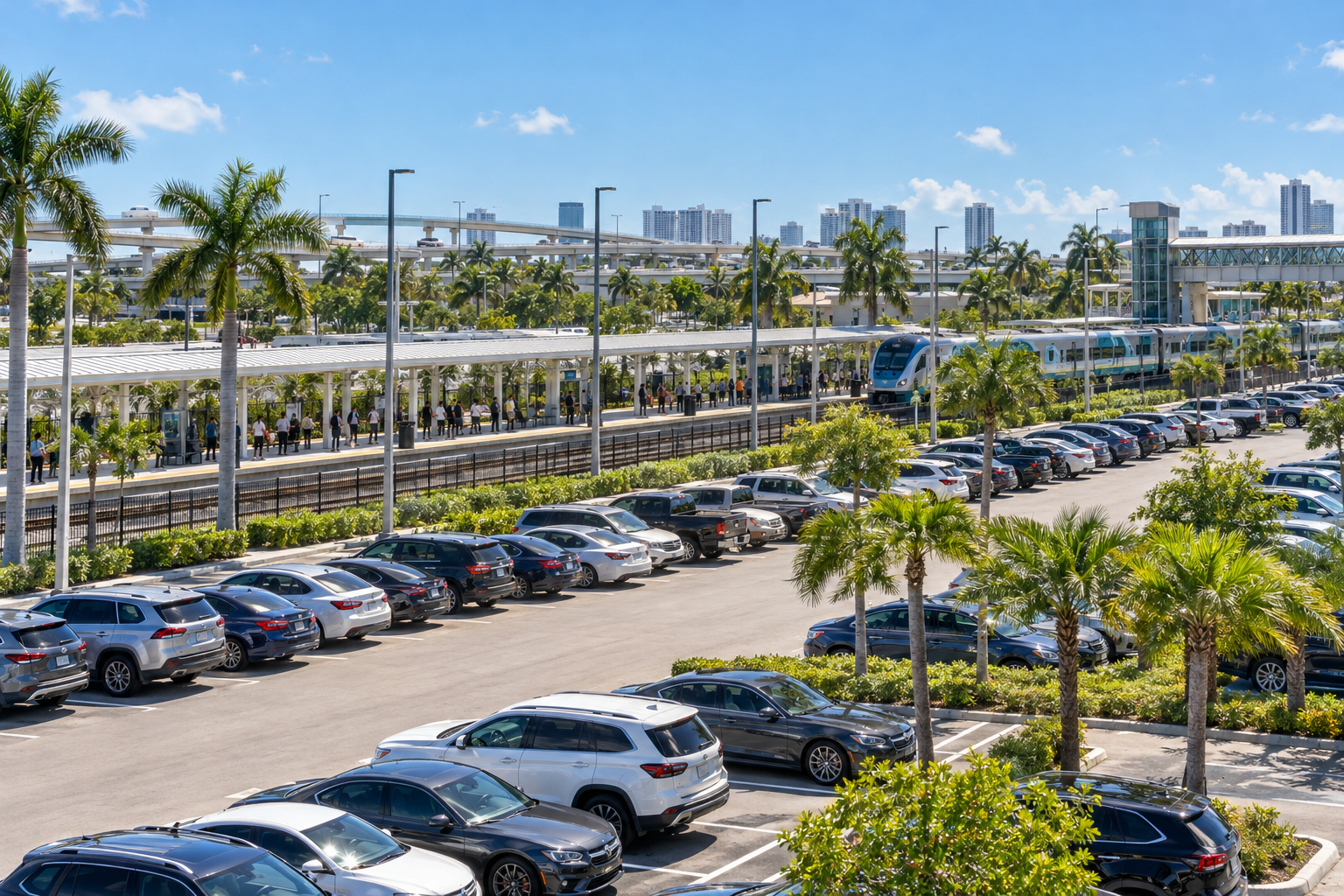
Everything about Tri-Rail pricing starts with zones. The line is cut into six, numbered from north to south. Your fare depends on how many zones your trip touches, including the one you start in.
Travel within a single zone counts as one zone. Fort Lauderdale (Zone 4) to Miami Airport (Zone 6) touches three zones. West Palm Beach (Zone 1) to Miami Airport is a six-zone ride.
Tri-Rail stations by zone, north to south
| Station | County | Zone | Main road or landmark | Key connection |
|---|---|---|---|---|
| Mangonia Park | Palm Beach | 1 | 45th Street, north of West Palm | Northern terminus, large lot |
| West Palm Beach | Palm Beach | 1 | Tamarind Avenue, shared with Amtrak | Amtrak, Palm Tran, PBI shuttle |
| Lake Worth Beach | Palm Beach | 1 | Lake Worth Road at I-95 | Palm Tran |
| Boynton Beach | Palm Beach | 2 | Gateway Boulevard | Palm Tran |
| Delray Beach | Palm Beach | 2 | Congress Avenue, shared with Amtrak | Amtrak, Palm Tran |
| Boca Raton | Palm Beach | 2 | Yamato Road | Palm Tran, FAU area |
| Deerfield Beach | Broward | 3 | Hillsboro Boulevard, shared with Amtrak | Amtrak, BCT |
| Pompano Beach | Broward | 3 | Near SFRTA headquarters | BCT |
| Cypress Creek | Broward | 3 | Cypress Creek Road | BCT, office district |
| Fort Lauderdale | Broward | 4 | Broward Boulevard, west of I-95 | Amtrak, BCT, downtown bus |
| FLL Airport at Dania Beach | Broward | 4 | Off Griffin Road | Airport shuttle |
| Sheridan Street | Broward | 4 | Sheridan Street at I-95 | BCT |
| Hollywood | Broward | 5 | Hollywood Boulevard at I-95 | Amtrak, BCT |
| Golden Glades | Miami-Dade | 5 | Golden Glades interchange | Big park-and-ride, Miami-Dade buses |
| Opa-locka | Miami-Dade | 5 | Ali Baba Avenue | Miami-Dade buses |
| Metrorail Transfer | Miami-Dade | 6 | NW 79th Street area | Metrorail |
| Hialeah Market | Miami-Dade | 6 | Near Hialeah Market district | Miami-Dade buses |
| Miami Airport | Miami-Dade | 6 | Miami Intermodal Center | MIA Mover, Metrorail, rental cars |
| MiamiCentral | Miami-Dade | 6 | Downtown Miami, Government Center | Metrorail, Metromover, Brightline |
Station platforms are mostly open-air with a canopy. A few, like Fort Lauderdale and Boca Raton, have staffed ticket windows during the day. Most do not, so plan on using the machine.
Not every station has every amenity. Golden Glades and Mangonia Park have huge lots built for commuters. Hialeah Market and Opa-locka are smaller. If you need a restroom before boarding, the airport stations and West Palm Beach are your safest bets.
Step 2: Check the Tri-Rail schedule for your day
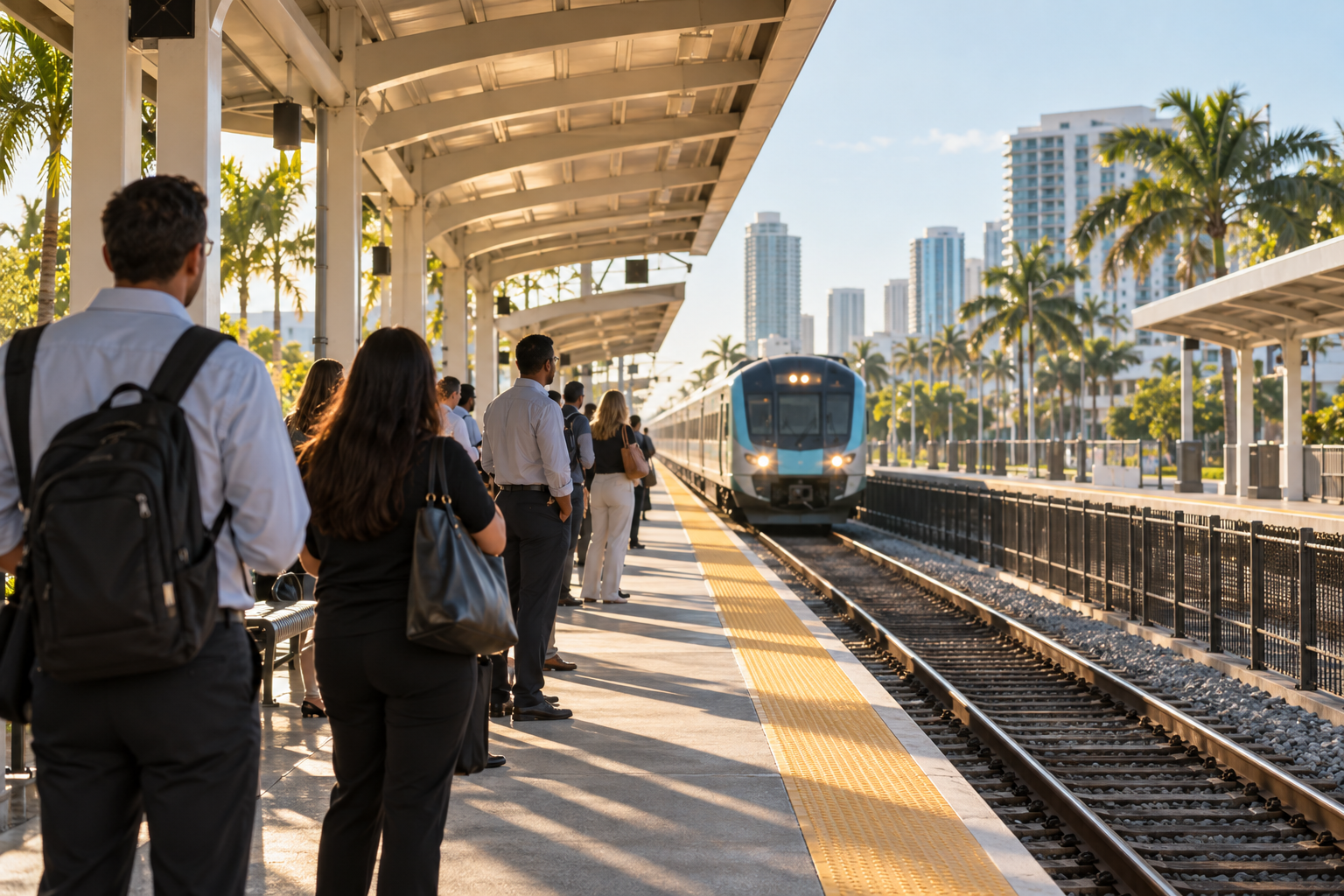
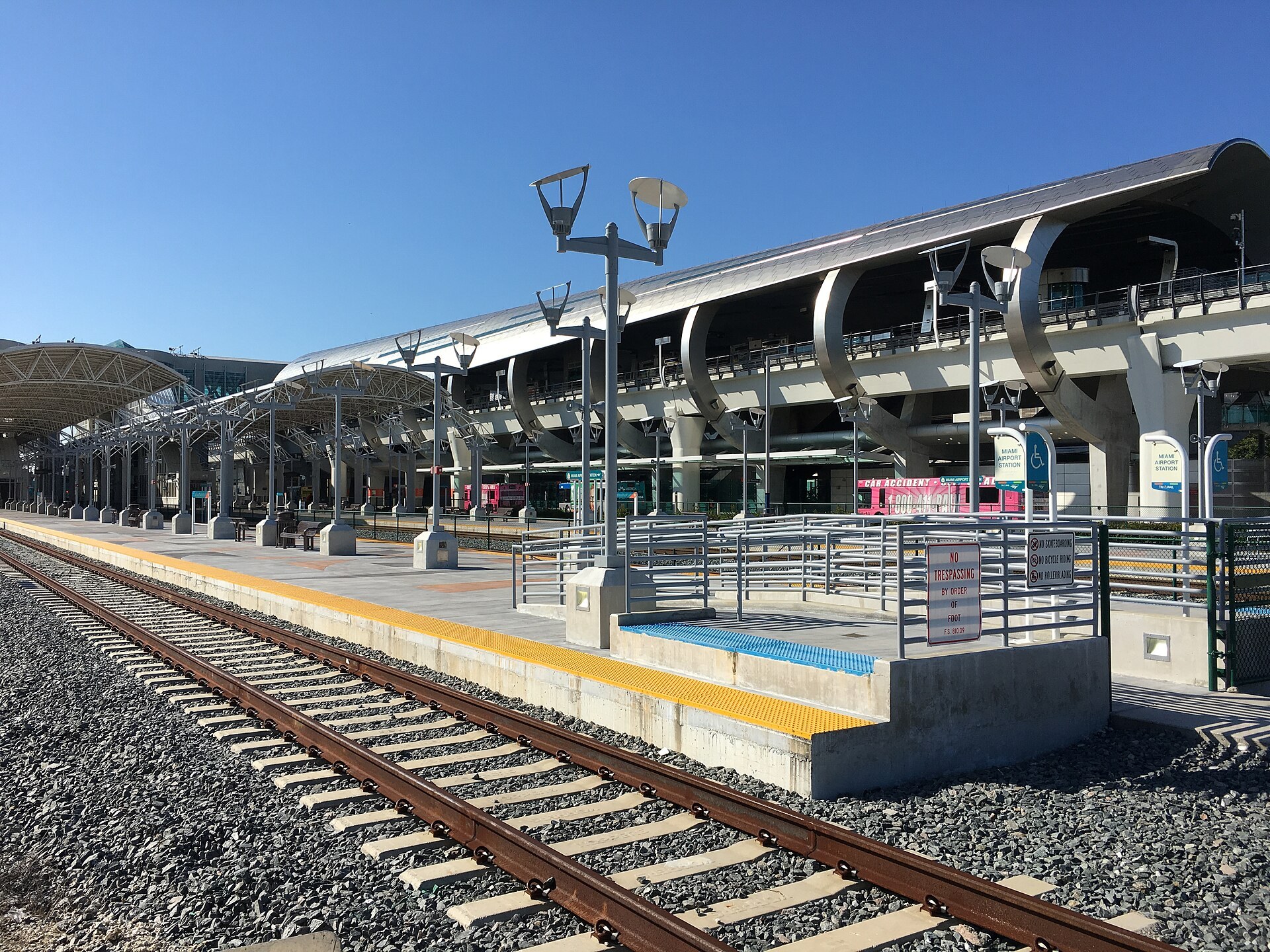
Tri-Rail publishes two timetables: one for weekdays and one for weekends and holidays. That is the whole system. There is no separate summer or school schedule. Both live under Schedules on the official site, and the Tri-Rail app shows the same data with live train positions.
How the weekday schedule works
Weekday service starts before 5 a.m. at both ends of the line and finishes around midnight. Trains run every 20 to 30 minutes during the morning and afternoon peaks. Between the peaks, and in the evening, headways stretch to about an hour.
The peaks skew toward the commuter flow: southbound in the morning, northbound in the afternoon. Both directions still run through the day, so a reverse commute works fine. You just get the hourly pattern more often.
Weekday trains carry the heaviest crowds between Boca Raton and Fort Lauderdale from about 7 to 8:30 a.m. If you want a seat on the upper level, be on the platform a few minutes early.
How the weekend and holiday schedule works
Weekend trains run roughly every hour from about 5 a.m. to around 11 p.m. The last northbound and last southbound trains of the night are the ones that catch people out, so check that departure time specifically before an evening out.
The weekend timetable also applies on major holidays. Tri-Rail has historically used it on New Year’s Day, Memorial Day, Independence Day, Labor Day, Thanksgiving and Christmas. The holiday list is posted under Schedules each year, so confirm before a long weekend.
The weekend fare is a flat $5 round trip. Many riders don’t realize this applies on holidays too, even a Monday or Thursday.
How to read the station schedule
The printed and online Tri-Rail timetable is a grid. Stations run down the left side, north to south on the southbound page and south to north on the northbound page. Each column is one train, labeled with a train number.
Read down a column to see where that train stops and when. Read across a row to see every departure from your station. That row is your “station schedule,” and it’s the fastest way to pick a train.
A few things to watch for in the grid:
- A dash in a cell means the train does not stop there. Most trains stop everywhere, but a few skip stops.
- Times at the final station are arrival times. Times everywhere else are departures.
- Train numbers help when you call customer service about a delay. Note yours.
Miami Airport trains versus MiamiCentral trains
Since January 2024, some Tri-Rail trains leave the main line at Metrorail Transfer and run on the Florida East Coast tracks into MiamiCentral, the downtown station shared with Brightline. This is the Downtown Miami Link.
Those trains do not stop at Hialeah Market or Miami Airport. The other trains do the opposite: they continue to Miami Airport and never touch downtown.
The schedule marks which trains go where. The platform signs and the conductor’s announcement at Metrorail Transfer repeat it. If you’re headed to the airport and find yourself on a downtown train, get off at Metrorail Transfer and wait for the next airport train, or ride Metrorail’s Orange Line from there to the airport.
The number of downtown trains has been lower than the number of airport trains since the link opened. Expect that split to shift over time, which is another reason to read the current timetable instead of relying on memory.
Typical travel times
These are approximate, based on the pattern of the timetable. Add a few minutes for freight interference, which happens because Tri-Rail shares its tracks with Amtrak and CSX.
| Trip | Approximate time on Tri-Rail | Same trip on I-95 in peak traffic |
|---|---|---|
| Mangonia Park to Miami Airport | About 2 hours | 1.5 to 2.5 hours |
| West Palm Beach to Fort Lauderdale | About 1 hour | 50 to 90 minutes |
| Boca Raton to Fort Lauderdale | About 30 minutes | 30 to 60 minutes |
| Fort Lauderdale to Miami Airport | About 50 to 55 minutes | 40 to 80 minutes |
| Fort Lauderdale to FLL Airport station | About 10 minutes | 15 to 25 minutes |
| Hollywood to MiamiCentral | About 40 minutes | 35 to 70 minutes |
The train rarely beats a car with an empty highway. It wins when the highway is not empty, which in South Florida is most of the day.
Step 3: Get to the station
For most riders this means driving to a park-and-ride lot. Tri-Rail parking is free at every station except Miami Airport and MiamiCentral, where the garages belong to other agencies and charge their own rates.
Lots fill on weekday mornings at the busiest stations, especially Boca Raton, Cypress Creek and Fort Lauderdale. Golden Glades and Mangonia Park almost never fill. If you arrive after 8 a.m. at a full lot, driving one station north or south usually solves it in under ten minutes.
Overnight parking for an airport trip is allowed at the free lots, but it is at your own risk and the lots are not staffed. Plenty of locals do it for short trips. For a two-week vacation, weigh the saving against the exposure.
Local tip
Flying out of FLL? Park free at Sheridan Street or Hollywood, ride one or two stops to the FLL Airport station and take the free shuttle. You skip airport parking rates and the Griffin Road traffic at the same time.
Bus connections
All three county bus systems meet Tri-Rail at most stations:
- Palm Tran in Palm Beach County
- Broward County Transit, usually called BCT, in Broward
- Miami-Dade Transit buses and Metrorail in Miami-Dade
Bus fares are separate from Tri-Rail fares. Each agency has its own card or app, though the EASY Card works on Miami-Dade Transit and Tri-Rail. Check each agency’s trip planner for the exact route serving your station, because route numbers change more often than the train schedule does.
Shuttles
SFRTA runs a small number of connecting shuttle buses from certain stations to nearby employers, campuses and airport terminals. The list has shrunk over the years and shifts with funding. The station pages on the Tri-Rail site list the current shuttles, and the two airport connections are the ones most riders need.
Walking and biking
A handful of stations sit close to where people actually want to go. West Palm Beach station is a short walk from the downtown core and the Amtrak waiting room. MiamiCentral puts you in the middle of downtown Miami. Fort Lauderdale station is not downtown; it’s about two and a half miles west on Broward Boulevard, and the bus along Broward Boulevard is the easy fix.
Bikes are welcome on board at no charge, and bike racks exist at most stations. More on where bikes go on the train below.
Step 4: Buy your ticket
You have three ways to pay. Pick one and stick with it, because mixing them creates the confusion that gets people fined.
Weekday one-way fares by zone
| Zones traveled | Full fare, one way | Discount fare, one way | Example trip |
|---|---|---|---|
| 1 | $2.50 | $1.25 | Fort Lauderdale to Sheridan Street |
| 2 | $3.75 | $1.90 | Boca Raton to Cypress Creek |
| 3 | $5.00 | $2.50 | Fort Lauderdale to Miami Airport |
| 4 | $5.65 | $2.85 | Boca Raton to Hollywood |
| 5 | $6.25 | $3.15 | Delray Beach to Metrorail Transfer |
| 6 | $6.90 | $3.45 | West Palm Beach to Miami Airport |
A round trip is twice the one-way price on weekdays. Discount fares are half price and rounded; the machine shows the exact figure. On weekends and holidays, ignore the table: the flat $5 round trip applies to any distance, with discount riders paying half.
Fares have held at these levels for years, but SFRTA’s board can change them. Confirm the current table under Fares on the official site before budgeting a monthly commute.
EASY Card
The EASY Card is the plastic smart card shared by Tri-Rail and Miami-Dade Transit. You load money or a pass onto it, tap the validator on the platform before boarding, and tap again at the validator when you exit. The system calculates the zones and deducts the right fare.
The tap-off step matters. Skip it and the system may charge you the maximum fare or flag the trip as incomplete. The validators are the small posts near the platform entrance, not on the train.
Buy and reload the card at any station ticket machine. The card itself carries a small purchase fee, so it only makes sense if you’ll ride more than a couple of times.
EASY Ticket
The EASY Ticket is the paper version, printed by the same machine. It works for a single ride, a round trip or a day. Tap it the same way you’d tap a card. It’s the right choice for a one-time airport run.
The Tri-Rail app
The official Tri-Rail app sells mobile tickets you activate before boarding and show the conductor. It also carries the live schedule and service alerts. If your phone dies mid-trip, you have no ticket, so screenshot nothing and keep a charger handy.
Passes and discounts
Monthly passes and 12-trip passes are sold by zone count and load onto an EASY Card. A monthly pass pays off quickly for anyone riding ten or more round trips a month. Employer programs through SFRTA can cut the price further, so ask your HR department before paying full price.
Discount fares, roughly half the full fare, apply to riders 65 and older, riders with disabilities, Medicare cardholders and students with valid school ID. Children under 5 ride free with a paying adult. Bring proof of eligibility; conductors ask.
Good to know
Tri-Rail is proof-of-payment. Conductors check tickets on nearly every trip, and riding without a valid activated ticket or tapped card can mean a fine well above the fare. Buying on board is not an option.
Step 5: Board and ride
Every station has two platforms, one for each direction. Northbound trains head toward West Palm Beach and Mangonia Park. Southbound trains head toward Miami. The signage says which is which, and the station schedule row tells you the time. Match both.
Trains are bi-level with a mix of older Bombardier cars and newer Hyundai Rotem cars. Doors are at the lower level. Stairs lead up to the quieter upper deck, where the view of the back lots of South Florida is honestly better than it sounds.
On board
- Free Wi-Fi runs on most trains. It’s fine for email, not for streaming.
- Restrooms are on board, usually in one car per train. They’re serviceable, not pleasant.
- Power outlets are limited. Treat them as a bonus.
- Seating is first come. There are no reservations and no quiet car.
- Bikes go in the designated lower-level areas, marked with a bike symbol. Stay with your bike.
- Service animals ride free. Other pets need to be in a carrier; confirm the current pet rule before you bring one.
- Food and non-alcoholic drinks are allowed. Keep it tidy.
The conductor walks the train and checks tickets. Have your paper ticket, card or phone ready rather than digging for it after they ask.
Announcements and delays
Stops are announced, and the digital signs inside newer cars show the next station. Delays happen, usually from freight traffic, a signal issue or a weather hold during summer thunderstorms. The app’s alerts and the Tri-Rail social accounts post updates faster than the station speakers do.
If a train is canceled or the tracks close for work, SFRTA runs a bus bridge between the affected stations. These show up most often on weekends. Check alerts before a Saturday trip to Miami.
Step 6: Finish the trip
Your last mile is where Tri-Rail trips succeed or fall apart. Plan it before you leave home.
Miami Airport
Miami Airport station sits in the Miami Intermodal Center, the big building that also holds the rental car center and a Metrorail station. From the Tri-Rail platform, follow signs to the MIA Mover, the free automated train that reaches the airport terminal in a few minutes. Allow 15 minutes from stepping off Tri-Rail to standing at check-in.
Flying into MIA? Reverse it: terminal, MIA Mover, then follow the Tri-Rail signs. Ticket machines are near the platform.
Fort Lauderdale airport
The FLL Airport at Dania Beach station is across the highway from the terminals, not inside them. A free shuttle bus runs between the station and the terminals, timed loosely to the trains. Confirm the shuttle hours on the station page, especially for late evening and early morning flights. A rideshare from the station to the terminal is short and cheap if the shuttle has stopped.
Palm Beach airport
West Palm Beach station is the closest stop to PBI, about two miles away. There is no on-airport rail station. Use the connecting bus or shuttle listed on the station page, or a short rideshare. Allow 20 minutes.
Downtown Miami and Metrorail
MiamiCentral connects by walkway to Government Center, the hub where Metrorail and the free Metromover meet. From there you can reach Brickell, the Kaseya Center area, Vizcaya and the University of Miami without a car.
If your train ends at Miami Airport instead, Metrorail’s Orange Line runs from the same intermodal center into downtown and south to Dadeland. Metrorail charges its own fare, payable with the same EASY Card. Tap it at the Metrorail gates; your Tri-Rail fare does not cover it.
Downtown Fort Lauderdale
Fort Lauderdale station is on Broward Boulevard, west of I-95. Downtown, Las Olas and the county courthouse are east. The BCT bus along Broward Boulevard takes about 15 minutes to the courthouse area. If you have business with the broward county clerk of courts, that bus drops you within a short walk and saves you the downtown garage fees.
Tri-Rail versus Brightline
South Florida has two passenger railroads running roughly parallel, and people mix them up constantly. They serve different jobs.
| Tri-Rail | Brightline | |
|---|---|---|
| Operator | SFRTA, a public agency | Private company |
| Route | Mangonia Park to Miami Airport or MiamiCentral | Miami to Orlando via West Palm Beach |
| South Florida stations | 18 plus MiamiCentral | Miami, Aventura, Fort Lauderdale, Boca Raton, West Palm Beach |
| Airport stations | MIA and FLL | None directly |
| Typical one-way fare in region | $2.50 to $6.90 | Varies by demand, usually several times more |
| Weekend fare | Flat $5 round trip | Market pricing |
| Frequency | Every 20 to 60 minutes | Roughly hourly |
| Parking | Free at most stations | Paid garages |
| Seat reservations | None | Assigned seats |
| Food on board | Bring your own | Café car |
Take Tri-Rail when you want the airports, a cheap fare, a suburban park-and-ride or a stop Brightline doesn’t make. Take Brightline when you want downtown Fort Lauderdale to downtown Miami in half an hour with a reserved seat, or when you’re heading to Orlando.
The two share MiamiCentral, so a trip can combine them. Ride Brightline from Aventura into MiamiCentral, then Tri-Rail out to Metrorail Transfer and beyond, or the reverse. Note that Tri-Rail does not serve Aventura. If your destination is aventura mall, Brightline’s Aventura station is the rail option, not Tri-Rail.
Using Tri-Rail for games, days out and errands
Tri-Rail gets written up as a commuter line, but a good share of its weekend riders are heading somewhere fun. The flat $5 weekend round trip makes it the cheapest way to cross the region.
Dolphins and Hard Rock Stadium
Golden Glades station is the closest stop to Hard Rock Stadium, about five miles northwest in Miami Gardens. On game days the plan that works is train to Golden Glades, then a rideshare or the event bus the county sometimes runs. Rideshare surge after the final whistle is real, so plan to leave early or linger late. Match the train times against the dolphins schedule, because a 1 p.m. kickoff and a Sunday night game need very different return trains.
Heat games and downtown Miami events
MiamiCentral is the ticket for anything downtown. From the station it’s a short Metromover hop or a 15-minute walk to the Kaseya Center. On weekday evenings, confirm the last downtown-bound and last northbound train before you buy miami heat tickets for a late tip-off. Weekend service ends earlier than the weekday schedule.
Beaches
No Tri-Rail station is on the sand. The practical beach trips pair the train with a short bus or rideshare:
- Hollywood station to Hollywood Beach and the Broadwalk, about three miles east.
- Lake Worth Beach station to Lake Worth Beach, via the bus along Lake Worth Road.
- Fort Lauderdale station to Fort Lauderdale Beach, by bus along Broward Boulevard then Las Olas.
- Deerfield Beach station to the pier, roughly three miles east on Hillsboro.
Go early on summer weekends. The hourly schedule means a missed train costs you an hour of beach time.
Shopping and errands
Miami Airport station is the jumping-off point for the western Miami malls. Dolphin Mall is a few miles west of the intermodal center, close enough for a cheap rideshare but not a walk. If a dolphin mall trip is the whole point of the day, driving usually wins on time. If you’re already at MIA with hours to kill, the train-plus-rideshare combo beats a taxi from the terminal.
Courts and county offices
Tri-Rail runs within a bus ride of the main courthouses in all three counties. West Palm Beach station is closest to the Palm Beach County courthouse, a short walk or one bus stop into downtown. Fort Lauderdale station connects by bus to the Broward courthouse. Miami’s civil and criminal courthouses are reachable from MiamiCentral and Metrorail.
Jurors and people with morning hearings should take a train one slot earlier than they think they need. Freight delays don’t care about your docket time.
Common problems and how to fix them
| Problem | Why it happens | Fix |
|---|---|---|
| Charged the maximum fare on an EASY Card | You didn’t tap off at the exit validator | Tap off every time; call 1-800-TRI-RAIL to dispute a bad charge |
| Train went downtown, you wanted the airport | Downtown Miami Link trains split from the main line | Check the last stop in the timetable; transfer at Metrorail Transfer |
| Parking lot full at 8:15 a.m. | Boca, Cypress Creek and Fort Lauderdale fill on weekdays | Use the next station north or south, or arrive before 7:45 |
| Waited an hour on a weekday midday | Off-peak headways are hourly | Plan around the station row in the timetable, not peak habits |
| Ticket machine won’t take your card | Reader faults are common on older machines | Use the app, or carry cash as a backup |
| No shuttle at the airport station late at night | Shuttles run limited hours | Check shuttle times first; rideshare the last mile |
| Bus bridge instead of a train on Saturday | Weekend track work | Read alerts in the app before leaving home |
| Conductor fined you despite buying a ticket | App ticket not activated, or card not tapped | Activate before boarding; tap at the platform, not on the train |
| Wrong platform, train left without you | Northbound and southbound platforms are separate | Read the platform sign; ask any rider which direction it is |
| Stuck between stations with no announcement | Freight or signal hold | Check the app alerts; crews usually post the cause within minutes |
When to get help
Call 1-800-TRI-RAIL for fare disputes, lost items and accessibility requests, or use the customer service section of the official site. For a bad EASY Card charge, note your train number, both stations and the time before you call. Station attendants exist only at a few busy stops, so the phone line and the app’s alert feed are your real support desk.
What this means for riders
Tri-Rail is the only transit option that links all three counties and both big airports on one fare, and it does it at a price that hasn’t moved much in years. For a regular commuter between Palm Beach County and Broward, or Broward and Miami, a monthly pass costs less than one month of gas and tolls on I-95.
The weak spots are real. The last mile is on you at most stations. Service thins to hourly outside the peaks and on weekends. Freight trains share the tracks and occasionally hold passenger trains for ten or fifteen minutes.
The practical takeaway: Tri-Rail works best when you treat the timetable as a hard constraint and plan your connection before you buy the ticket. Riders who do that use it for years. Riders who show up and hope end up waiting on a hot platform.
What happens next
A few things are worth watching, and none of them should change how you ride this month.
The Downtown Miami Link is the biggest recent change. SFRTA has signaled it wants more trains serving MiamiCentral over time, which would shift the airport-versus-downtown split in the timetable. Each schedule update is posted under Schedules, usually with a few weeks’ notice.
Fare technology is the next likely shift. The EASY Card system is aging, and regional agencies have discussed a shared, tap-to-pay fare platform across Tri-Rail, Miami-Dade Transit, BCT and Palm Tran. Until that arrives, the EASY Card, paper tickets and the app remain the three ways to pay.
Longer term, planners have studied the Tri-Rail Coastal Link, a service on the Florida East Coast tracks through the downtowns of the three counties, and extensions north of Mangonia Park. None of it is funded in a way you can plan around. Treat the current 18 stations plus MiamiCentral as the system for the foreseeable future.
SFRTA’s governing board meets monthly in Pompano Beach, and its agendas are public. If you want to know about a fare increase before it hits the machines, that is where it shows up first.
FAQ
What time does the first Tri-Rail train run?
On weekdays the first trains leave both ends of the line before 5 a.m. Weekend service starts around 5 a.m. Exact first and last departures are in the current timetable under Schedules on the Tri-Rail site and in the app.
How much is a Tri-Rail ticket from West Palm Beach to Miami?
That is a six-zone trip at $10 one way on weekdays, $20 round trip. On weekends and holidays it is a flat $5 round trip. Discount riders pay about half.
Does Tri-Rail go to Miami International Airport?
Yes. Miami Airport station is inside the Miami Intermodal Center, and the free MIA Mover carries you to the terminal in a few minutes. Make sure your train ends at Miami Airport, not MiamiCentral.
Does Tri-Rail stop at Fort Lauderdale airport?
Yes, at the FLL Airport at Dania Beach station. A free shuttle runs between the station and the terminals during posted hours. Confirm the shuttle schedule for early or late flights.
Is parking free at Tri-Rail stations?
Parking is free at every station on the main line except Miami Airport, where the intermodal center garage charges its own rate. MiamiCentral has no Tri-Rail parking. Lots are unstaffed, so overnight parking is at your own risk.
How often do Tri-Rail trains run?
Every 20 to 30 minutes in weekday peaks, roughly hourly midday, evenings and all weekend. Holidays follow the weekend pattern.
Can I bring a bike on Tri-Rail?
Yes, at no charge. Bikes ride in the marked lower-level areas of the train. Stay with your bike and board where the bike symbol is posted.
What is the difference between Tri-Rail and Brightline?
Tri-Rail is the public commuter line with 18 stations, airport stops, cheap fares and free parking. Brightline is a private, faster, pricier service with five South Florida stations and trains to Orlando. They share MiamiCentral and nothing else.
Does Tri-Rail run on holidays?
Yes, on the weekend schedule. The annual holiday list is posted on the official site, and the flat $5 weekend fare applies on those days.
Where do I confirm the current Tri-Rail schedule and fares?
The Schedules and Fares sections of the official Tri-Rail website, the Tri-Rail app, or 1-800-TRI-RAIL. This guide reflects the system’s long-standing pattern, but SFRTA changes timetables several times a year.