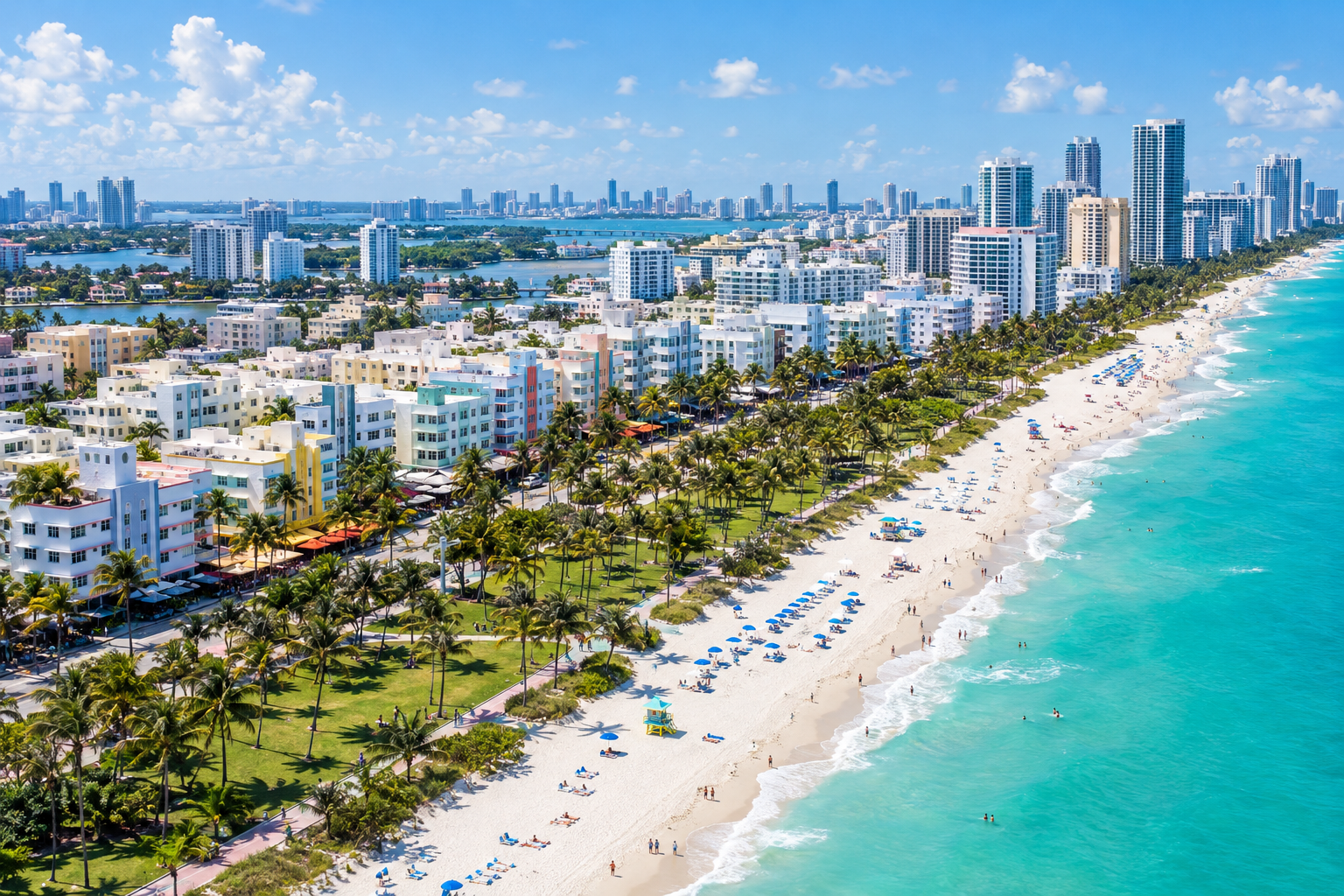
South Beach is the southern end of the city of Miami Beach, the stretch from South Pointe Park north to roughly Dade Boulevard that holds Ocean Drive, Lummus Park and the Art Deco Historic District. Miami Beach is a separate city from Miami, on a barrier island across Biscayne Bay, so plan on a causeway crossing, garage parking, and a day spent on foot between the beach, the deco blocks, Lincoln Road and Española Way.
What South Beach Is, and How It Fits Into Miami Beach
People search for south beach miami, south beach florida and miami beach south beach as if they were three different places. They are not. Miami Beach is the incorporated city on the barrier island east of Miami, and South Beach (often shortened to SoBe) is its southernmost and most famous neighborhood. A South Beach mailing address reads “Miami Beach, FL,” not “Miami, FL,” and the city of Miami Beach runs its own police, parking, beaches and permits.
Most locals put the northern edge of South Beach at Dade Boulevard and the Collins Canal, with the Atlantic Ocean on the east and Biscayne Bay on the west. Hotels and real estate listings often stretch the label up to about 23rd Street to include Collins Park and the museum blocks. North of that you are in Mid-Beach, home to the Fontainebleau and Faena, and beyond 63rd Street lies North Beach.
Inside South Beach the character changes every few blocks, so it helps to know the zones before you pick a hotel or a parking garage.
| Zone | Rough boundaries | What it’s like | Best for |
|---|---|---|---|
| South of Fifth (SoFi) | 5th Street south to South Pointe | Quieter, residential towers, upscale dining | Families, sunset walks, Joe’s Stone Crab |
| Ocean Drive and Lummus Park | 5th to 15th Street, oceanfront | Deco hotels, sidewalk cafes, busiest beach | First-time visitors, people-watching |
| Collins and Washington Avenues | 5th to 17th Street, inland | Hotels, bars, clubs, late-night food | Nightlife, budget and mid-range stays |
| Flamingo Park area | Roughly 6th to 15th, west of Washington | Residential deco apartments, public park | Tennis, pool, quieter rentals |
| Lincoln Road and Española Way | 14th to 17th Street | Pedestrian streets, shops, outdoor dining | Shopping, evening strolls |
| Collins Park / Museum area | 17th to about 23rd Street | Large resorts, The Bass, Convention Center | Art, big-hotel stays, Art Basel |
| Sunset Harbour | Northwest corner, near Dade Blvd and the bay | Neighborhood restaurants, gyms, cafes | Local-style eating away from crowds |
Plan your visit
- Pick your base zone from the table above before booking.
- Cross on the MacArthur Causeway (I-395) to 5th Street.
- Park in a city garage near your first stop.
- Spend the morning on the beach at Lummus Park or South Pointe.
- Walk Ocean Drive and the deco blocks around midday.
- Head to Lincoln Road or Española Way for late afternoon.
- Catch sunset from South Pointe Pier or the bay side.
- Eat dinner, then decide how late your night runs.
What you need
- Reef-safe sunscreen, hat and sunglasses
- Refillable water bottle (no glass on the beach)
- Photo ID if you plan to drink
- Phone with a parking app and charger
- Light layer for overly air-conditioned restaurants
- Cash or card for chair and umbrella rentals
Getting to South Beach and Parking
Driving in
Three causeways connect the mainland to Miami Beach, and the one you pick decides where you land. The MacArthur Causeway (I-395, signed as A1A) runs from downtown Miami past PortMiami and Star, Palm and Hibiscus islands, ending at 5th Street in the heart of South Beach. It is the default route for most drivers.
The Venetian Causeway, a low, older drawbridge route with a small toll, crosses a chain of residential islands and lands near Dade Boulevard and the Sunset Harbour area. Cyclists and runners love it; drivers in a hurry should skip it, since the drawbridges open for boat traffic. The Julia Tuttle Causeway (I-195) lands at 41st Street in Mid-Beach, which works if you are coming from I-95 north of downtown but leaves you a drive south on Collins or Alton Road.
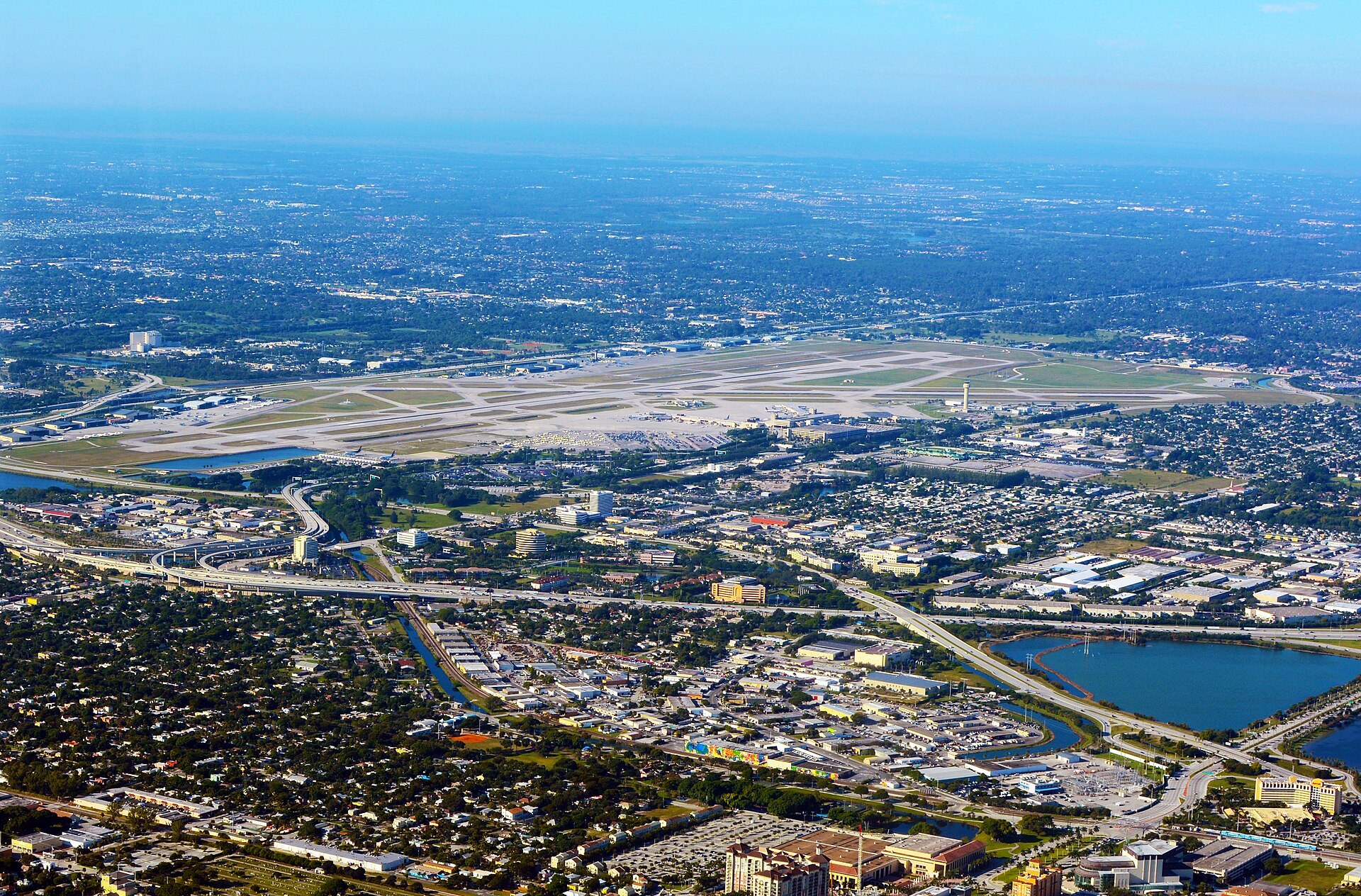
From Miami International Airport, the drive is roughly 11 to 12 miles and takes about 20 minutes with clear roads, or 40 minutes or more at rush hour and on event weekends. Our Miami International Airport guide covers terminals, rental car pickup and rideshare zones if you are landing and heading straight to the beach. Fort Lauderdale-Hollywood International is roughly 25 to 30 miles north, usually 35 to 60 minutes by car depending on I-95.
Transit, trolley and bikes
You can reach South Beach without a car, and once you are there you may not want one. Miami-Dade Transit’s Metrobus 150, the Miami Beach Airport Flyer, links MIA with Miami Beach over the MacArthur Causeway, with stops in South Beach and up Collins Avenue. Route 120 (Beach MAX) and Route 119 also connect downtown Miami with the beach. Regular Metrobus fares are modest, but routes and fares get revised, so check the Miami-Dade Transit section of the county’s website or the GO Miami-Dade Transit app before you ride.
Inside the city, the Miami Beach Trolley runs free loops, including a South Beach route that covers Washington Avenue, Alton Road and the blocks between. It is slow in traffic but genuinely useful for getting from SoFi to Lincoln Road without paying for parking twice. Citi Bike Miami docks are scattered across South Beach, and the flat terrain makes biking the fastest way to move between zones. Note that bikes are not allowed on every stretch of the Beachwalk at every hour; follow the posted signs.
A water taxi has operated at various times between downtown Miami and Miami Beach, and the service, landing points and schedules have changed more than once. If arriving by boat appeals to you, confirm the current operator, docks and timetable with the City of Miami Beach before planning around it.
| Option | Route | Typical time to South Beach | Cost notes |
|---|---|---|---|
| Car from MIA | SR 836 to I-395, MacArthur Causeway | 20 to 40 min | Plus garage or meter parking |
| Rideshare or taxi from MIA | Same route | 20 to 40 min | Surge pricing on weekends and events |
| Metrobus 150 Airport Flyer | MIA to Miami Beach via MacArthur | About 45 to 60 min | Standard county fare; confirm current fare |
| Metrobus 119 or 120 | Downtown Miami to the beach | About 20 to 35 min | Standard county fare |
| Miami Beach Trolley | Loops within Miami Beach | Varies with traffic | Free |
| Citi Bike | Docks throughout South Beach | Fastest for short hops | Pay per ride or pass |
| Car from Fort Lauderdale | I-95 south to I-395 | 35 to 60 min | Plus parking |
Parking: garages beat the street
South Beach parking is run by the City of Miami Beach Parking Department, and the rule locals follow is simple: use a municipal garage, not a private lot. City garages near the action include the 7th Street Garage off Collins, the 12th Street and 13th Street garages close to Ocean Drive, and the 17th Street Garage near Lincoln Road and the New World Center. Metered street spaces exist, but they fill early and enforcement is strict.
Rates differ by zone, time of day and season, and the city sets special flat event rates during spring break, holiday weekends and major festivals. Miami Beach residents get discounted rates through the city’s resident parking programs, which is why you will see locals happily parking in garages that visitors find expensive. Check the parking section of the City of Miami Beach website for current hourly rates, event pricing and the pay-by-phone apps the city accepts.
Good to know
Private lots and residential zones tow fast, and recovery fees add up quickly. Read every sign, and never park in a spot marked for residents with a zone permit.
Local tip
Park once in the 17th Street Garage, walk Lincoln Road, then ride the free trolley or a Citi Bike south. You avoid paying for a second garage near Ocean Drive.
The Beach: Lummus Park, SoFi and North of 15th
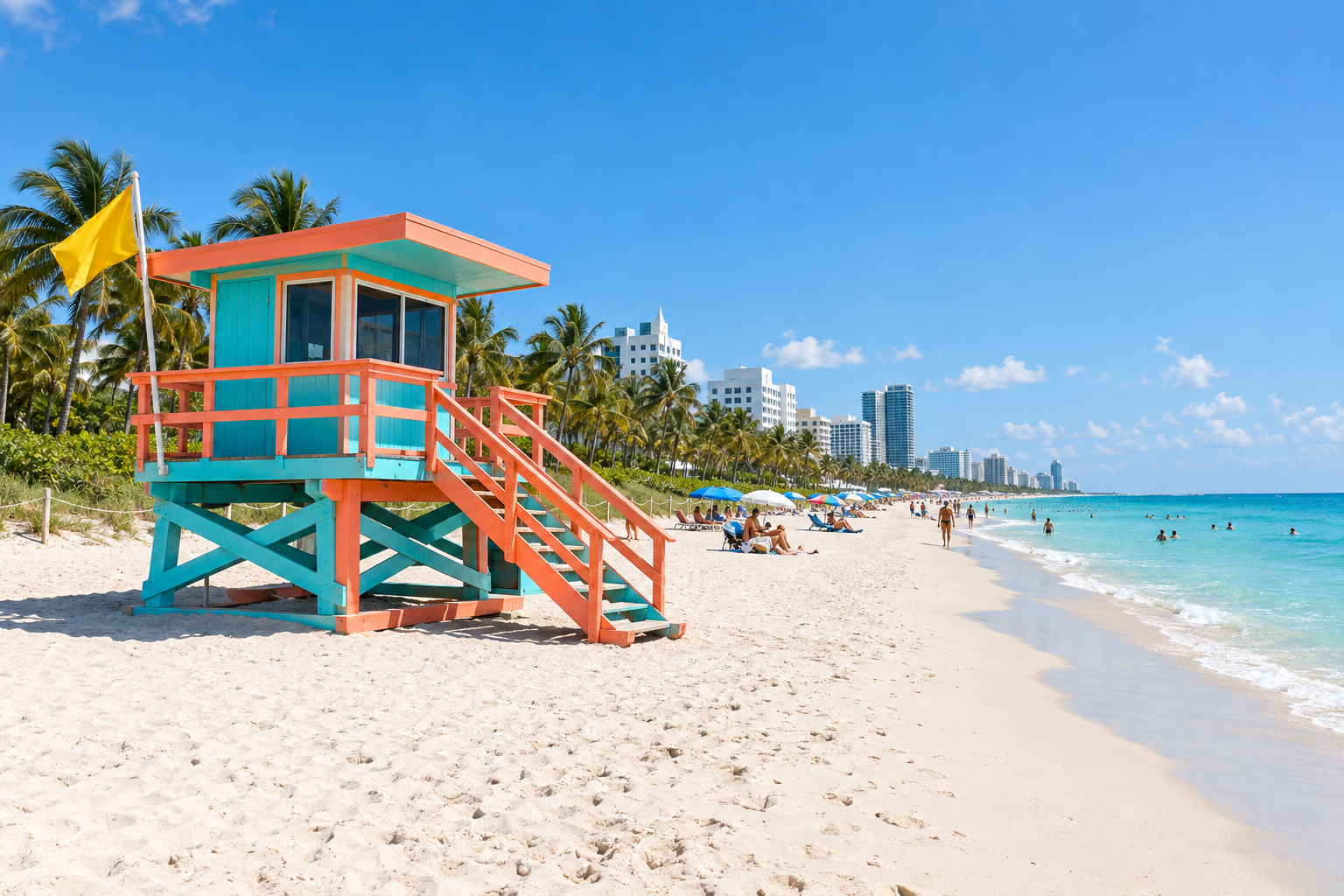
The sand runs continuously from South Pointe to Mid-Beach and beyond, but each section has its own crowd. Every stretch is public, free to walk onto, and staffed by Miami Beach Ocean Rescue during posted daytime hours. Hotel chair setups are for guests, though independent vendors rent chairs and umbrellas on most public stretches.
Lummus Park (5th to 15th Street)
This is the South Beach of postcards. Lummus Park runs along the east side of Ocean Drive between 5th and 15th Streets, with a wide strip of sand, palm-lined grass, and the brightly painted lifeguard stands that started appearing after Hurricane Andrew in 1992. You will find public restrooms, outdoor showers, volleyball nets and the Muscle Beach outdoor gym near 9th Street.
Lummus Park is busy from late morning through sunset, loud on weekends, and the easiest place to spend a day if you want everything within a few steps. Arrive before 10 a.m. on a weekend if you want a spot near the water without squeezing in.
South of Fifth
Below 5th Street the beach narrows toward the jetty at Government Cut and the crowd shifts toward locals and families from the condo towers. The water here often looks calmer, and you have South Pointe Park’s restrooms, shade and grass right behind you. It is the stretch most residents pick when they want the beach without the Ocean Drive soundtrack.
15th to 23rd Street
North of 15th, the beach fronts big resorts such as the Loews, the Setai and the SLS, and it is also where the city has historically allowed a LGBTQ-friendly crowd to gather around 12th Street a few blocks south. Mornings here are quiet, and the paved Beachwalk behind the dunes makes it easy to walk or jog north toward Mid-Beach.
Beach flags and rules
Miami Beach lifeguards fly warning flags from each staffed tower. Read them before you swim, because rip currents along this coast are real even on sunny days.
| Flag | Meaning | What to do |
|---|---|---|
| Green | Low hazard, calm conditions | Swim normally, still near a lifeguard |
| Yellow | Medium hazard, moderate surf or currents | Weak swimmers stay out of deep water |
| Red | High hazard, strong surf or currents | Stay out unless you are a strong swimmer; better to stay on the sand |
| Double red | Water closed to the public | Do not enter the water |
| Purple | Dangerous marine life (jellyfish, man-o’-war) | Watch for stings; ask the lifeguard |
The city’s beach rules are enforced, especially on holiday weekends. Alcohol, glass containers and expanded polystyrene (foam coolers and cups) are not allowed on the beach, and dogs are not permitted on South Beach sand; the city’s designated dog beach is in North Beach. Smoking, drones, amplified music and tents also have restrictions that the city has tightened over time, so read the signs posted at beach entrances or check the City of Miami Beach parks and beaches pages.
Good to know
Rip currents pull you away from shore, not under. Swim parallel to the beach until you are out of the pull, then head in, and swim only near a staffed lifeguard tower.
South Pointe Park and the Pier
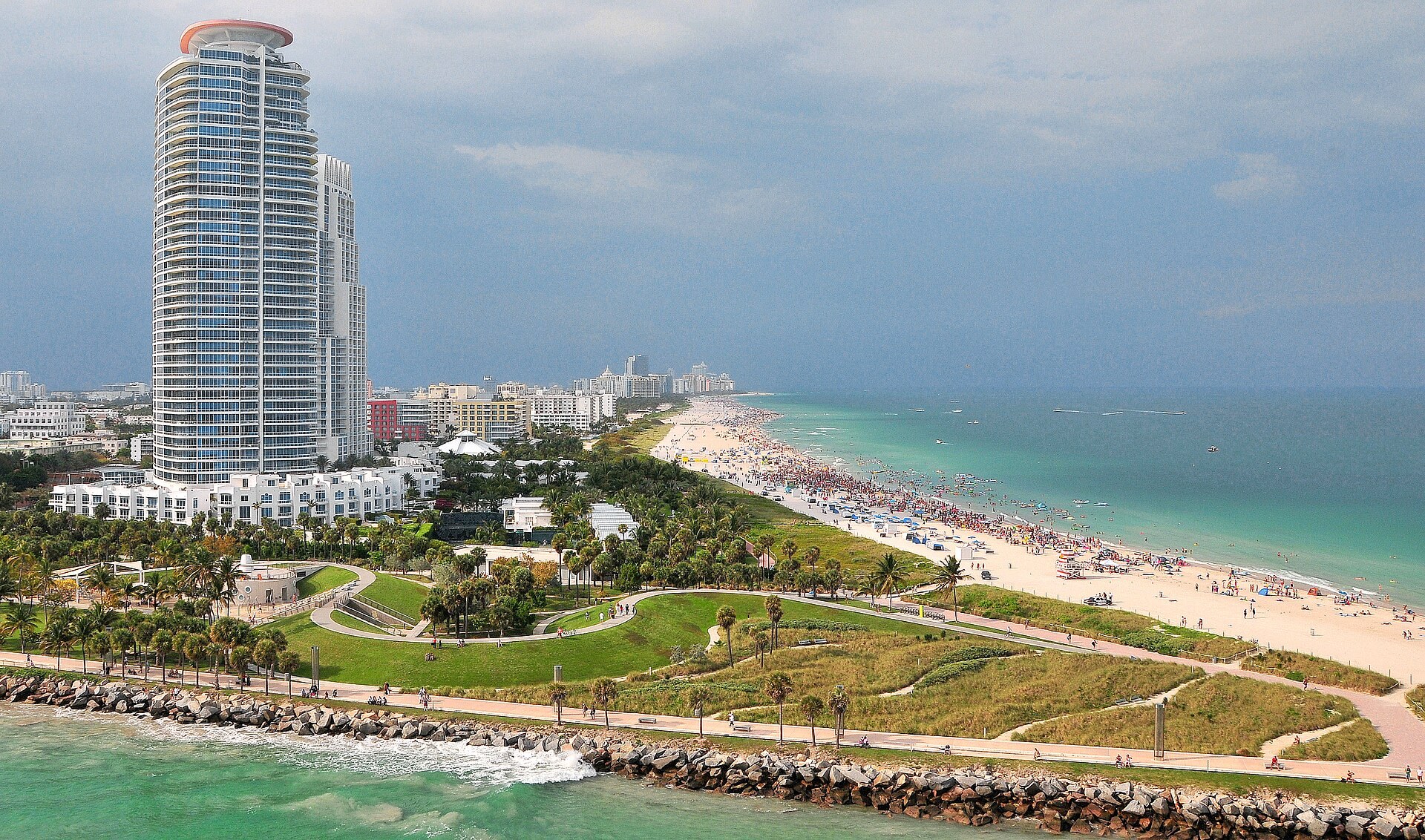
South Pointe Park, at the southern tip of the island at 1 Washington Avenue, is the best free spot in South Beach and the one locals defend most. The park has wide lawns, shaded picnic areas, a children’s splash pad and playground, a paved path along the water, and South Pointe Pier, which juts out past the jetty into the ocean.
The real show happens late afternoon on cruise days, when ships leaving PortMiami slide through Government Cut close enough to hear their horns. Weekends are busiest for departures. Bring a drink (non-alcoholic, no glass), find a spot on the seawall, and stay for sunset over the bay and the Miami skyline. Pier hours and fishing rules are set by the city, so check posted hours before you plan an early-morning visit.
Smith & Wollensky sits at the edge of the park with waterfront seating, and Joe’s Stone Crab is a short walk north on Washington Avenue.
The Art Deco Historic District
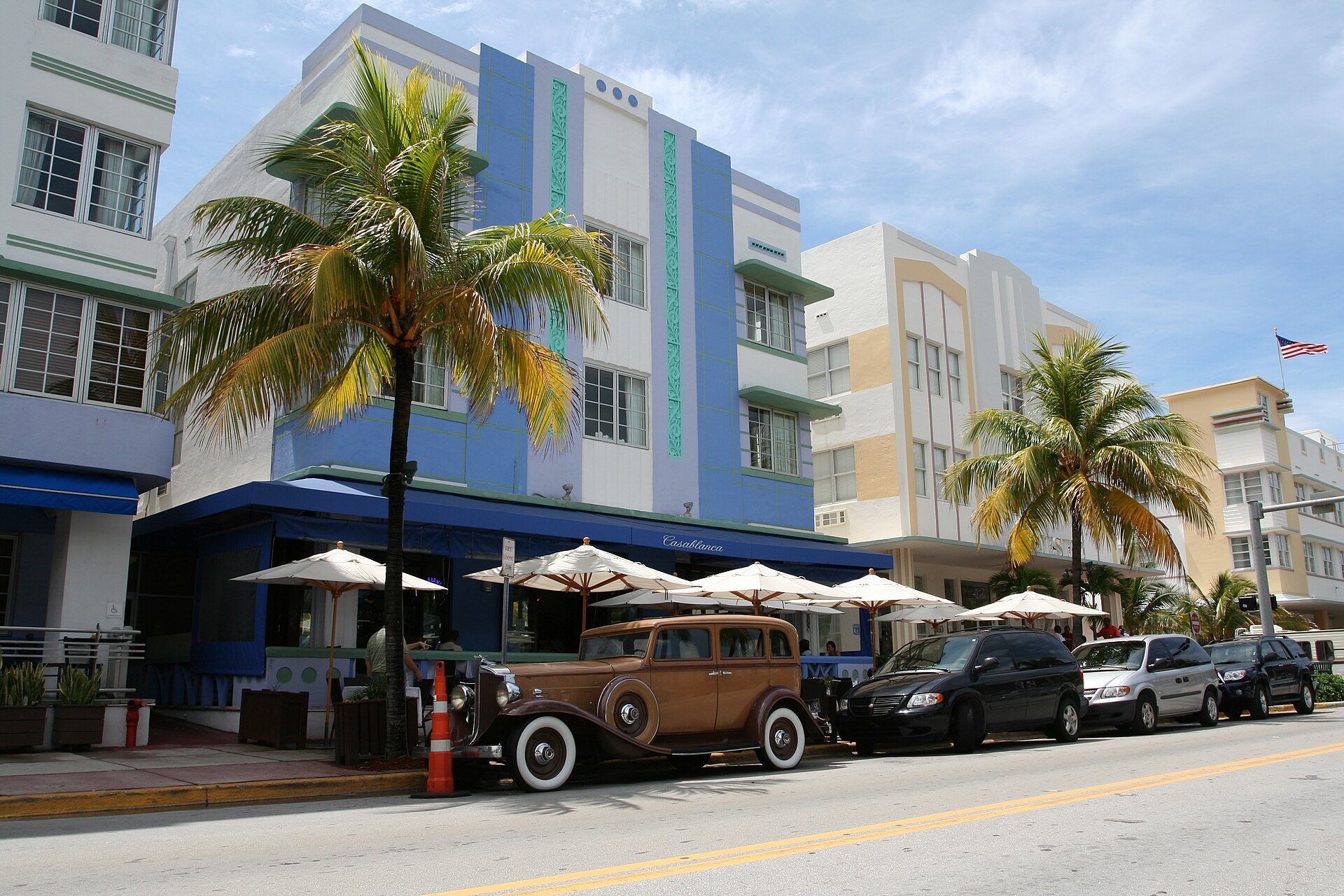
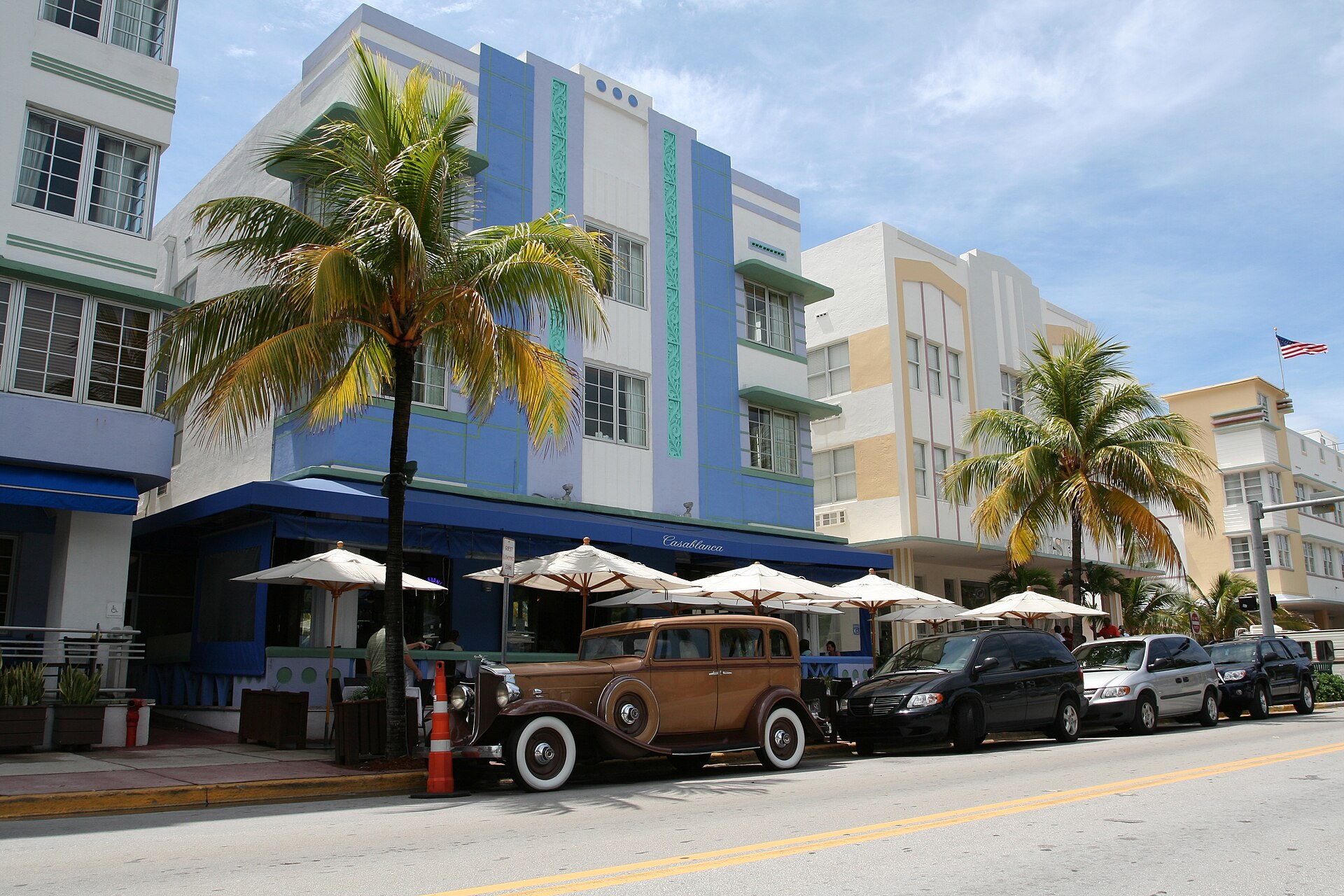
The reason South Beach looks like nowhere else is architecture. The Miami Beach Architectural District, commonly called the Art Deco Historic District, was listed on the National Register of Historic Places in 1979, the first 20th-century district to earn that status. It holds roughly 800 historic buildings, most built in the 1920s through early 1940s in Art Deco, Mediterranean Revival and Miami Modern (MiMo) styles.
The district exists because of a preservation fight. In the 1970s many of these hotels were run down and slated for demolition, and the Miami Design Preservation League, founded in 1976 by Barbara Capitman and Leonard Horowitz, pushed for protection. Horowitz is also credited with the pastel color palettes you now see along Ocean Drive.
What to look for
Classic South Beach deco is easy to spot once you know the details. Look for “eyebrows,” the thin concrete ledges shading windows; vertical neon signage and towers called finials; porthole windows and racing stripes borrowed from ocean liners; and terrazzo floors visible through hotel lobbies. Many buildings use the “rule of three,” with three-part facades, banding or decorative elements.
The densest concentration runs along Ocean Drive, Collins Avenue and Washington Avenue between roughly 5th and 15th Streets. Standouts include the Colony Hotel at 736 Ocean Drive, the Breakwater at 940 Ocean Drive, the Cardozo at 1300 Ocean Drive, and The Tides at 1220 Ocean Drive. At 1116 Ocean Drive, the Mediterranean Revival mansion once owned by Gianni Versace now operates as a hotel and restaurant, and the steps out front are one of the most photographed spots on the street.
Tours
The Miami Design Preservation League runs guided walking tours from the Art Deco Welcome Center at 1001 Ocean Drive, with a morning tour offered most days and self-guided audio options. Tours last around 90 minutes, mostly on shaded sidewalks, and they are the fastest way to understand what you are looking at. Times and prices change, so confirm on the league’s official website or at the Welcome Center. Independent operators also run food, Segway and bike tours that cover the deco blocks.
Local tip
Walk the deco blocks of Collins and Washington early on a weekday morning. The light is softer, the sidewalks are empty, and you can actually see the facades without café tables in the way.
Ocean Drive
Ocean Drive is the face of South Beach: neon-lit hotels on one side, Lummus Park and the beach on the other, sidewalk cafés in between. The famous stretch runs from 5th to 15th Street. By day it is a sightseeing walk; after dark the neon comes on and the Clevelander, Mango’s Tropical Café and other bars fill up.
The street’s traffic setup has changed repeatedly since 2020, with sections closed to cars, reopened, and redesigned, and the city has also tightened rules around late-night alcohol sales in the entertainment district. If you plan to drive or be dropped off on Ocean Drive, check the city’s current configuration first, or simply walk in from Collins.
Good to know
Some Ocean Drive restaurants sell oversized cocktails at eye-watering prices and add automatic service charges, often around 18 to 20 percent. Ask for a menu with prices before you order and read the bill before tipping again.
Lincoln Road and Española Way: Shopping and Strolling
Lincoln Road
Lincoln Road is an outdoor pedestrian mall running east to west between Washington Avenue and Alton Road, around 16th and 17th Streets. Developer Carl Fisher laid out the original street, and architect Morris Lapidus redesigned it as a pedestrian mall around 1960, adding the curving shade structures and fountains that still define it.
Expect national retail brands, sneaker and fashion stores, outdoor dining under umbrellas, and a regular rotation of markets. Lincoln Road has hosted farmers and antique markets on set weekends for years, but schedules shift, so check the Lincoln Road business district’s official listings before planning around one. The 1111 Lincoln Road building at the west end is a Herzog & de Meuron-designed parking garage that doubles as an architecture stop.
Española Way
Española Way is a short pedestrian street between Washington and Pennsylvania avenues, between 14th and 15th Streets, built in the 1920s in Mediterranean Revival style. Think pink stucco, wrought iron and string lights over outdoor tables. It is mostly restaurants now, with Spanish, French, Italian and Mexican places lining both sides, and it is most charming after dark. Hosts on the street can be pushy; take a lap first and pick a spot on your own terms.
Other shopping
Collins Avenue between roughly 6th and 10th Streets holds a cluster of fashion and surf shops. For bigger malls, locals drive to Bal Harbour Shops north of Miami Beach or to Brickell City Centre on the mainland.
Museums and Culture
South Beach has a compact, walkable museum scene, and several of its best cultural experiences cost nothing.
| Place | Address | Cost | Why go |
|---|---|---|---|
| The Wolfsonian-FIU | 1001 Washington Ave | Paid; check site | Design and propaganda art, 1850 to 1950 |
| Jewish Museum of Florida-FIU | 301 Washington Ave | Paid; check site | Florida Jewish history in two restored former synagogues |
| Holocaust Memorial Miami Beach | Meridian Ave at Dade Blvd | Free | Kenneth Treister’s outstretched-arm sculpture and memorial garden |
| The Bass | 2100 Collins Ave | Paid; check site | Contemporary art in Collins Park |
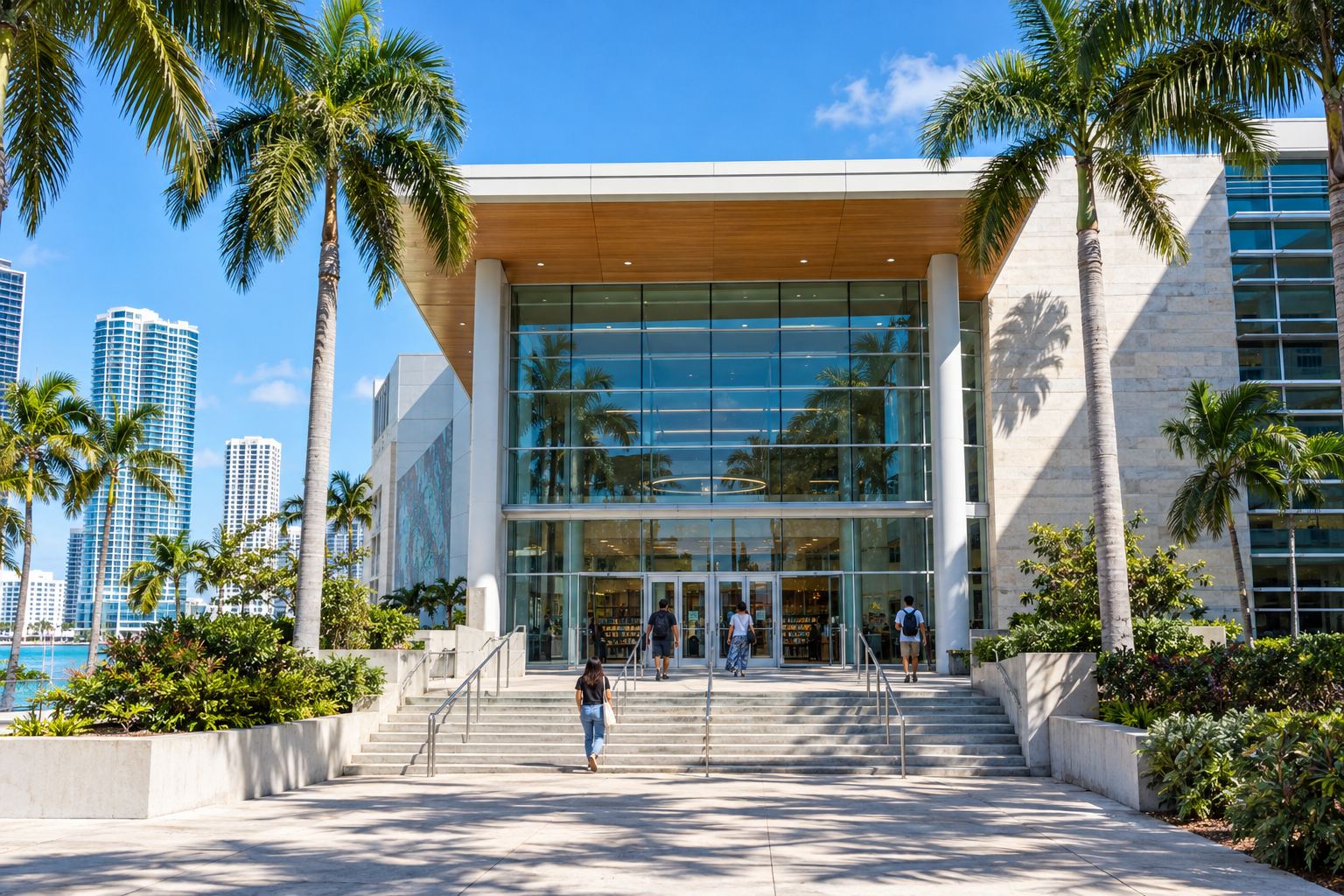
| New World Center / SoundScape Park | 500 17th St | Wallcast concerts free | Frank Gehry building, outdoor concerts on a projection wall |
| Art Deco Welcome Center | 1001 Ocean Dr | Free to enter; tours paid | Deco exhibits and tour departures |
| Miami Beach Botanical Garden | 2000 Convention Center Dr | Check site | Quiet garden next to the Convention Center |
The New World Center is home to the New World Symphony, and its Wallcast concerts project live performances onto the building’s 7,000-square-foot outer wall facing SoundScape Park. Bring a blanket, arrive early, and you have one of the best free nights out in South Florida. The symphony posts its Wallcast dates on its official website each season.
The Holocaust Memorial is a sobering, essential stop. Allow 30 to 45 minutes and keep voices low. It sits a short walk from the Botanical Garden and the Convention Center, which hosts Art Basel Miami Beach every December.
Parks, Courts and Outdoor Activities
Flamingo Park
Flamingo Park, the large city park in the residential blocks west of Washington Avenue around 11th Street and Michigan Avenue, is where South Beach residents actually work out. It has the Flamingo Park Tennis Center with public courts, including clay, a public pool, baseball and softball fields, a track, and handball and basketball courts. Court reservations and fees run through the City of Miami Beach Parks and Recreation Department, and residents pay less than visitors; check the department’s pages for current rates and booking rules.
If you follow pro tennis, the Miami Open plays at Hard Rock Stadium in Miami Gardens each March, about a 40-minute drive north.
The Beachwalk
The paved Beachwalk runs behind the dunes from South Pointe Park north through South Beach and continues toward Mid-Beach, connecting with older boardwalk sections farther up. It is the best morning walk, run or bike ride on the island. Go early, before heat and foot traffic build, and watch for posted rules on bike and scooter use.
On the water
Paddleboard and kayak rentals operate on the bay side, where the water is calmer, and jet ski rentals and boat tours run from marinas along the western shore. Miami Beach Marina, just north of South Pointe, is the base for charters, fishing trips and sightseeing boats that cruise past the islands and celebrity homes of Biscayne Bay. Snorkeling right off South Beach is limited; for reefs, locals head to Biscayne National Park or the Upper Keys.
Sunset on the bay side
Ocean-side South Beach faces east, so the sunset views are on the bay. Locals grab a spot near Sunset Harbour, along West Avenue, or at the west end of South Pointe Park to watch the sun drop behind the Miami skyline.
Restaurants: Where Locals Actually Eat
South Beach restaurants range from overpriced tourist traps to some of the best tables in Florida. A few names are worth building a day around.
Joe’s Stone Crab at 11 Washington Avenue opened in 1913 and is the most famous restaurant on the island. Its calendar follows Florida’s stone crab season, which under current state rules runs October 15 through May 1. Expect a wait at peak dinner hours; the takeaway counter next door is the shortcut locals use for key lime pie and crab claws.
Puerto Sagua at 700 Collins Avenue is a decades-old Cuban diner where you will get a proper cafecito, a Cuban sandwich and ropa vieja at fair prices. La Sandwicherie on 14th Street is a tiny counter serving French-style subs, open late and beloved by the post-club crowd. Big Pink on Collins in SoFi does big diner plates and is a reliable family pick.
For splurges, Prime 112 at 112 Ocean Drive is the classic South Beach steakhouse scene, and Smith & Wollensky at South Pointe pairs steaks with water views. Yardbird on Lenox Avenue serves Southern comfort food near Lincoln Road. Sunset Harbour, in the northwest corner of South Beach, is where residents go for neighborhood restaurants, coffee and brunch without Ocean Drive prices.
Local tip
Order a cafecito at a Cuban ventanita (walk-up window) instead of a café latte on Ocean Drive. It costs a fraction, and it is how the city actually runs.
Nightlife
South Beach nights start late. Bars on Ocean Drive, Collins and Washington fill around 10 p.m., and clubs do not peak until after midnight. Mac’s Club Deuce on 14th Street, open since the 1920s and one of the oldest bars on the island, is the dive locals love. Mango’s on Ocean Drive is loud Latin dance and spectacle; the Clevelander mixes a pool deck with a sports-bar crowd.
Some of Miami’s biggest club names are not technically in South Beach. LIV is inside the Fontainebleau in Mid-Beach, a short ride up Collins. Over in Park West on the mainland, the 24-hour club scene is anchored by E11even Miami, and our guide to it covers cover charges, table minimums and dress code.
Dress codes on South Beach are enforced at the door, cover charges climb on weekends and during events, and table minimums can run into the thousands. Check each venue’s official site or social channels for current policies, and use rideshare rather than driving.
Good to know
Watch your drink, keep your phone in a front pocket, and never accept “free entry” offers from street promoters who then steer you to a specific bar. Overcharging and card skimming complaints cluster around these setups.
Where to Stay in South Beach
Your hotel’s zone shapes your trip more than its star rating. A beautiful room above a nightclub on Washington Avenue will feel very different from a tower suite in SoFi.
| Area | Hotel style | Good examples | Trade-off |
|---|---|---|---|
| Ocean Drive, 5th to 15th | Restored deco boutique hotels | The Tides, Cardozo, Colony, Breakwater, The Betsy | Noise from bars and traffic at night |
| Collins Ave, 15th to 23rd | Large resorts with pools and beach service | Loews Miami Beach, The Setai, SLS South Beach, National Hotel | Higher rates, resort fees |
| South of Fifth | Luxury condos and a few upscale hotels | Short-term rentals, high-end properties | Fewer budget options |
| Washington and Collins inland | Mid-range and budget boutiques, hostels | Many small deco properties | Party noise, smaller rooms |
| Near Lincoln Road | Mix of boutique and luxury | The Ritz-Carlton South Beach at 1 Lincoln Road | Walk to the beach from inland blocks |
Two costs catch visitors off guard. Many Miami Beach hotels add a nightly resort or destination fee on top of the room rate, and overnight valet parking is often expensive with self-parking unavailable. Ask about both before you book. Short-term rental rules in Miami Beach are strict and enforced, with many residential areas prohibiting rentals under six months, so book only listings that display a valid city license and resort tax registration.
Upcoming South Beach Events by Season
South Beach runs on a calendar of recurring events. Dates move each year, so confirm with the organizer’s official website or the City of Miami Beach events calendar before booking around them.
| Event | Usual timing | Where | Who to confirm with |
|---|---|---|---|
| Art Deco Weekend | January | Ocean Drive, Lummus Park | Miami Design Preservation League |
| South Beach Wine & Food Festival | Late February | Beach tents and venues across Miami Beach | Festival’s official site |
| Spring break period | March | Citywide, especially Ocean Drive | City of Miami Beach |
| Miami Beach Pride | Spring | Lummus Park and Ocean Drive | Miami Beach Pride organizers |
| Memorial Day weekend crowds | Late May | Citywide | City of Miami Beach |
| Miami Swim Week | Early summer | Hotels and venues across Miami Beach | Event organizers |
| Art Basel Miami Beach | Early December | Miami Beach Convention Center and satellite fairs | Art Basel’s official site |
| New Year’s Eve | December 31 | Beach and hotels | City of Miami Beach |
March deserves a specific warning. In recent years the city has rolled out spring break measures that can include higher flat parking rates, bag checks at beach entrances, DUI checkpoints, curfews and beach closures. Holiday weekends, especially Memorial Day, can bring similar controls. If you want a calm trip, avoid March weekends or stay in Mid-Beach or SoFi.
College and pro sports also bring crowds to town. Miami Hurricanes football plays home games at Hard Rock Stadium, and the Orange Bowl lands there around New Year’s, which pushes up South Beach hotel rates even though the stadium is far north in Miami Gardens.
Best Time to Go
South Beach is a year-round beach, but the experience changes sharply by season.
December through April is peak season: average highs in the mid to upper 70s°F, low humidity, little rain and the highest hotel rates. The ocean is usually in the low to mid 70s°F, refreshing rather than cold. Art Basel, the holidays, the wine festival and spring break all fall in this window.
May and late October through November are the sweet spots. Crowds thin, rates soften, and the weather is warm without full summer intensity. Late spring can bring sargassum seaweed on the sand, which the city clears but cannot always keep up with.
June through September is hot, humid and stormy, with highs around 90°F, daily afternoon thunderstorms and ocean temperatures in the mid 80s°F. Hotel deals are at their best. Atlantic hurricane season runs June 1 through November 30, with the highest risk from August through October, so buy refundable bookings or travel insurance and monitor the National Hurricane Center before and during your trip.
For the beach itself, mornings are always best: cooler, calmer, cleaner sand and better parking. Plan indoor time (museums, Lincoln Road shops, a long lunch) between about 1 and 4 p.m. in summer.
Good to know
South Florida sun burns fast even on cloudy days. Reapply sunscreen every two hours, drink water steadily, and get indoors if you feel dizzy or stop sweating.
Safety and Practical Notes
South Beach is generally safe in busy, well-lit areas, but it is a dense entertainment district with the usual city issues. Petty theft from unattended beach bags is the most common problem; bring only what you need and keep valuables in your hotel safe. Car break-ins happen in street parking, so leave nothing visible.
Police presence is heavy along Ocean Drive and Collins, especially on weekend nights. If something goes wrong in an emergency, call 911. For non-emergency police matters, lost property or noise complaints, use the Miami Beach Police non-emergency contact listed on the city’s official website.
When to get help
Ask the nearest lifeguard first for anything beach-related: lost children, stings, injuries or swim conditions. For hotel billing disputes or automatic service charges you did not agree to, ask for a manager in person, then file a complaint with the Florida Department of Business and Professional Regulation if needed.
Nearby: Beyond South Beach
You can spend a full week in South Beach without running out of things to do, but the region rewards a few short trips.
Mid-Beach and North Beach. Head north on Collins for the Fontainebleau, Faena and the boardwalk. North Beach has a quieter, local feel, wider beaches and the city’s designated dog beach.
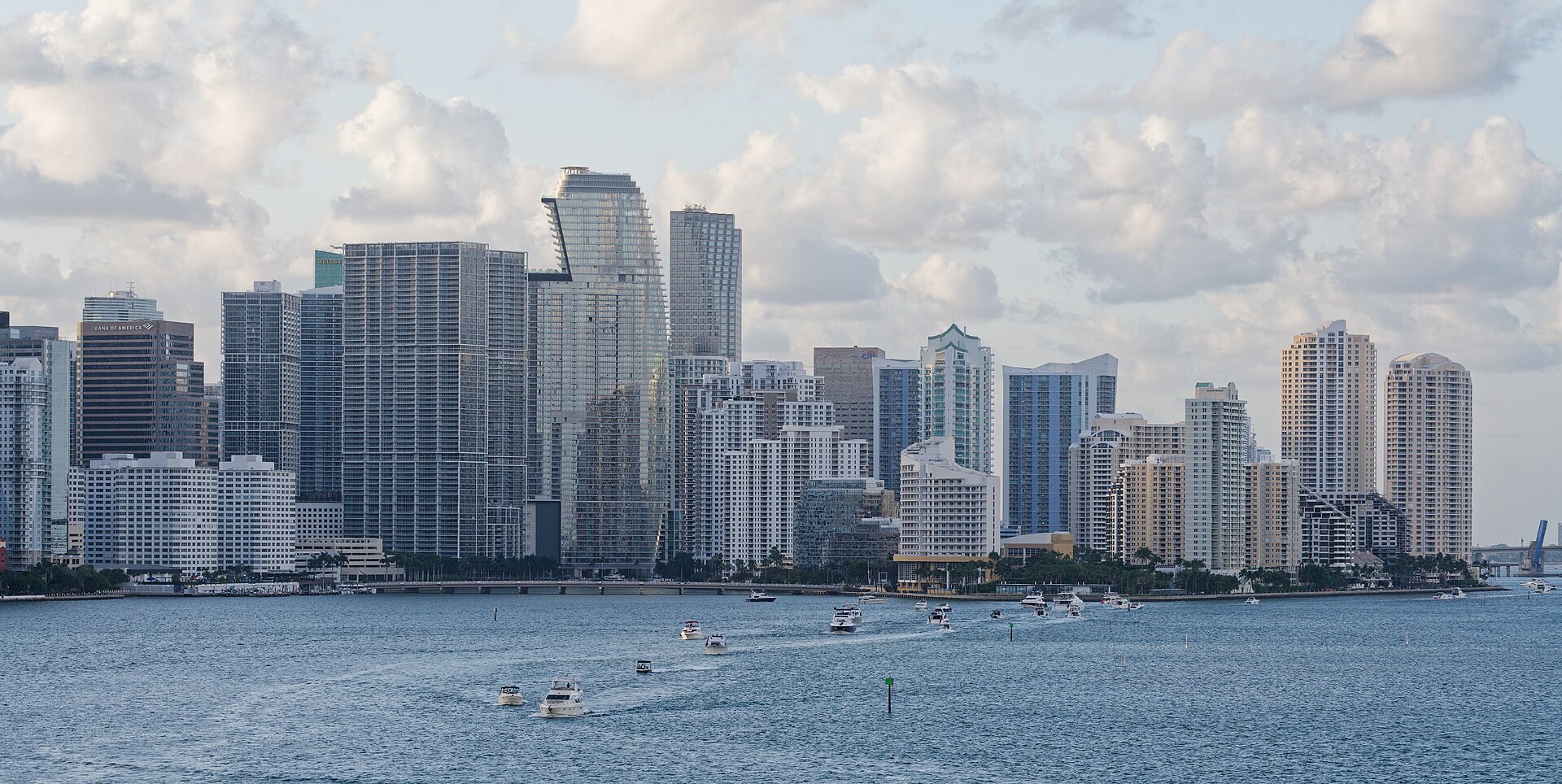
Brickell and downtown Miami. Across the MacArthur Causeway, Brickell is Miami’s financial district, packed with high-rise restaurants and rooftop bars; our Miami Brickell neighborhood guide covers where to eat and park. Downtown has Bayfront Park, the Pérez Art Museum Miami and the Frost Museum of Science.
Wynwood and Little Haiti. Wynwood’s murals and breweries are about 20 minutes away by car. Just north, Little Haiti offers Haitian food, art galleries and the Little Haiti Cultural Complex, a world apart from the beach scene.
Key Biscayne. South of downtown over the Rickenbacker Causeway, Key Biscayne has calmer beaches and state park trails.
Palm Beach County. For a longer drive, West Palm Beach is about 70 miles north and makes an easy overnight trip with its waterfront, Clematis Street and nearby Palm Beach island.
FAQ
Is South Beach in Miami or Miami Beach?
South Beach is in the city of Miami Beach, Florida, not the city of Miami. The two are separate municipalities connected by causeways across Biscayne Bay. Your address reads “Miami Beach, FL,” and the city of Miami Beach handles its own parking, police and beach rules.
Where exactly does South Beach start and end?
South Beach runs from South Pointe Park at the island’s southern tip north to roughly Dade Boulevard and the Collins Canal, between the Atlantic Ocean and Biscayne Bay. Hotels and listings sometimes extend the name to about 23rd Street.
Is the beach in South Beach free?
Yes. All Miami Beach beaches are public and free to walk onto. You pay only for parking, and for chairs and umbrellas if you rent them from vendors.
Can you drink alcohol on South Beach?
No. Alcohol and glass containers are banned on Miami Beach’s public beaches, and the rules are enforced, especially during spring break and holiday weekends. Drink at bars and restaurants instead.
Do you need a car in South Beach?
Not if you are staying in South Beach. The area is compact and walkable, the Miami Beach Trolley is free, and Citi Bike stations are everywhere. A car helps only for day trips, and parking costs add up quickly.
What is the best part of South Beach for families?
South of Fifth and South Pointe Park are the family picks, with calmer crowds, a splash pad, grassy picnic areas and restrooms near the beach. Lummus Park works for daytime too, but it gets loud on weekend afternoons.
How do you get from Miami International Airport to South Beach?
Drive or take a rideshare via SR 836 and the MacArthur Causeway (about 20 to 40 minutes), or ride Metrobus 150, the Miami Beach Airport Flyer, which connects MIA with Miami Beach. Check current routes and fares with Miami-Dade Transit before you travel.
When is the worst time to visit South Beach?
March weekends and holiday weekends bring the heaviest crowds, highest parking rates and the most police restrictions. Late summer brings heat, storms and hurricane risk. For good weather and smaller crowds, aim for late April, May, or November.